.webp)
Product Description
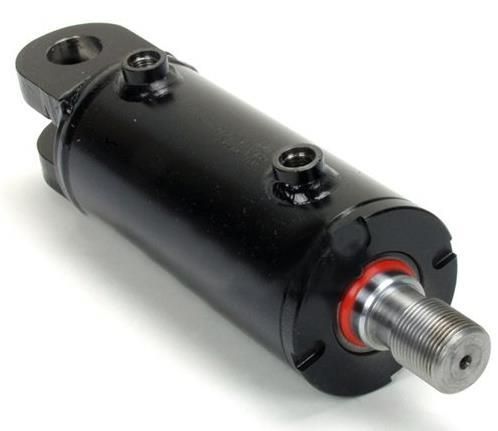
Product Title: Forklift tilting tilt cylinder forklift hydraulic cylinders for sale
Product Model: Forklift tilt cylinder (HL2-3T / H right DZ) and connector
| Item | Description |
| Product name | Forklift tilt cylinder (HL2-3T / H right DZ) Forklift tilt cylinder (HL2-3T) |
| P/N | H22N0-50011-TY |
| Applied Model | Heli H2000 # 2-3T (original) Heli H2 # 2-3.5T (right angle) |
| Net Weight (kg) | Tilt cylinder: 10.5 Connector: 0.05 |
| Gross Weight (kg) | 12 |
| Qty per Carton | 1 |
| Carton Size (cm) | 60*16*16 |
Forklift Tilt Cylinder
Forklift tilt cylinder is installed on the forklift mast. The tilting cylinder of the forklift is all double-acting piston type. Forklift hydraulic cylinders have an oil pipe joint at the front and rear ends. The front end of the tilting cylinder of the forklift is connected to the outer mast through a piston rod joint, and the rear end is connected to the support seat on the forklift frame.
The hydraulic cylinders of the forklift hydraulic system include forklift lifting hydraulic cylinders, forklift tilting hydraulic cylinders, forklift steering hydraulic cylinders, etc.
Specifications of Forklift Tilt Cylinder
| Name | Unit | Parameter |
| Cylinders diameter (piston diameter) | mm | 40~160 |
| Rod diameter (piston rod diameter) | mm | 20~120 |
| Stroke | mm | 50~2500 |
| Pressure | MPa | 16~25 |
| Operating temperature | ºC | -40~120 |
| Piston rod coating NSS neutral salt spray test time | H | ≥96 |
| Material: | Aluminum Alloy |
|---|---|
| Surface Treatment: | Baking Paint |
| Customized: | Non-Customized |
| Standard: | Standard |
| Advantage: | High Quality Forklift Parts |
| Manufacturer: | Genuine Forklift Parts Maker |
| Samples: |
US$ 42.9/Piece
1 Piece(Min.Order) | |
|---|
| Customization: |
Available
|
|
|---|
How does a tilt cylinder contribute to load distribution and control?
A tilt cylinder plays a significant role in load distribution and control in various applications. It helps ensure proper weight distribution and enables precise control over the tilting function. Here’s a detailed explanation:
- Load Distribution: Tilt cylinders assist in achieving optimal load distribution in mechanical systems. By adjusting the tilt angle, the cylinder allows for the redistribution of weight or force applied to the system. This is particularly useful in applications where uneven weight distribution may cause imbalance, stress, or instability. The ability to adjust the tilt angle enables operators to distribute the load more evenly, enhancing system performance, safety, and longevity.
- Controlled Tilting: Tilt cylinders provide precise control over the tilting motion. Whether it’s in equipment attachments, platforms, or other mechanical systems, the cylinder allows for controlled and gradual tilting. Operators can adjust the tilt angle according to specific requirements, ensuring smooth and accurate positioning. This control over the tilting function enhances operational efficiency, productivity, and safety.
- Positioning and Alignment: Tilt cylinders contribute to the precise positioning and alignment of loads or equipment. By tilting the system, operators can align the load or equipment with the desired orientation or target. This is particularly beneficial in applications such as material handling, construction, or manufacturing, where precise positioning is crucial for accurate assembly, installation, or processing.
- Stability and Safety: Tilt cylinders play a role in maintaining stability and safety during load distribution and tilting operations. They are designed to provide controlled movement and resist external forces, ensuring that the load or equipment remains stable during tilting. This stability prevents sudden shifts or imbalances that could potentially lead to accidents, damage, or injuries.
- Integration with Control Systems: Tilt cylinders can be integrated with control systems or hydraulic circuits, enabling automated and remote-controlled tilting operations. Integration with control systems allows for precise, repeatable, and synchronized tilting actions. This integration enhances load distribution accuracy, control, and adaptability to different operating conditions or requirements.
- Load Capacity and Durability: Tilt cylinders are engineered to handle heavy loads and withstand harsh operating conditions. They are designed with appropriate load ratings, materials, and construction to ensure reliable load distribution and control. The robustness and durability of tilt cylinders enable them to handle demanding applications, providing long-lasting performance.
Therefore, a tilt cylinder contributes to load distribution and control by enabling even weight distribution, facilitating controlled tilting, ensuring precise positioning and alignment, enhancing stability and safety, integrating with control systems, and offering sufficient load capacity and durability. These features make tilt cylinders essential components in various industries, including construction, material handling, agriculture, and manufacturing.
Can tilt cylinders be used in construction equipment like bulldozers and excavators?
Yes, tilt cylinders are commonly used in construction equipment like bulldozers and excavators. These cylinders play a crucial role in enhancing the functionality and versatility of such equipment. Here’s a detailed explanation:
- Bulldozers: Tilt cylinders are essential components in bulldozers, enabling the adjustment of the blade’s angle for efficient earthmoving and grading operations. The tilt cylinders allow the operator to control the blade’s tilt, allowing it to adapt to the terrain, achieve desired slopes, and efficiently push or move materials. By tilting the blade, bulldozers can perform tasks such as leveling ground, creating embankments, or pushing debris aside. Tilt cylinders provide the necessary force and control to execute these operations effectively.
- Excavators: Tilt cylinders also find application in excavators, particularly in the tilting of the excavator bucket. By incorporating tilt cylinders, excavators gain the ability to tilt the bucket and precisely control the material’s dumping or placement. This feature is valuable in tasks such as digging trenches, loading trucks, or shaping terrain. Tilt cylinders allow operators to adjust the bucket’s angle, ensuring accurate positioning and efficient material handling.
- Versatility and Efficiency: The use of tilt cylinders in construction equipment like bulldozers and excavators enhances their versatility and efficiency. By providing controlled tilting capabilities, these cylinders enable operators to adapt to different work conditions, achieve precise results, and optimize productivity. The ability to adjust the blade or bucket angle allows for more efficient material handling, improved grading accuracy, and reduced rework.
- Integration with Hydraulic Systems: Tilt cylinders are integrated with hydraulic systems present in bulldozers and excavators. Hydraulic power is utilized to actuate the cylinders, providing the required force and control for tilting. The hydraulic system allows for smooth and precise movement, enabling operators to adjust the tilt angle accurately and quickly respond to changing requirements.
- Customization and Compatibility: Tilt cylinders can be customized to suit specific bulldozer and excavator models. Manufacturers offer tilt cylinders with varying specifications, such as different force capacities, stroke lengths, and mounting options, to ensure compatibility and optimal performance with specific equipment. This customization allows for seamless integration and enhances the overall functionality of construction machinery.
Therefore, tilt cylinders are widely used in construction equipment like bulldozers and excavators, enabling controlled tilting of blades and buckets. These cylinders contribute to the versatility, efficiency, and precision of the equipment, empowering operators to accomplish various earthmoving and material handling tasks with enhanced productivity and performance.
How does a tilt cylinder differ from other types of hydraulic cylinders?
A tilt cylinder has specific characteristics and functionalities that differentiate it from other types of hydraulic cylinders. While hydraulic cylinders serve various purposes in different applications, here are the key ways in which a tilt cylinder differs:
- Tilting Functionality: The primary distinction of a tilt cylinder is its ability to provide controlled tilting or angling of components. Unlike other hydraulic cylinders that primarily focus on linear motion, a tilt cylinder is specifically designed to enable angular movement. It allows for the adjustment of the working angle of attachments, such as buckets or blades, in heavy machinery.
- Mounting Orientation: Tilt cylinders are typically mounted in a horizontal or near-horizontal orientation, allowing for effective tilting movement. In contrast, other hydraulic cylinders may be mounted vertically, horizontally, or at various angles depending on their specific application requirements.
- Range of Motion: While other hydraulic cylinders may have a limited range of motion, typically in the form of extending or retracting the piston rod, a tilt cylinder offers a broader range of motion. It allows for continuous and controlled tilting action within a specific angular range, providing flexibility and adaptability in heavy machinery operations.
- Control Mechanisms: Tilt cylinders often require specialized control mechanisms to regulate the tilting movement accurately. Hydraulic systems controlling tilt cylinders incorporate valves, pressure regulators, and other components specifically designed for precise control of the angular motion. In contrast, other hydraulic cylinders may utilize different control mechanisms tailored to their particular linear motion requirements.
- Application-Specific Design: Tilt cylinders are engineered to meet the specific demands of heavy machinery applications that involve tilting or angling of components. They are designed to withstand high loads, provide precise control, and ensure reliable performance in challenging work environments. Other types of hydraulic cylinders, such as single-acting, double-acting, telescopic, or differential cylinders, are designed for different purposes and may have distinct structural and functional features.
While tilt cylinders share the fundamental principles of hydraulic cylinders, their specialization in tilting functionality sets them apart from other types of hydraulic cylinders. The unique design, mounting orientation, range of motion, control mechanisms, and application-specific characteristics make tilt cylinders suitable for tasks that require controlled angular movement in heavy machinery applications.
In conclusion, a tilt cylinder differs from other types of hydraulic cylinders through its dedicated focus on providing controlled tilting functionality, specialized design, and specific mounting orientation. These distinctions enable tilt cylinders to fulfill the unique requirements of heavy machinery applications involving angular adjustments and enhance the versatility and performance of the equipment.


editor by CX 2023-10-14