.webp)
Product Description
Product Title: Forklift Hydraulic Tilt Cylinder
Product Model: B382072
Detailed Photos
Product Parameters
| Item | Description |
| Product Name | Forklift Hydraulic Tilt Cylinder |
| P/N | YB382072 |
| Applied Model | Tailift Forklift 5T |
| Net Weight (kg) | 15 |
| Gross Weight (kg) | 17 |
| Qty per Carton | 1 |
| Carton Size (cm) | 60*15*15 |
Here are other forklift cylinders below for your choice:
Product Description
Lift Truck Tilt Cylinder
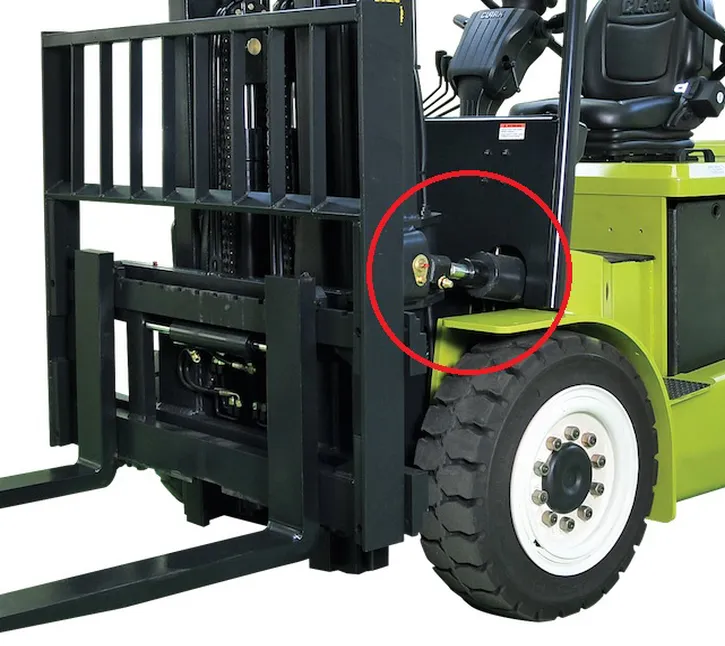
The lift truck tilt cylinder is installed on the forklift upright mast. The lift truck tilt cylinder is mainly composed of the main parts such as the piston, cylinder body, piston rod, upper cover, lower cover, compression nut, and cover nut.
Inspection and Repair of Lift Truck Tilt Cylinder
1. After disassembling the lift truck tilt cylinder, the forklift cylinder parts should be carefully cleaned and dried.
2. Check the coaxiality of the forklift piston and forklift piston rod. Mount the forklift piston rod on the V-shaped frame and check with a dial indicator. If the accuracy of the forklift piston does not meet the accuracy requirements and is out of tolerance, it should be replaced.
3. Check if the piston of the forklift is bent. Check with a V-shaped frame and dial indicator. When it is bent, it should be corrected and repaired.
4. When the surface of the forklift tilt cylinder is seriously worn or scratched, it can be repaired by honing.
5. If the inner hole of the forklift guide tube is seriously worn or scratched, it should be replaced.
5. If the leather cup and forklift sealing ring are worn and broken, they should be replaced. When an O-ring seal is used on a forklift piston, it generally loses its original shape after several years of use and should be replaced.
7. The clearance between the repaired tilt cylinder inner surface and the forklift piston should be 0.04-0.13mm, but the clearance should not be greater than 0.25mm.
8. The gap between the piston rod of the forklift and the guide sleeve is 0.04-0.15mm. If the gap is greater than 0.45mm, the guide sleeve should be replaced.
Specifications of Lift Truck Tilt Cylinder
| Name | Unit | Parameter |
| Cylinder diameter (piston diameter) | mm | 40~160 |
| Rod diameter (piston rod diameter) | mm | 20~120 |
| Stroke | mm | 50~2500 |
| Pressure | MPa | 16~25 |
| Operating temperature | ºC | -40~120 |
| Piston rod coating NSS neutral salt spray test time | H | ≥96 |
Company Profile
/* May 10, 2571 16:49:51 */!function(){function d(e,r){var a,o={};try{e&&e.split(“,”).forEach(function(e,t){e&&(a=e.match(/(.*?):(.*)$/))&&1
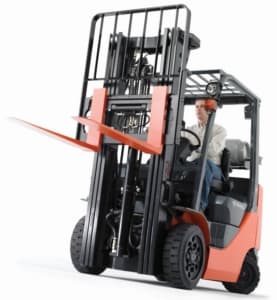
Can Hydraulic Cylinders be Used in Forklift Attachments?
Yes, hydraulic cylinders can be used in forklift attachments to enhance their functionality and expand their capabilities. Forklift attachments are auxiliary devices that can be mounted to the forks or carriage of a forklift to perform specific material handling tasks. The addition of hydraulic cylinders to these attachments offers several advantages and enables a wide range of applications. Here’s a detailed explanation of how hydraulic cylinders can be used in forklift attachments:
- Improved Lifting and Tilting:
- Extended Reach and Telescoping:
- Rotational Movement:
- Specialized Handling:
- Quick Attachment Changes:
Hydraulic cylinders can be incorporated into forklift attachments to provide enhanced lifting and tilting capabilities. For example, attachments such as fork positioners, side shifters, or paper roll clamps can utilize hydraulic cylinders to adjust the position of the forks or arms, allowing for efficient handling of different load sizes or configurations. The hydraulic cylinders enable precise control over the movement, enabling operators to lift, tilt, or adjust the position of the attachment as needed to optimize material handling operations.
Hydraulic cylinders can be employed in telescopic attachments for forklifts, enabling extended reach capabilities. Telescopic attachments consist of multiple sections that can be extended or retracted using hydraulic cylinders. By extending or retracting the sections, the attachment can reach deeper into racks, containers, or other storage areas, allowing forklifts to handle materials that are situated further away or at greater heights. This extension and retraction feature enhances the versatility of the forklift and enables efficient material handling in various environments.
Some forklift attachments, such as rotators or clamps, require rotational movement to handle loads effectively. Hydraulic cylinders can be integrated into these attachments to provide the necessary rotational capabilities. By utilizing hydraulic power, the attachment can rotate the load in either direction, allowing for precise positioning or transferring of goods. The inclusion of hydraulic cylinders enables controlled and smooth rotation, enhancing the efficiency and safety of material handling operations.
Hydraulic cylinders can be utilized in various specialized forklift attachments designed for specific material handling applications. Examples include attachments for handling drums, barrels, coils, or bales. These attachments often require unique lifting, clamping, or squeezing mechanisms, which can be achieved by incorporating hydraulic cylinders. The hydraulic cylinders provide the necessary force and control to handle specialized loads safely and efficiently, expanding the capabilities of the forklift in specific industries or tasks.
Hydraulic cylinders can facilitate quick and easy attachment changes on forklifts. Some forklifts are equipped with hydraulic quick-coupler systems that allow attachments to be rapidly connected or disconnected using hydraulic power. The hydraulic cylinders in the quick-coupler system enable a secure and efficient attachment change process, reducing downtime and improving productivity. This feature is particularly beneficial in applications where different attachments are frequently used, allowing forklifts to adapt to diverse material handling requirements swiftly.
The integration of hydraulic cylinders in forklift attachments provides numerous benefits, including improved lifting and tilting capabilities, extended reach and telescoping features, rotational movement, specialized handling options, and quick attachment changes. These advantages enhance the versatility, efficiency, and adaptability of forklifts, allowing them to handle a wide range of materials and perform specialized tasks in various industries.
How does a forklift hydraulic cylinder contribute to load rotation?
A forklift hydraulic cylinder plays a significant role in facilitating load rotation. The hydraulic cylinder enables the forklift to manipulate and reposition loads by providing controlled rotational movement. Here’s an explanation of how the hydraulic cylinder contributes to load rotation:
The forklift hydraulic cylinder contributes to load rotation in the following ways:
1. Tilt Function:
Hydraulic cylinders are responsible for the tilt function of the forklift’s mast or carriage. The hydraulic cylinder controls the tilting mechanism, allowing the forks or attachments to tilt forward or backward. By adjusting the tilt angle, the hydraulic cylinder enables the forklift to change the orientation of the load and achieve load rotation.
2. Controlled Movement:
The hydraulic cylinder provides controlled movement during load rotation. It allows the operator to adjust the speed and direction of the tilt function, ensuring smooth and precise rotation of the load. The operator can manipulate the hydraulic controls to achieve the desired rotation angle and maintain stability throughout the process.
3. Load Centering:
Hydraulic cylinders contribute to load rotation by assisting in load centering. The hydraulic system can be equipped with attachments such as rotators or clamps that are actuated by hydraulic cylinders. These attachments help secure the load and ensure it remains centered during rotation, preventing imbalances or accidents.
4. Load Manipulation:
The hydraulic cylinder allows for load manipulation during rotation. By controlling the tilt function, the hydraulic cylinder enables the forklift to precisely position the load, making it easier to place or retrieve items from specific locations. Load rotation facilitated by the hydraulic cylinder enhances the forklift’s versatility and efficiency in various material handling tasks.
5. Operator Control:
Forklift hydraulic cylinders are operated by the forklift operator using hydraulic controls. The operator can adjust the tilt angle and speed of the hydraulic cylinder to achieve the desired load rotation. The hydraulic system provides the necessary responsiveness and control, allowing the operator to safely and accurately manipulate the load.
In summary, a forklift hydraulic cylinder enables load rotation through its tilt function, controlled movement, load centering capabilities, load manipulation, and operator control. The hydraulic cylinder’s ability to provide controlled rotation enhances the forklift’s versatility and efficiency in handling different types of loads and materials.
How Does a Forklift Hydraulic Cylinder Handle Variations in Lift Height?
A forklift hydraulic cylinder is responsible for raising and lowering the forks or lifting platform, allowing the forklift to handle loads at different heights. It handles variations in lift height through a combination of design features and hydraulic principles. Here’s a detailed explanation of how a forklift hydraulic cylinder handles variations in lift height:
1. Piston and Cylinder Design:
The hydraulic cylinder consists of a piston and a cylinder, which are sealed together to form a closed hydraulic system. The piston is connected to the forks or lifting platform, while the cylinder is fixed to the forklift frame. The design of the piston and cylinder allows for smooth movement and effective transfer of hydraulic pressure to generate lifting force.
2. Hydraulic Fluid and Pressure:
The hydraulic cylinder operates on the principle of Pascal’s Law, which states that when pressure is applied to a fluid in a closed system, it is transmitted equally in all directions. In the case of a forklift hydraulic cylinder, hydraulic fluid is used as the medium to transmit pressure. When hydraulic fluid is pumped into the cylinder, it creates pressure on the piston, causing it to move upward and lift the forks or lifting platform.
3. Cross-Sectional Area and Force:
The cross-sectional area of the piston within the hydraulic cylinder determines the force that can be exerted. A larger piston area can generate a greater lifting force. By varying the diameter of the piston, forklift manufacturers can adjust the lifting capacity and handle variations in lift height. Forklifts designed for heavier loads typically have larger piston areas to generate the necessary lifting force.
4. Valves and Controls:
The hydraulic system of a forklift includes valves and controls that regulate the flow of hydraulic fluid to the cylinder. These valves, such as control valves and relief valves, allow for precise control of the lifting operation. By adjusting the valves, operators can control the speed of ascent and descent, enabling smooth and controlled variations in lift height.
5. Telescopic Cylinders:
In some forklift designs, especially those used for high-reach applications, telescopic cylinders are employed. Telescopic cylinders consist of several nested stages that extend and retract, providing increased lift height. These cylinders allow for a compact design when retracted while offering extended reach when fully extended. Telescopic cylinders enable forklifts to handle variations in lift height without compromising stability or requiring excessively long cylinder strokes.
6. Stability and Counterbalancing:
Handling variations in lift height requires maintaining forklift stability. Forklifts are designed with counterweight systems to balance the load and prevent tipping. The hydraulic cylinder’s operation is coordinated with the counterweight system, ensuring that the center of gravity remains within safe limits during lifting and lowering operations. This counterbalancing helps maintain stability even when handling loads at different heights.
Through careful design, hydraulic principles, and the integration of valves and controls, a forklift hydraulic cylinder effectively handles variations in lift height. The combination of hydraulic pressure, piston and cylinder design, control mechanisms, and counterbalancing ensures precise and controlled lifting operations, allowing forklifts to safely handle loads at different heights as required in various material handling applications.
<img src="https://img.jiansujichilun.com/img/hydrauliccylinders/hydrauliccylinders-l1.webp" alt="China OEM Tailift Forklift Hydraulic Parts Tilt Cylinder for Cpcd50 Fork Truck Accessories with Good quality “><img src="https://img.jiansujichilun.com/img/hydrauliccylinders/hydrauliccylinders-l2.webp" alt="China OEM Tailift Forklift Hydraulic Parts Tilt Cylinder for Cpcd50 Fork Truck Accessories with Good quality “>
editor by Dream 2024-10-09