
Product Description
Company Profile
ZheJiang CHINAMFG Hydraulic Co., Ltd. (Stock Code: 83 0571 ), founded in June 2004, is a domestic medium and high pressure hydraulic cylinder supplier integrating R&D, production, sales and service. Its main products include 3 series of hydraulic cylinders for dump trucks, hydraulic cylinders for mechanical equipment and hydropneumatic springs.
The company’s management team and main technical personnel are stable. We has constantly innovated from the actual needs of customers, has gradually positioned the medium and high-end market, and has provided high-quality products for customers in automobile, coal mine, petroleum, engineering machinery and other industries with high-quality service.
Product Description
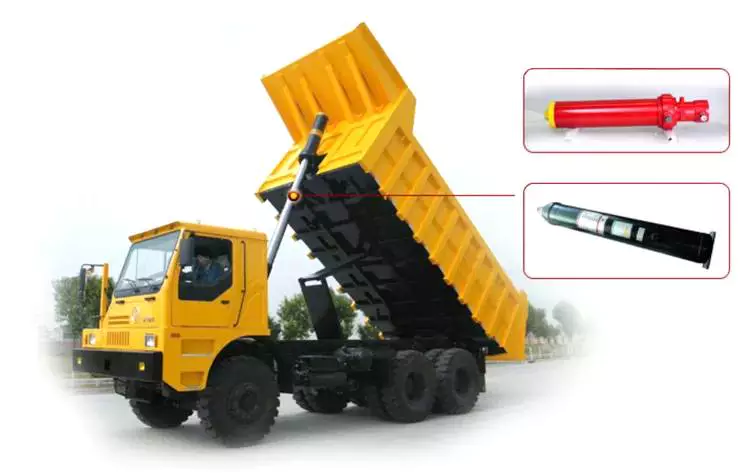
FC telescopic hydraulic cylinder has always been the core product of our company, the company according to the market demand, continuous technical iteration and process innovation.
Our product advantage lies in:
1.World-class processing technology ensures stable and reliable quality of FC type front-end telescopic cylinders with outercover, more suitable for overload environment.
2.High quality alloy seamless steel pipe, with better mechanical properties, gives full play to the strength of big lifting capacity better.
3.High-end gantry type linear electroplating production line improves the anti-corrosion and hardness of the cylinder better.
4.The world famous brands of seals ensure the sealing performance.
5.Supplied to famous tipper trucks brands-SINOTRUCK/CIMC/SHACMAN/JAC and tested by the market for over 10 years.
To better ensure the safety of your goods, professional, environmentally friendly, convenient and efficient packaging services will be provided.
Specification
| ITEM | MODEL NO. | # of Stages | Largest Moving Stage Diameter(mm) | stroke(mm) | the largest sleeve OD(mm) | mounting distance(mm) |
| 1 | WTFC 4TG-E152*4280ZJ | 4 | 152 | 4280 | 272 | 335 |
| 2 | WTFC 5TG-E152*4280ZJ | 5 | 152 | 4280 | 272 | 335 |
| 3 | WTFC 4TG-E160*5390ZJ | 4 | 160 | 5390 | 272 | 335 |
| 4 | WTFC 4TG-F175*4280ZJ | 4 | 175 | 4280 | 272 | 335 |
| 5 | WTFC 4TG-F175*5390ZJ | 4 | 175 | 5390 | 272 | 335 |
| 6 | WTFC 4TG-F175*5700ZJ | 4 | 175 | 5700 | 272 | 335 |
| 7 | WTFC 5TG-F175*5390ZJ | 5 | 175 | 5390 | 272 | 335 |
| 8 | WTFC 5TG-F175*5700ZJ | 5 | 175 | 5700 | 272 | 335 |
| 9 | WTFC 4TG-F185*4650ZJ | 4 | 185 | 4650 | 272 | 335 |
| 10 | WTFC 4TG-F185*5000ZJ | 4 | 185 | 5000 | 272 | 335 |
| 11 | WTFC 4TG-F185*5700ZJ | 4 | 185 | 5700 | 272 | 335 |
| 12 | WTFC 4TG-F185*6180ZJ | 4 | 185 | 6180 | 272 | 335 |
| 13 | WTFC 5TG-F185*5000ZJ | 5 | 185 | 5000 | 272 | 335 |
| 14 | WTFC 4TG-F200*6000ZJ | 4 | 200 | 6000 | 272 | 335 |
| 15 | WTFC 5TG-F200*6500ZJ | 5 | 200 | 6500 | 272 | 335 |
| 16 | WTFC 4TG-F175*4280BH | 4 | 175 | 4280 | 244 | 325 |
| 17 | WTFC 4TG-F175*4650BH | 4 | 175 | 4650 | 244 | 325 |
| 18 | WTFC 4TG-F175*5390BH | 4 | 175 | 5390 | 244 | 325 |
| 19 | WTFC 4TG-F185*5700BH | 4 | 185 | 5700 | 244 | 325 |
| 20 | WTFC 4TG-F185*6000BH | 4 | 185 | 6000 | 244 | 325 |
| 21 | WTFC 4TG-F185*6180BH | 4 | 185 | 6180 | 244 | 325 |
| 22 | WTFC 4TG-F200*6000BH | 4 | 200 | 6000 | 244 | 325 |
| 23 | WTFC 4TG-F175*4280JT | 4 | 175 | 4280 | 244 | 325 |
| 24 | WTFC 4TG-F175*4650JT | 4 | 175 | 4650 | 244 | 325 |
| 25 | WTFC 4TG-F175*5390JT | 4 | 175 | 5390 | 244 | 325 |
| 26 | WTFC 4TG-F200*5700JT | 4 | 200 | 5700 | 272 | 325 |
| 27 | WTFC 4TG-F200*6180JT | 4 | 200 | 6180 | 272 | 325 |
| 28 | WTFC 4TG-F175*4450HT | 4 | 175 | 4450 | 244 | 345 |
| 29 | WTFC 5TG-F200*6180AF | 5 | 200 | 6180 | 272 | 325 |
Quality Guarantee System
1. Trial Operation Test
2. Start-up Pressure Test
3. Pressure-Tight Test
4. Leak Test
5. Full Stroke Test
6. Buffer Test
7. Testing the Effect of Limit
8. Load Efficiency Test
9. Reliability Test
Every piece of hydraulic cylinder are tested and will send out only after they are pasted the each test. Our company has abundant technical force and perfect testing means. By making wide technical and business cooperation with many related enterprises, universities, colleges and institutes both at home and abroad, and employing senior engineers and software engineers, we have greatly strengthened and improved our designing, processing, and testing abilities.
Machining Equipment
Our company have 700 sets manufacturing equipment, such as cold drawing production line, heat treatment production line, surface treatment production line, testing equipment, various digital-control machining equipment, gantry style linear electroplating production line.
Certificate And Our Customers
Domestic Marketing Locations
The company’s products are widely sold in ZheJiang , ZheJiang , ZheJiang , ZheJiang , ZheJiang , ZheJiang , ZheJiang , ZheJiang , ZheJiang and other more than 20 provinces, municipalities and autonomous regions.
Foreign Marketing Locations
Our products are exported to the United States, Canada, Mexico, Russia, South Africa, Indonesia and other Europe, America, South America, Southeast Asia.
After Service
1.Pre-sale service: Keep communicating with the truck manufacturers , including selection of product model , design of hydraulic system, test of performance and analysis of the accident. Once the problems occur, we will solve them immediately together with truck manufacturers.
2.The sale service: Provide training and technical support for users.
3.After-sale service: Solve the problem firstly, then analyse responsibility ; Replace the system components immediately if any need.
4.24 hours telephone service hotline.
FAQ
Q1:What’s the brand name of your products ?
A:Generally, we use our own brand “WTJX”, OEM is also available as required.
Q2:Hydraulic cylinder internal leakage?
A: There are 3 main reasons causing internal leakage : Overload, polishing is not well controlled, bad seal kits. As is known to all, vehicles in China are often overload,our products all designed to bear the overload power. We have numerical control machine to assure the polish processing. And we use the imported seals to meet customers’ demands.
Q3:Does your piston rod get ruptured easily?
A: Hard chrome plating quenched and tempered 45# steel for piston rod to assure sufficient hardness and toughness.
Q4:What about the quality feedback of your products?
A: Guarantee the quality from the raw material. We have cold drawing production line and nickel-chrome electroplating production line, so we can produce cold-drawing pipe and hard-chrome pipe used for hydraulic cylinder!
/* May 10, 2571 16:49:51 */!function(){function d(e,r){var a,o={};try{e&&e.split(“,”).forEach(function(e,t){e&&(a=e.match(/(.*?):(.*)$/))&&1
Can hydraulic cylinders be integrated with advanced control systems and automation?
Yes, hydraulic cylinders can be integrated with advanced control systems and automation technologies to enhance their functionality, precision, and overall performance. The integration of hydraulic cylinders with advanced control systems allows for more sophisticated and precise control over their operation, enabling automation and intelligent control. Here’s a detailed explanation of how hydraulic cylinders can be integrated with advanced control systems and automation:
1. Electronic Control:
– Hydraulic cylinders can be equipped with electronic sensors and transducers to provide real-time feedback on their position, force, pressure, or velocity. These sensors can be integrated with advanced control systems, such as programmable logic controllers (PLCs) or distributed control systems (DCS), to monitor and control the operation of hydraulic cylinders. By integrating electronic control, the position, speed, and force of hydraulic cylinders can be precisely monitored and adjusted, allowing for more accurate and automated control.
2. Closed-Loop Control:
– Closed-loop control systems use feedback from sensors to continuously monitor and adjust the operation of hydraulic cylinders. By integrating hydraulic cylinders with closed-loop control systems, precise control over position, velocity, and force can be achieved. Closed-loop control enables the system to automatically compensate for variations, external disturbances, or changes in operating conditions, ensuring accurate and consistent performance. This integration is particularly beneficial in applications that require precise positioning, synchronization, or force control.
3. Proportional and Servo Control:
– Hydraulic cylinders can be integrated with proportional and servo control systems to achieve finer control over their operation. Proportional control systems use proportional valves to regulate the flow and pressure of hydraulic fluid, allowing for precise adjustment of cylinder speed and force. Servo control systems, on the other hand, combine feedback sensors, high-performance valves, and advanced control algorithms to achieve extremely precise control over hydraulic cylinders. Proportional and servo control integration enhances the responsiveness, accuracy, and dynamic performance of hydraulic cylinders.
4. Human-Machine Interface (HMI):
– Hydraulic cylinders integrated with advanced control systems can be operated and monitored through human-machine interface (HMI) devices. HMIs provide a graphical user interface that allows operators to interact with the control system, monitor cylinder performance, and adjust parameters. HMIs enable operators to set desired positions, forces, or velocities, and visualize the real-time feedback from sensors. This integration simplifies the operation and monitoring of hydraulic cylinders, making them more user-friendly and facilitating seamless integration into automated systems.
5. Communication and Networking:
– Hydraulic cylinders can be integrated into communication and networking systems, enabling them to be part of a larger automated system. Integration with industrial communication protocols, such as Ethernet/IP, Profibus, or Modbus, allows for seamless information exchange between the hydraulic cylinders and other system components. This integration enables centralized control, data logging, remote monitoring, and coordination with other automated processes. Communication and networking integration enhance the overall efficiency, coordination, and integration of hydraulic cylinders within complex automation systems.
6. Automation and Sequential Control:
– By integrating hydraulic cylinders with advanced control systems, they can be seamlessly incorporated into automated processes and sequential control operations. The control system can execute predefined sequences or programmed logic to control the operation of hydraulic cylinders based on specific conditions, inputs, or timing. This integration enables the automation of complex tasks, such as material handling, assembly operations, or repetitive motions. Hydraulic cylinders can be synchronized with other actuators, sensors, or devices, allowing for coordinated and automated operation in various industrial applications.
7. Predictive Maintenance and Condition Monitoring:
– Advanced control systems can also enable predictive maintenance and condition monitoring for hydraulic cylinders. By integrating sensors and monitoring capabilities, the control system can continuously monitor the performance, health, and condition of hydraulic cylinders. This integration allows for the detection of abnormalities, wear, or potential failures in real-time. Predictive maintenance strategies can be implemented based on the collected data, optimizing maintenance schedules, reducing downtime, and enhancing the overall reliability of hydraulic systems.
In summary, hydraulic cylinders can be integrated with advanced control systems and automation technologies to enhance their functionality, precision, and performance. The integration allows for electronic control, closed-loop control, proportional and servo control, human-machine interface (HMI) interaction, communication and networking, automation and sequential control, as well as predictive maintenance and condition monitoring. These integrations enable more precise control, automation, improved efficiency, and optimized performance of hydraulic cylinders in various industrial applications.
Advancements in Hydraulic Cylinder Technology Improving Corrosion Resistance
Advancements in hydraulic cylinder technology have led to significant improvements in corrosion resistance. Corrosion is a major concern in hydraulic systems, especially in environments where cylinders are exposed to moisture, chemicals, or corrosive agents. These advancements aim to enhance the durability and longevity of hydraulic cylinders. Let’s explore some of the key advancements in hydraulic cylinder technology that have improved corrosion resistance:
- Corrosion-Resistant Materials: The use of corrosion-resistant materials is a fundamental advancement in hydraulic cylinder technology. Stainless steel, for example, offers excellent resistance to corrosion, making it a popular choice in marine, offshore, and other corrosive environments. Additionally, advancements in metallurgy have led to the development of specialized alloys and coatings that provide enhanced corrosion resistance, extending the lifespan of hydraulic cylinders.
- Surface Treatments and Coatings: Various surface treatments and coatings have been developed to protect hydraulic cylinders from corrosion. These treatments can include electroplating, galvanizing, powder coating, and specialized corrosion-resistant coatings. These coatings create a barrier between the cylinder surface and corrosive elements, preventing direct contact and inhibiting the onset of corrosion. The selection of appropriate coatings depends on the specific application and environmental conditions.
- Sealing Technology: Effective sealing systems are crucial in preventing water, moisture, and contaminants from entering the cylinder and causing corrosion. Advancements in sealing technology have led to the development of high-quality seals and advanced sealing designs that offer superior resistance to corrosion. These seals are typically made from materials specifically engineered to withstand corrosive environments, ensuring long-term sealing performance and minimizing the risk of corrosion-related issues.
- Improved Surface Finishes: The surface finish of hydraulic cylinders plays a role in their resistance to corrosion. Advancements in machining and polishing techniques have allowed for smoother and more uniform surface finishes. Smoother surfaces reduce the likelihood of corrosion initiation and make it easier to clean and maintain hydraulic cylinders. Additionally, specialized finishes, such as passivation or chemical treatments, can be applied to further enhance corrosion resistance.
- Environmental Protection Features: Hydraulic cylinders can be equipped with additional features to protect against corrosion. These features may include protective boots, bellows, or shields that guard vulnerable areas from exposure to corrosive agents. By incorporating these protective elements into the design, hydraulic cylinders can withstand harsh environments and minimize the risk of corrosion-related damage.
In summary, advancements in hydraulic cylinder technology have significantly improved corrosion resistance. The use of corrosion-resistant materials, advanced surface treatments and coatings, innovative sealing technology, improved surface finishes, and the incorporation of environmental protection features have all contributed to enhanced durability and longevity of hydraulic cylinders in corrosive environments. These advancements ensure reliable performance and reduce the maintenance and replacement costs associated with corrosion-related issues.
Can hydraulic cylinders be customized for specific equipment or attachment needs?
Yes, hydraulic cylinders can be customized to meet specific equipment or attachment needs. Hydraulic cylinder manufacturers often offer customization options to ensure that the cylinders meet the unique requirements of different applications. Here’s a detailed explanation of how hydraulic cylinders can be customized for specific equipment or attachment needs:
1. Size and Configuration:
– Hydraulic cylinders can be customized in terms of size and configuration to fit specific equipment or attachment requirements. The dimensions of the cylinder, such as bore size, rod diameter, and stroke length, can be tailored to match the available space and the desired force or movement requirements. Additionally, the mounting style and orientation of the cylinder can be customized to ensure proper integration with the equipment or attachment.
2. Operating Pressure and Force:
– The operating pressure and force capabilities of hydraulic cylinders can be customized to suit the specific equipment or attachment needs. Different applications may require different force outputs, and hydraulic cylinder manufacturers can design and manufacture cylinders with the appropriate piston area and pressure ratings to meet those requirements. Customization in this aspect ensures optimal performance and efficiency for the particular equipment or attachment.
3. Stroke Length:
– The stroke length of a hydraulic cylinder refers to the distance the piston can travel from fully retracted to fully extended. Customization of the stroke length allows the hydraulic cylinder to accommodate the specific range of motion required by the equipment or attachment. By adjusting the stroke length, the cylinder can be tailored to deliver the necessary extension and retraction capabilities for efficient operation.
4. Mounting Options:
– Hydraulic cylinders can be customized with various mounting options to facilitate easy installation and integration with specific equipment or attachments. Different applications may require different mounting styles, such as flange mounts, trunnion mounts, or clevis mounts. Manufacturers can provide customized mounting options to ensure proper alignment, stability, and functionality when the cylinder is connected to the equipment or attachment.
5. Sealing and Material Options:
– The sealing system of a hydraulic cylinder is crucial for preventing fluid leakage and maintaining the cylinder’s integrity. Hydraulic cylinder manufacturers offer customization options for sealing materials, such as different types of seals and seal configurations, to suit specific equipment or attachment needs. Additionally, customization of cylinder materials, such as selecting corrosion-resistant materials or specialized coatings, can enhance the cylinder’s durability and performance in specific operating environments.
6. Integration with Control Systems:
– In certain applications, hydraulic cylinders may need to be integrated with sophisticated control systems or automation technologies. Customization can involve incorporating sensors, position feedback devices, or other control elements into the hydraulic cylinder design to enable seamless integration with the overall equipment or attachment control system. This customization ensures precise control, monitoring, and synchronization of the hydraulic cylinder’s movements within the specific application.
7. Specialized Features or Accessories:
– Hydraulic cylinder customization can also involve incorporating specialized features or accessories to meet unique equipment or attachment needs. This may include the integration of safety features, such as pressure relief valves or load-holding valves, or the addition of specific ports or fittings for auxiliary functions or attachments. Customization allows hydraulic cylinders to be tailored to the specific requirements and functionalities of the equipment or attachment.
By offering customization options, hydraulic cylinder manufacturers can provide solutions that precisely match the needs of different equipment or attachment applications. Customized hydraulic cylinders ensure optimal performance, efficiency, and integration, enhancing the overall functionality and productivity of the equipment or attachment. It is important to work closely with experienced manufacturers or hydraulic system specialists to determine the specific customization requirements and ensure the successful implementation of customized hydraulic cylinders.
<img src="https://img.jiansujichilun.com/img/hydrauliccylinders/hydrauliccylinders-l1.webp" alt="China Custom Single Acting FC Tipper Truck Hoist Telescopic Hydraulic Cylinder for Trailer vacuum pump “><img src="https://img.jiansujichilun.com/img/hydrauliccylinders/hydrauliccylinders-l2.webp" alt="China Custom Single Acting FC Tipper Truck Hoist Telescopic Hydraulic Cylinder for Trailer vacuum pump “>
editor by Dream 2024-10-10