
Product Description
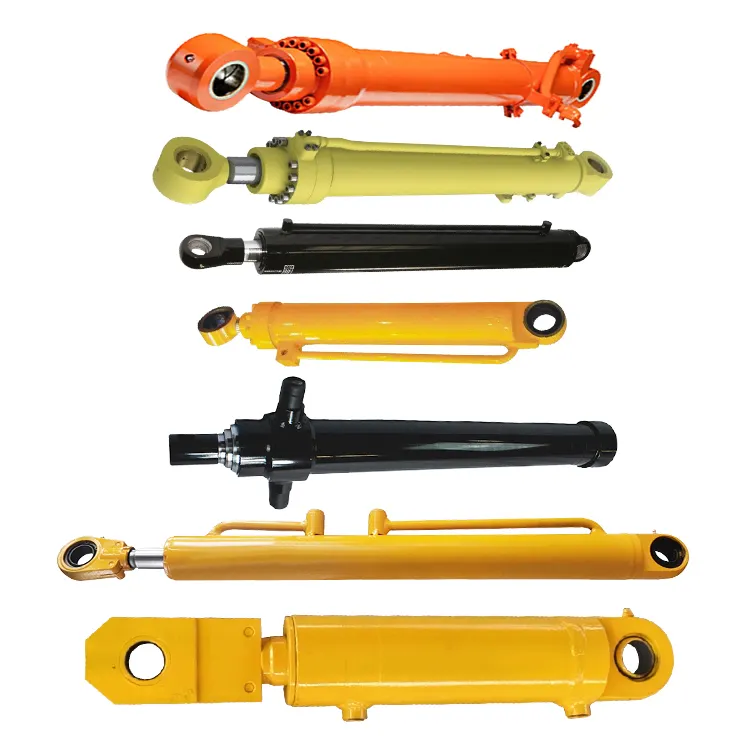
Products Description
| Product Name | SYG Series Multi-Stage Hydraulic Cylinder |
| Pressure | 7/14/16/21/31.5MPa |
| Material | Aluminum, Cast Iron,45mnb Steel, Stainless Steel |
| Stage | Up to 5 stage |
| Bore Size | 40mm–320mm, Customizable |
| Shaft Diameter | 20mm–220mm, Customizable |
| Stroke Length | 30mm–14100mm, Customizable |
| Rod Surface Hardness | HRC48-54 |
| Paint Color | Black, Yellow, Blue, Brown, Customizable |
| Mounting | Earring, Flange, Clevis.Foot, Trunnion, Customizable |
| Warranty | 1 Year |
| Delivery Time | 7-15 Days, Also depending on specific demands |
Company Profile
QIANGLIN HYDRAULIC MACHINERY CO., LTD
| QiangLin is a professional hydraulic equipment manufacturer, mainly engaged in hydraulic system design, manufacture, installation, transformation, sales, and technical services. Our manufacturing facilities are certified to the ISO 9001 standard. We are an approved supplier to many equipment manufacturers in China. We also partner with many customers from America, Canada, Australia, Germany, England, and other European Countries. Product quality, shorter delivery time, and customer satisfaction are our long-term commitments to our CHINAMFG customers. I hope to be your partner. |
FAQ:
Q1: Are you a trading company or a manufacturer?
A: We have our own factory.
Q2: Are you able to make Non-standard or customized products?
A: Yes, we can.
Q3: How long is your delivery time?
A: Normally, the delivery time is 7 days if we have stock, and 15-30 working days if we don’t. but it
also depends on the product
requirements and quantity.
Q4: Do you provide samples? are the samples free or not?
A: Yes, we can provide samples, but they are not free of charge.
Q5: What are your payment terms?
A: 30% deposit T/T or Irrevocable L/C at sight, If you have any questions, please feel free to
contact us.
Q6: What are your After-sales services?
A: Before shipment, Each individual product will be strictly inspected on our factory QC Process
System. In addition, We have a
Customer Service team to respond to customers’ questions within 12 hours. Being helpful in
solving customers’ problems is always our goal.
| Certification: | CE, ISO9001 |
|---|---|
| Pressure: | High Pressure |
| Work Temperature: | Normal Temperature |
| Customization: |
Available
|
|
|---|
.shipping-cost-tm .tm-status-off{background: none;padding:0;color: #1470cc}
|
Shipping Cost:
Estimated freight per unit. |
about shipping cost and estimated delivery time. |
|---|
| Payment Method: |
|
|---|---|
|
Initial Payment Full Payment |
| Currency: | US$ |
|---|
| Return&refunds: | You can apply for a refund up to 30 days after receipt of the products. |
|---|
Can hydraulic cylinders be used in narrow-aisle forklifts?
Yes, hydraulic cylinders can be used in narrow-aisle forklifts. In fact, hydraulic cylinders play a crucial role in the lifting and operational capabilities of these specialized forklifts designed for maneuvering in narrow spaces. Here’s an explanation of their use:
Narrow-aisle forklifts, also known as narrow-aisle reach trucks or very narrow aisle (VNA) forklifts, are designed to operate in tight spaces with narrow aisles and high racking systems. These forklifts rely on hydraulic systems, including hydraulic cylinders, to perform their lifting and positioning functions.
The hydraulic cylinder in a narrow-aisle forklift is responsible for vertically extending and retracting the mast assembly, which carries the load-carrying forks. The mast assembly typically consists of multiple stages that can reach significant heights to access the high racking systems.
When the operator activates the lifting control, hydraulic fluid is pressurized and directed to the hydraulic cylinder. The cylinder extends vertically, raising the mast and forks to the desired height. The hydraulic system provides precise control over the lifting speed and positioning, allowing for efficient and accurate load handling in narrow spaces.
In addition to the lifting function, hydraulic cylinders can also contribute to the tilting and side-shifting capabilities of narrow-aisle forklifts. Some models are equipped with hydraulic cylinders that enable the tilting of the mast or the forks, allowing for better load positioning and stability. Hydraulic cylinders can also be employed to provide side-shifting functionality, enabling the lateral movement of the forks for improved load placement.
The use of hydraulic cylinders in narrow-aisle forklifts ensures that these specialized machines have the necessary power and control to operate in tight spaces. The hydraulic system provides the force required for lifting and positioning loads, while also offering the flexibility to tilt or shift the forks as needed.
In summary, hydraulic cylinders are an integral part of narrow-aisle forklifts. They enable the vertical lifting of the mast assembly and contribute to tilting and side-shifting functionalities. By utilizing hydraulic power, these forklifts can efficiently navigate narrow aisles and handle loads in high racking systems with precision and control.
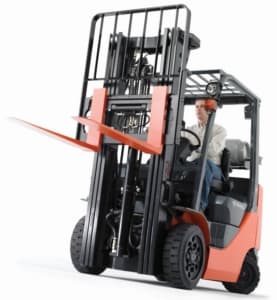
Can hydraulic cylinders be used in counterbalance forklifts?
Yes, hydraulic cylinders are commonly used in counterbalance forklifts. They play a crucial role in the operation and stability of these types of forklifts. Here’s an explanation of their use:
Counterbalance forklifts are a popular type of forklift widely used in various industries for lifting and transporting heavy loads. They are designed with a weight distribution system that includes hydraulic cylinders to provide balance and stability.
The hydraulic cylinders in counterbalance forklifts contribute in the following ways:
1. Weight Distribution:
Counterbalance forklifts feature hydraulic cylinders that are strategically positioned to help distribute the weight of the load and the forklift itself. These cylinders work in conjunction with the forklift’s frame and counterweight to create a stable equilibrium. By adjusting the extension or retraction of the hydraulic cylinders, the forklift can maintain a balanced weight distribution, ensuring safe and efficient lifting and maneuvering of loads.
2. Tilt Control:
Hydraulic cylinders are utilized in counterbalance forklifts to control the tilting of the mast and forks. These cylinders enable the operator to tilt the mast and adjust the angle of the forks as needed to safely pick up, transport, and deposit loads. By extending or retracting the hydraulic cylinders, the operator can achieve precise control over the tilt angle, enhancing stability during lifting and maneuvering operations.
3. Mast Height Adjustment:
Some counterbalance forklifts incorporate hydraulic cylinders to facilitate the adjustment of the mast height. These cylinders enable the operator to raise or lower the mast to match the height requirements of the storage racks or loading docks. The hydraulic system allows for smooth and controlled vertical movement, ensuring accurate positioning of the load at different heights.
4. Stability and Safety:
The hydraulic cylinders in counterbalance forklifts contribute to overall stability and safety. By maintaining proper weight distribution and providing controlled tilt and mast height adjustments, these cylinders help prevent tip-overs, load shifts, and other safety hazards. The hydraulic system’s responsiveness and precision control enhance the operator’s ability to handle loads safely.
In summary, hydraulic cylinders are integral components of counterbalance forklifts. They are used for weight distribution, tilt control, mast height adjustment, and overall stability and safety. By utilizing hydraulic power, these cylinders contribute to the efficient and safe lifting, moving, and positioning of heavy loads in counterbalance forklift operations.
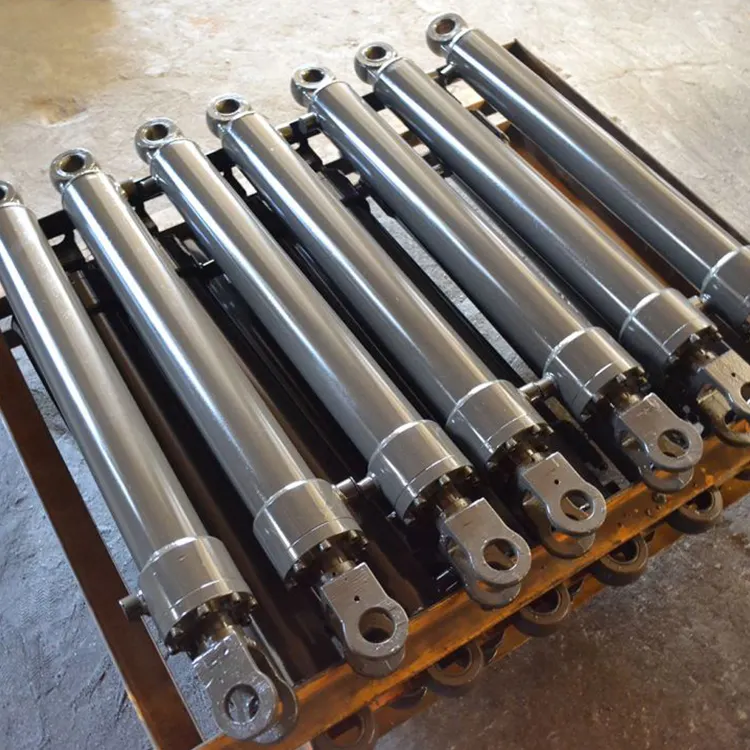
How Does a Forklift Hydraulic Cylinder Contribute to Precise Load Positioning?
A forklift hydraulic cylinder plays a crucial role in achieving precise load positioning during material handling operations. The hydraulic cylinder, along with the hydraulic system of a forklift, enables operators to accurately lift, lower, and position loads with precision. Here’s how a forklift hydraulic cylinder contributes to precise load positioning:
- Controlled Lifting and Lowering:
- Smooth and Gradual Movements:
- Load Sensing and Feedback:
- Fine Adjustment Controls:
- Stability and Balance:
The hydraulic cylinder allows for controlled lifting and lowering of the load. When the operator activates the controls to lift the load, the pressurized hydraulic fluid is directed to the hydraulic cylinder. The hydraulic pressure exerts force on the piston, causing it to extend and lift the load. By regulating the hydraulic pressure and flow, the operator can precisely control the height to which the load is raised. Similarly, during lowering, the hydraulic system enables a controlled descent, allowing for accurate placement of the load.
The hydraulic system, including the cylinder, facilitates smooth and gradual movements of the load. This is achieved through the use of control valves and hydraulic fluid flow regulation. By adjusting the valve settings, the operator can control the speed at which the hydraulic fluid enters or exits the cylinder, resulting in smooth and gradual movements. This level of control allows for precise positioning of the load, especially when working in tight spaces or when dealing with fragile or sensitive materials.
Modern forklifts often incorporate load sensing mechanisms in their hydraulic systems, which further enhance precise load positioning. Load sensing valves continuously monitor the force exerted on the hydraulic cylinder and provide feedback to the hydraulic system. This feedback enables the hydraulic system to adjust the hydraulic pressure and flow rate in real-time, ensuring that the load is positioned accurately and safely. Load sensing technology helps compensate for variations in load weight and provides the operator with greater control and precision.
Forklift hydraulic systems are typically equipped with fine adjustment controls that allow for precise load positioning. These controls, often in the form of joysticks or knobs, enable the operator to make small, incremental adjustments to the lift height or tilt angle of the forks. By manipulating these controls, the operator can fine-tune the position of the load to align it with racks, shelves, or other designated areas. These fine adjustment controls provide the operator with fine-grained control over load positioning, increasing accuracy and efficiency.
The hydraulic cylinder works in conjunction with the overall design and stability features of the forklift to contribute to precise load positioning. Forklifts are designed with a stable base, a low center of gravity, and features such as tilt cylinders and mast positioners. These elements ensure stability and balance during load handling operations, allowing for more accurate positioning of the load. The hydraulic cylinder’s smooth and controlled movements, combined with the stability features of the forklift, enable precise load placement without compromising safety or stability.
In summary, a forklift hydraulic cylinder contributes to precise load positioning through controlled lifting and lowering, smooth and gradual movements, load sensing and feedback mechanisms, fine adjustment controls, and the overall stability and balance of the forklift. These features and capabilities empower operators to handle loads with precision, align them accurately in designated areas, and optimize material handling operations in various industrial settings.


editor by CX 2023-10-20