.webp)
A 2026 Engineering Deep-Dive into Surface Topology, Cold-Work Hardening, and the Science of Triple-Life Sealing Systems.
In the precision-obsessed world of 2026 hydraulics, the internal finish of a cylinder barrel is the primary variable that determines the difference between a high-efficiency actuator and an expensive environmental hazard.
While traditional honing has been the industry standard for decades, the transition toward high-cycle automation and zero-drift safety has necessitated a superior finishing method. At tiltcylinder.net, our EP series represents the pinnacle of this evolution, utilizing the advanced CNC Skiving and Roller Burnishing (SRB) process.
The fundamental question for fleet managers and hydraulic engineers remains: Which finish is truly superior for seal life? To answer this, we must look beyond the naked eye. We must analyze the surface profile at the sub-micron level, examining how the “peaks and valleys” of a metal finish interact with the polymer chemistry of Japanese NOK seals. This white-paper provides a multi-disciplinary analysis of the mechanical, metallurgical, and tribal-economic factors that make SRB the non-negotiable choice for modern infrastructure and logistics.
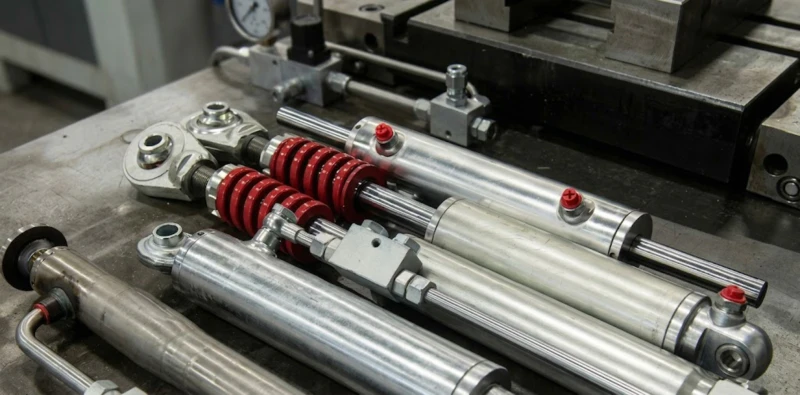
Honing: The Abrasive Legacy and its Modern Limits
Honing is an abrasive material-removal process. Using high-speed rotating stones, the process grinds the internal bore of the cylinder to reach the desired diameter. While effective at creating a cross-hatch pattern for lubrication, honing has a fundamental flaw: it creates a “jagged” surface topology.
If we look at a honed surface under an electron microscope, we see a series of sharp, microscopic peaks. In a high-load system, these peaks act like a saw. Every time the piston cycles, these metallic teeth “nibble” away at the polyurethane seal lip. This abrasive wear is the primary cause of premature Internal Pressure Bypass and the loss of “Zero-Drift” performance. Furthermore, honing does not alter the molecular structure of the steel; it merely scratches it to shape, leaving the surface susceptible to the micro-pitting caused by fluid cavitation.
Skiving and Roller Burnishing: The Cold-Working Revolution
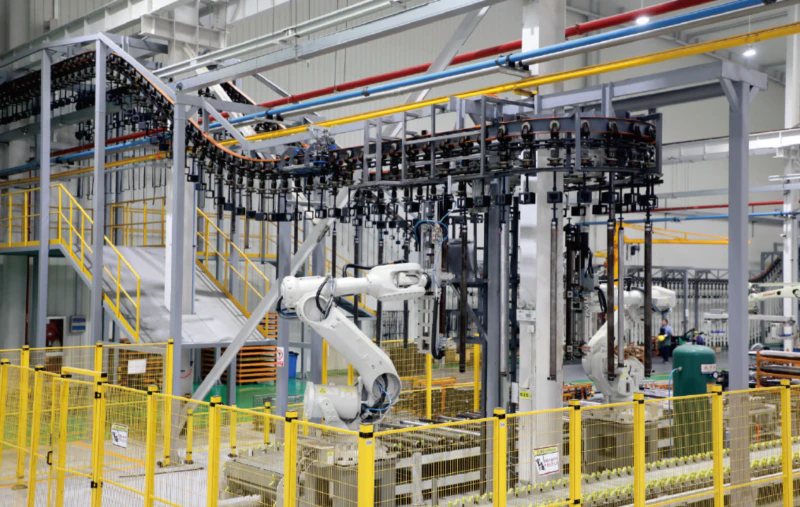
The EP series utilizes a superior two-step CNC process. First, the Skiving tool-head removes the bulk of the internal material with a series of knives, establishing a perfectly concentric bore. Then, the Roller Burnishing head follows. Unlike honing, burnishing is a non-abrasive, cold-working process.
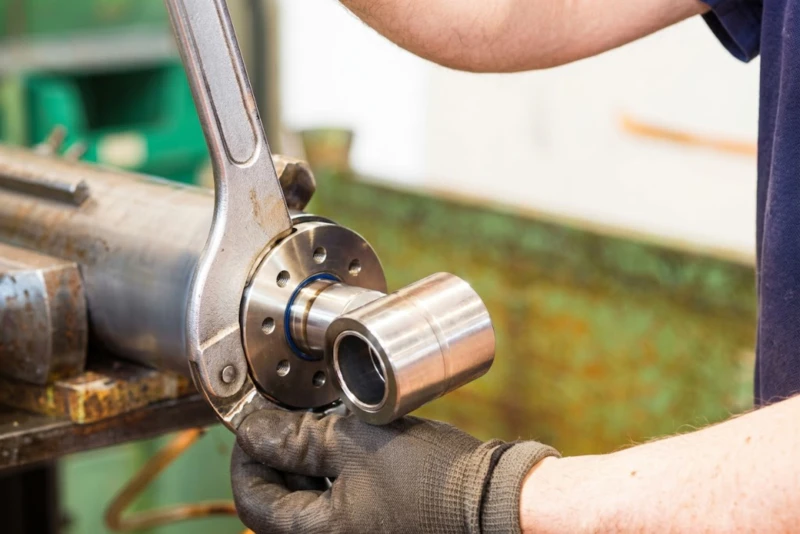
During burnishing, a series of hardened steel rollers apply high pressure to the internal wall. This physically “crushes” the peaks of the metal into the valleys. This results in two major engineering advantages:
– Plateau Topography: Instead of sharp peaks, SRB creates a flat, “plateaued” surface. This increases the load-bearing area of the metal, allowing the seal to float on a consistent film of oil without being shredded.
– Cold-Work Hardening: The pressure from the rollers increases the surface hardness of the ST52.3 steel by up to 10 to 15 percent. This hardened skin is significantly more resistant to the abrasive grit and chemical leachate found in environmental and agricultural applications.
– Ra 0.2 micron Mirror Finish: The resulting finish is so smooth it achieves a mirror-like appearance, reducing the coefficient of friction by over 30 percent compared to standard honing.
The EP Series “Mirror-Bore” Advantage
3x Seal Longevity
Eliminating sharp honed-peaks reduces the abrasive wear on Japanese NOK seal lips, extending service life by up to 300 percent.
Hardened Skin
Roller burnishing cold-works the steel wall, creating a denser, harder surface that resists cavitation-pitting and debris-scoring.
Thermal Reduction
Lower friction coefficients result in a 15 to 20 degree Celsius drop in hydraulic oil temperature during high-frequency operation.
Concentric Precision
CNC skiving ensures near-perfect cylinder roundness, eliminating the side-loading stresses that cause asymmetrical seal failure.
Tribology: The Interaction of Polymers and Plateaus
In the 2026 industrial sector, we design for Dynamic Sealing Efficiency. A seal does not actually touch the metal; it floats on a microscopic film of oil. For this film to be stable, the surface finish must be incredibly precise.
The Stick-Slip Crisis: Honed cylinders often suffer from “Stiction” (static friction). This causes the jerky, shuddering movement common in old forklifts or cranes. This shuddering creates massive pressure spikes that can blow out hydraulic hoses.
Because our EP series SRB finish achieves an Ra 0.2 micron smoothness, the “Stick-Slip” phenomenon is virtually eliminated. This allows for the micro-adjustments required in autonomous harvesting or automated warehouse picking, where a movement of even 2 millimeters must be executed with zero vibration.
.webp)
Economic Intelligence: The ROI of the Mirror Standard
While a honed cylinder may have a 10 percent lower initial purchase price, the Total Cost of Ownership (TCO) is significantly higher. For a fleet manager, the “Mirror Standard” of the EP series translates into direct financial gains:
- Reduced Oil Degradation: Cooler operating temperatures (due to lower friction) double the life of your hydraulic oil, reducing disposal costs and fluid spend.
- Minimized Seal Replacement: A machine equipped with SRB cylinders can typically double its mean-time-between-failure (MTBF) for seal kit replacements.
- Lower Energy Consumption: In electric forklift fleets, the 30 percent reduction in cylinder friction can extend battery life by up to 12 percent per shift.
- Higher Resale Valuation: Machines with verified EPYY hydraulics maintain better structural health and higher resale values in the secondary market.
Conclusion: The Surface is the Solution
As we move further into 2026, the complexity of global infrastructure demands a new level of mechanical integrity. We have entered an era where Surface Topology is as important as material grade. By choosing CNC Skiving and Roller Burnishing over traditional Honing, we are not just providing a smoother surface; we are providing a denser, harder, and more resilient mechanical foundation. At tiltcylinder.net, we combine this metallurgical mastery with Japanese sealing excellence to ensure that your machines remain stable, efficient, and profitable. The EP series is the mirror of our commitment to your success.
Upgrade to the Mirror Standard Today
Eliminate seal-shredding friction and internal drift. Connect with our engineering team for specialized EP series mirror-bore solutions or high-volume OEM support.
CNC Skiving & Burnishing
Ra 0.2 micron Standard
Worldwide Shipping