.webp)
An Exhaustive Engineering Deep-Dive into Material Yield Strength, Weldability, and Fatigue Life in 2026 Hydraulic Actuation.
In the design of high-pressure hydraulic cylinders, the choice of raw material is the single most critical decision impacting safety, longevity, and total cost of ownership. While various steel grades exist, the competition between ST52.3 (E355) and CK45 (C45E) remains the central debate in modern heavy-duty manufacturing.
As hydraulic systems in 2026 reach operating pressures of 350 bar and beyond, the structural demands on the cylinder barrel and rod have transcended traditional limits. At tiltcylinder.net, we recognize that material selection is not just about tensile strength—it is about the synergy of weldability, impact resistance, and elastic recovery.
This white-paper provides a granular, multi-disciplinary comparison of ST52.3 and CK45. We examine the atomic carbon equivalents that dictate weld integrity, the yield-to-tensile ratios that prevent barrel swelling, and the fatigue limits that determine the difference between a 10-year service life and a catastrophic failure. For engineers and procurement managers, understanding these nuances is the foundation of high-performance fleet management.
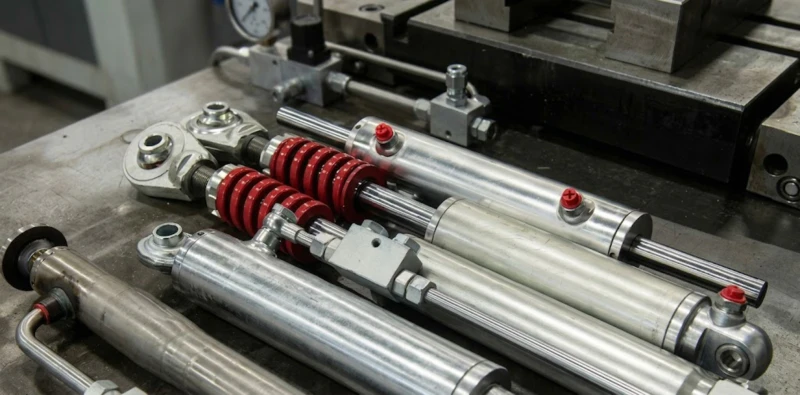
Material Profiles: Atomic Composition and Yield Characteristics
ST52.3 (DIN 17100 / E355)
ST52.3, increasingly referred to by its EuroNorm designation E355, is a low-carbon, high-manganese structural steel. It is specifically formulated for high-strength applications where weldability and impact toughness are paramount. With a carbon content limited to approximately 0.22 percent, it offers an exceptional balance of ductility and strength.
The defining characteristic of ST52.3 is its Yield Strength. In the 2026 industrial sector, we rely on the Yield point (the stress level where permanent deformation begins) more than the ultimate tensile strength. ST52.3 provides a minimum yield of 355 MPa, making it the ideal substrate for seamless hydraulic barrels that must remain dimensionally stable under massive internal fluid pressure.
CK45 (DIN 17200 / C45E / 1045)
CK45 is a medium-carbon steel (approximately 0.45 percent carbon) designed for hardening and tempering. Because of its higher carbon content, it can achieve a higher surface hardness and ultimate tensile strength than ST52.3. This makes CK45 a popular choice for piston rods and shafts where abrasion resistance is a key concern.
However, this increased carbon brings a significant drawback for high-pressure cylinder barrels: Brittleness. CK45 has a higher risk of “brittle fracture” in cold environments or under high-frequency shock loads. Furthermore, its weldability is significantly compromised, requiring intensive pre-heating and post-weld heat treatments to prevent “Cold Cracking” in the Heat Affected Zone (HAZ).
Mechanical Comparison: The 2026 Data Standard
| Property | ST52.3 (E355) | CK45 (1045) |
|---|---|---|
| Yield Strength (Min) | 355 MPa | 305 – 340 MPa (Normalized) |
| Ultimate Tensile Strength | 490 – 630 MPa | 570 – 700 MPa |
| Weldability Rating | Excellent (Low Carbon) | Poor (Requires Pre-Heat) |
| Impact Toughness (-20 C) | High (Ideal for Arctic) | Low (Brittle Risk) |
| Surface Hardening | Limited | Excellent (Induction) |
The Weldability Critical Path: Joint Fusion Excellence
For a hydraulic cylinder, the weld between the barrel and the flange or base is the most common point of structural failure. In high-pressure systems, this joint is subjected to massive shear forces every time the cylinder reaches full extension.
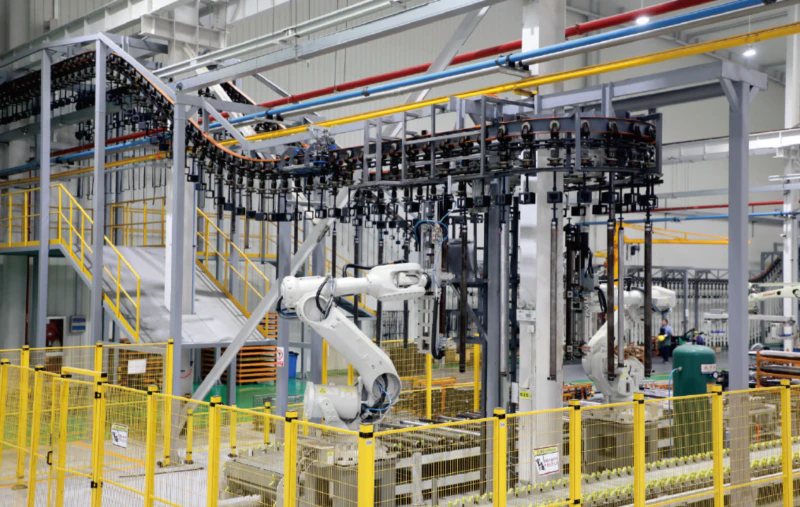
The ST52.3 Advantage: Because ST52.3 has a low Carbon Equivalent (CE), it can be fused using Robotic Submerged Arc Welding (SAW) with near-zero risk of porosity or embrittlement. The resulting weld joint is often as strong as the parent metal.
Conversely, welding CK45 for high-pressure barrels often leads to “Martensite Formation” in the heat-affected zone. Martensite is an extremely hard but brittle crystal structure. Under the vibration and pressure surges of a 2026 crawler crane or forklift operation, these brittle weld zones can develop micro-cracks that lead to catastrophic blowout. At tiltcylinder.net, we exclusively utilize ST52.3 for all pressure-bearing barrels to ensure 100 percent joint fusion integrity.
Elastic Recoil: Preventing Barrel Swelling and Drift
Barrel swelling is the silent killer of hydraulic efficiency. When a cylinder lifts a load at 100 percent capacity, the internal fluid pressure creates hoop stress on the barrel wall. If the yield strength is insufficient, the barrel undergoes microscopic “Elastic Expansion.”
When the barrel expands, the piston seals lose their tight interference with the bore. This allows oil to bypass the piston—the leading cause of Hydraulic Drifting. ST52.3 (E355), with its high yield strength, ensures that the barrel remains rigid even at 350 bar surge pressures.
To maximize this benefit, we combine ST52.3 with our Ra 0.2µm Mirror-Bore Finish. This ultra-smooth surface, achieved via CNC roller burnishing, reduces friction and localized heat, ensuring the ST52.3 barrel maintains its metallurgical properties over millions of operational cycles.
The EP Series Metallurgical Advantage
E355 Yield Grade
Utilizing high-yield ST52.3 (E355) ensures zero dimensional expansion under heavy loads, eliminating internal bypass drift.
Arctic Toughness
Superior impact resistance at sub-zero temperatures makes our ST52.3 series the gold standard for outdoor construction and logistics.
Unified Fusion
Low-carbon equivalents allow for deepest robotic SAW weld penetration, creating an airtight, fail-safe structural chassis.
Fatigue Resilience
High ductility prevents the onset of micro-cracks in high-cycle applications like waste compactors and AWP leveling.
The EP Strategy: Hybrid Material Engineering
Engineering is about choosing the right tool for the right job. In the EPYY Series, we do not simply choose one material—we utilize a Hybrid Material Strategy to maximize the ROI for our customers.
– For the Barrel: We exclusively use ST52.3 (E355). Its superior weldability and internal pressure containment properties make it the only safe choice for the hydraulic “pressure vessel.”
– For the Rod: We utilize CK45 (1045), induction-hardened to HRC 55. The rod is not welded in critical zones and requires high surface hardness to resist debris-pitting and seal-shredding longitudinal scratches.
– For Cold Environments: We offer EP-Arctic series, which utilizes specialized ST52.3 with Charpy V-notch impact testing to ensure safety in -40 degree climates.
.webp)
Economic Intelligence: ROI of Material Selection
While CK45 is often cheaper in its raw form, the Total Cost of Ownership (TCO) tells a different story. For a fleet manager, the failure of a single outrigger cylinder due to a weld crack or barrel expansion can lead to over 10,000 USD in downtime and salvage costs.
- Reduced Downtime: ST52.3 barrels resist fatigue-cracking, extending the mean time between failures (MTBF) by 40 percent.
- Zero-Drift Maintenance: By preventing barrel expansion, you maintain seal integrity, reducing the need for costly seal replacements.
- Arctic Capability: A single material standard (ST52.3) allows your fleet to move between climates without risk of brittle structural failure.
- Resale Value: Machines equipped with high-spec E355/ST52.3 hydraulics maintain higher valuation in the secondary rental market.
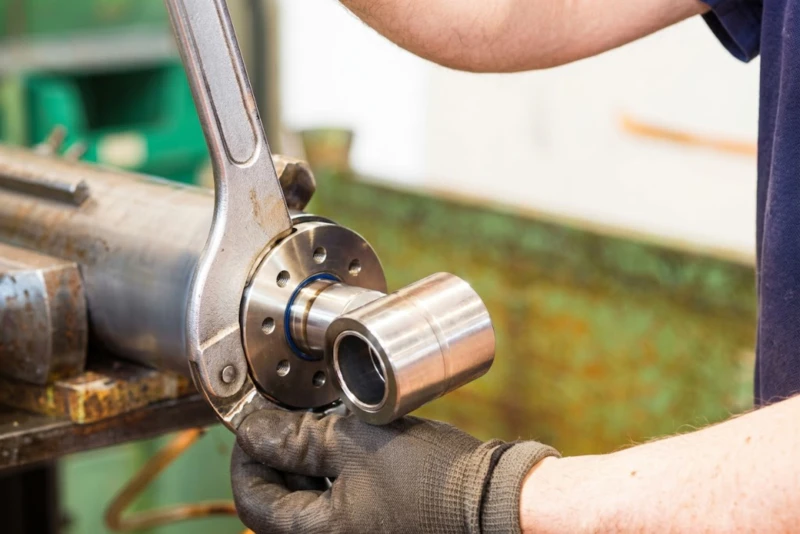
Conclusion: The Foundation of Lifting Confidence
As we move further into 2026, the complexity of global logistics and high-reach construction demands a new level of mechanical integrity. Material selection is no longer a luxury; it is the early-warning system that saves machines. By choosing ST52.3 for barrels and hardened CK45 for rods, we protect your infrastructure and your profitability. At tiltcylinder.net, we combine world-class metallurgy with precision manufacturing to provide the actuators that ensure your machines remain silent, stable, and safe.
Forge Your Fleet with Superior Metallurgy Today
Eliminate structural failure and barrel swelling. Connect with our engineering team for custom ST52.3 high-pressure solutions or high-volume OEM support.
ST52.3 / E355 Specialists
100 percent NDT Tested
Worldwide Shipping