.webp)
A 2026 Engineering Compendium on Polymer Elasticity, Lip-Geometry Optimization, and Tribal-Economic Stability in High-Load Actuation.
In the precision-driven industries of 2026, the term Zero-Drift is no longer a marketing claim; it is a critical safety and operational requirement. Whether holding a multi-ton load on a forklift mast or maintaining the luffing angle of a crawler crane, the integrity of the sealing system dictates the threshold of success.
Hydraulic drifting is the physical result of internal pressure bypass. While material choice for the barrel and rod provides the structural cage, the seal is the living, dynamic component that must contain energy at pressures exceeding 35 megapascals (MPa). At tiltcylinder.net, our EP series is engineered with a singular focus on eliminating this bypass. To achieve this, we have standardized the integration of Japanese NOK seals, widely recognized by hydraulic engineers as the global gold standard.
This white-paper provides a granular analysis of why NOK technology remains unparalleled. We explore the molecular chemistry of specialized polyurethanes, the tribological interaction between seal lips and Ra 0.2 micron mirror bores, and the long-term economic ROI of investing in premium sealing matrices. For fleet managers and OEM engineers, this is the definitive guide to understanding the microscopic barrier that prevents macroscopic failure.
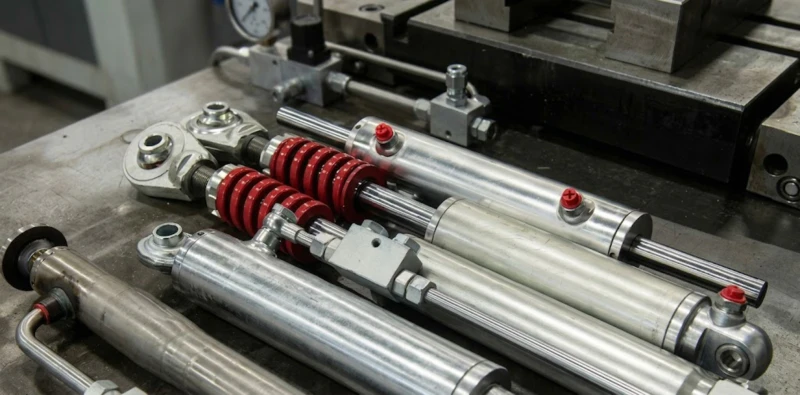
Molecular Resilience: The NOK Polyurethane Advantage
The core challenge of hydraulic sealing in 2026 is Compression Set. When a cylinder holds a load for hours, the seal is under constant deformation stress. Standard Nitrile (NBR) or low-grade polyurethanes often undergo molecular relaxation. They lose their spring-back force, creating a microscopic gap through which oil can seep.
The Japanese NOK Difference: NOK utilizes a proprietary AU (Adipate-based Polyurethane) formulation that exhibits a significantly higher modulus of elasticity. Even after thousands of high-pressure hold cycles at temperatures reaching 80 degrees Celsius, the NOK seal maintains its interference fit against the cylinder wall. This resilience is the fundamental reason why the EP series can guarantee Zero-Drift in high-reach aerial work platforms, where even a 1mm shift could destabilize the entire machine basket.
The Surface Interface: NOK Lips and Mirror Bores
A seal is only as good as the surface it slides upon. In traditional honed cylinders, the surface finish often presents jagged microscopic peaks. These peaks act like tiny saws, shredding the seal lip over time. At tiltcylinder.net, we combine NOK technology with our Ra 0.2 micron mirror-burnished bores.
This synergy creates a Plateau Topography. Because the metal surface is mirror-smooth, the NOK seal can maintain a consistent hydrodynamic film of oil. This film acts as a lubricant and a secondary seal. By reducing the coefficient of static friction (stiction), we eliminate the jerky movement known as stick-slip. This ensures that the high-frequency micro-adjustments required for precision material handling are executed without vibrating the machine chassis or compromising the seal’s structural integrity.
The EP Series Sealing Advantage
Zero-Bypass Hold
Japanese NOK multi-lip matrices provide the industry’s highest resistance to compression set, ensuring a liquid-tight lock at 350 bar.
Thermal Stability
Specially formulated polymers maintain their tensile strength and elasticity from negative 30 to positive 110 degrees Celsius.
Low-Friction Life
Mirror-bore interaction reduces heat generation by 30 percent, preventing the seal hardening that leads to catastrophic blowout.
Abrasive Shield
Integrated NOK rod wipers utilize a reinforced lip to scrape away silica dust and mud before it can penetrate the main pressure seals.
Lip Geometry: The Architecture of Pressure Containment
In the 2026 industrial environment, we no longer rely on simple O-rings for load-holding. The EP series utilizes NOK U-Cup and Multi-Lip profiles. These geometries are self-energizing; as the hydraulic pressure increases, the force pushing the seal lip against the bore also increases.
This ensures a variable sealing force that matches the load. For high-reach construction, this means the cylinder is just as tight at 10 percent load as it is at 100 percent load. Furthermore, we integrate specialized Buffer Seals. The buffer seal acts as a primary pressure absorber, dampening the sudden surge peaks that occur during machine stops. This protects the main rod seal from the “spike damage” that typically causes budgets-grade cylinders to weep oil after only 500 hours of service.
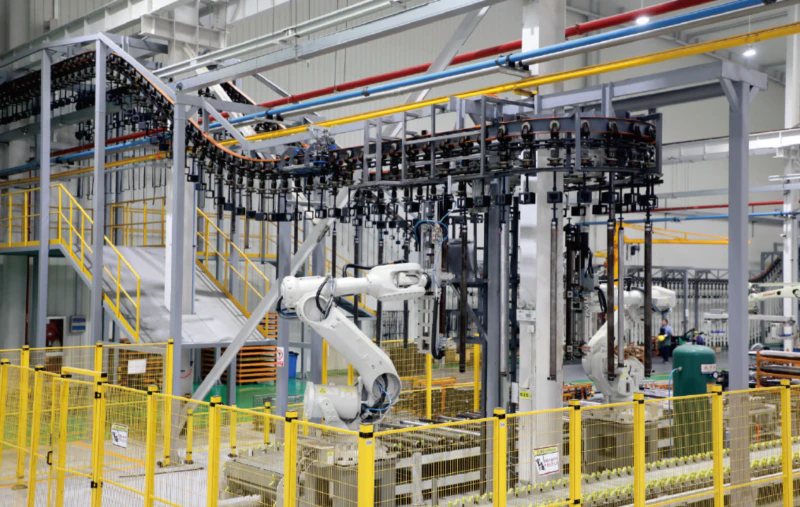
Manufacturing Excellence: Forging Trust through Automation
Even a world-class NOK seal will fail in hours if it is contaminated during installation. Our production facility is a benchmark for Industrial 4.0 Hydraulic Fabrication. Every cylinder component—the barrel, the rod, the piston—undergoes multi-stage ultrasonic cleaning to remove microscopic weld spatter and machining burrs before entering the assembly zone.
.webp)
Economic Intelligence: The ROI of Japanese NOK Quality
While a budget seal kit may save 50 USD initially, the Total Cost of Ownership (TCO) is dramatically higher. For a fleet manager, the failure of a single outrigger cylinder or forklift mast ram due to internal bypass translates into significant financial losses:
- Reduced Downtime: Machines equipped with NOK seals typically experience 300 percent longer mean-time-between-failure (MTBF) compared to budget alternatives.
- Eliminated Hydraulic Recalibration: Zero-Drift performance means operators spend less time re-adjusting loads, increasing pick-velocity in warehouses by up to 10 percent.
- Lower Environmental Fines: External seal integrity prevents the oil leakage that leads to soil contamination and expensive environmental cleanup fines.
- Preserved Resale Value: Used machines with verified EPYY hydraulics and healthy rod surfaces command much higher prices in the secondary rental market.
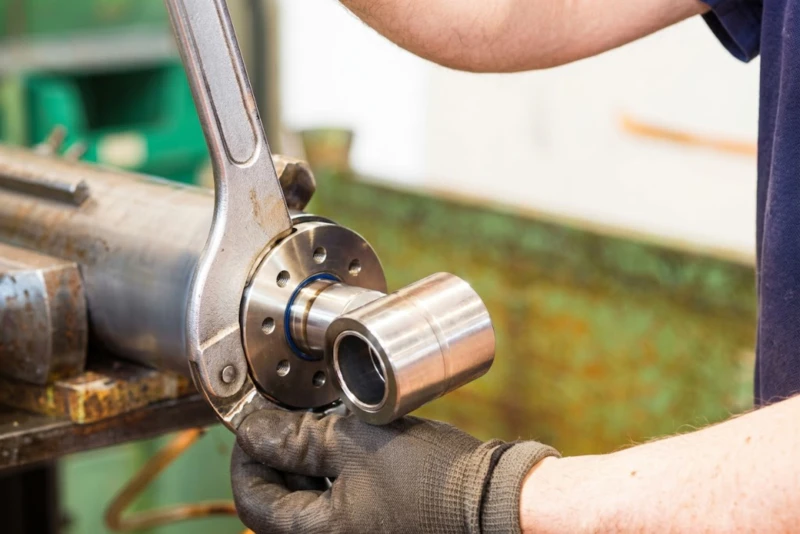
Conclusion: The Hydraulic Barrier of Success
As we move further into 2026, the complexity of global logistics and high-reach construction demands a new level of mechanical integrity. Sealing technology is no longer just a component; it is the non-negotiable link between hydraulic power and structural stability. By choosing Japanese NOK seals and pairing them with our metallurgical excellence, we provide the actuators that ensure your machines remain silent, stable, and safe. At tiltcylinder.net, we combine this precision mastery with automated manufacturing to protect your fleet’s productivity. The EP series is the foundation upon which your lifting confidence is built.
Upgrade to Zero-Drift Performance Today
Eliminate internal bypass and load sag. Connect with our engineering team for custom EP series sealing solutions or high-volume OEM support.
Japanese NOK Specialists
Zero-Drift Technology
Worldwide Shipping