.webp)
The 2026 Engineering Guide to Identifying Internal Bypass, Sealing Failures, and Structural Deflection in High-Load Actuators.
In the precision-driven world of modern industrial machinery, “drift” is the silent enemy of safety and productivity. Whether it is a 100-ton crane boom or a high-reach forklift mast, the ability to hold a load stationary is the most fundamental metric of hydraulic integrity.
Hydraulic drifting—the unintended movement of a cylinder rod when the control valve is in neutral—is rarely a single-point failure. It is a complex symptom of fluid dynamics, metallurgical fatigue, and sealing physics. At tiltcylinder.net, our EP series is engineered to eliminate drift through “Zero-Bypass” technology. However, for fleet managers maintaining older equipment, understanding the root causes is essential for reducing the Total Cost of Ownership (TCO). In this exhaustive guide, we explore the top five causes of cylinder drifting and provide professional engineering protocols to diagnose and fix them, ensuring your operations remain safe and efficient.
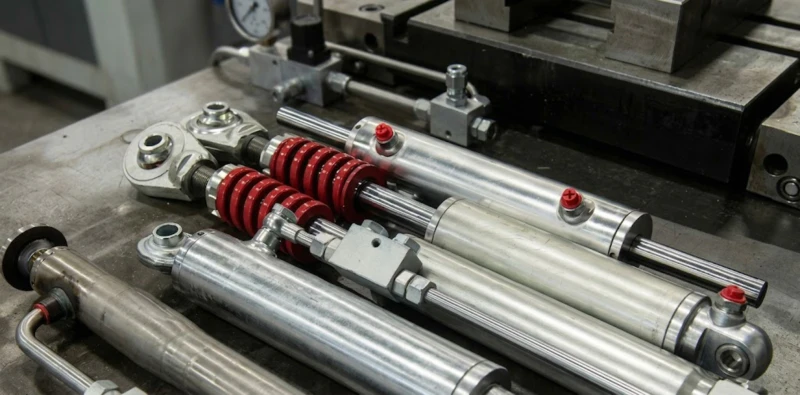
Internal Piston Seal Bypass: The Primary Culprit
The most common cause of hydraulic drifting is internal leakage across the piston seals. In a double-acting cylinder, the piston separates two pressure chambers. Drift occurs when high-pressure oil from the load-holding side of the piston bypasses the seals and enters the low-pressure side. This is often caused by seal hardening (due to thermal spikes) or abrasive wear from contaminated hydraulic fluid.
The Technical Solution: For heavy-duty applications, we exclusively utilize Japanese NOK multi-lip polyurethane seals. Unlike standard rubber, these seals are engineered to maintain their profile even under 25MPa of static hold pressure. To diagnose this, a “By-Pass Test” should be conducted: extend the cylinder fully, stall the pump, and measure the return flow. Any oil exiting the retraction port while under load indicates a failed piston seal.
Manifold and Check Valve Malfunction: The External Bypass
If the cylinder seals are intact but the load still sinks, the issue likely resides in the counterbalance valves or pilot-operated check valves. These components are designed to “lock” the oil in the cylinder. If the valve seat is contaminated with even a 10-micron particle of steel, the valve cannot close fully. This creates a leak path back to the reservoir, causing the cylinder to drift under gravity.
The Technical Solution: Integrated manifold blocks, like those in the EP series, minimize the number of potential leak points. To fix valve-induced drift, the manifold should be disassembled and the check valves inspected under a microscope for “pitting” on the seat. Often, a simple ultrasonic cleaning of the valve cartridges is enough to restore the zero-leak seal.
The EP Series “Anti-Drift” Advantage
Ra 0.2µm Mirror Bores
Our CNC skiving process reduces friction and stiction, ensuring the seals maintain a vacuum-tight interface against the bore wall.
NOK Sealing Matrix
Multi-lip polyurethane seals from Japan provide superior memory and resistance to chemical degradation from modern hydraulic fluids.
ST52.3 Steel Integrity
High-yield strength seamless steel prevents “barrel swelling” under heavy loads, which is a leading cause of internal pressure bypass.
100% Load Testing
Every cylinder undergoes a 30-minute hydrostatic pressure hold test at 1.5x rated pressure to verify zero-drift performance before dispatch.
Barrel Swelling and Structural Fatigue
A factor often overlooked by maintenance technicians is barrel deformation. In older or budget-built cylinders, the steel used in the barrel may not have a high enough yield strength for the application. Over time, under maximum luffing or lifting pressures, the barrel undergoes microscopic “elastic swelling.” When the barrel expands, even by a few microns, the piston seals lose their compressive interference with the bore.
This results in intermittent drift—the cylinder sinks under heavy loads but holds steady under light loads. At tiltcylinder.net, we eliminate this through the use of ST52.3 (E355) seamless steel. By ensuring the barrel remains rigid even at 35MPa surge pressures, we preserve the seal’s physical environment, preventing drift throughout the cylinder’s life cycle.
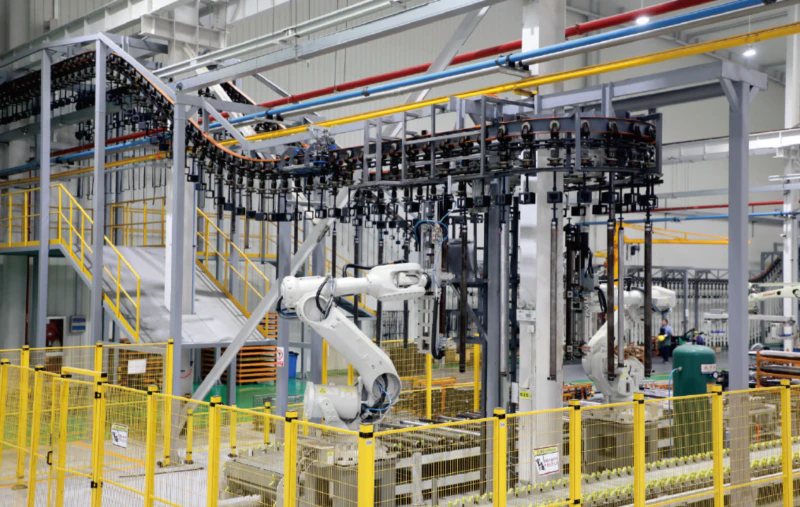
Fluid Contamination: The Micro-Abrasive Factor
Hydraulic fluid hygiene (ISO 4406) is the single most important factor in preventing drift. When oil becomes contaminated with silica or metallic particles, it acts as a liquid sandpaper. These particles erode the mirror finish of the cylinder bore and the sharp edges of the seal lips. Once the seal lip is rounded, it can no longer maintain a high-pressure line-contact with the bore, allowing oil to seep past.
The Pro-Fix: If drift is detected alongside “discolored” oil, a full system flush is required. Replacing the cylinder without replacing the oil and filters is a recipe for immediate re-failure. We recommend a filtration level of 10-microns or better to protect the Ra 0.2µm finish of our EP series cylinders.
.webp)
Engineering Protocol: How to Fix Hydraulic Drift
When you identify drifting in your fleet, follow this systematic diagnostic and repair protocol to restore operational safety:
- The “Valve Isolation” Test: Disconnect and cap the hydraulic lines to the cylinder while it is under load. If the drift continues, the leak is internal (piston seals). If the drift stops, the leak is external (control valve or manifold).
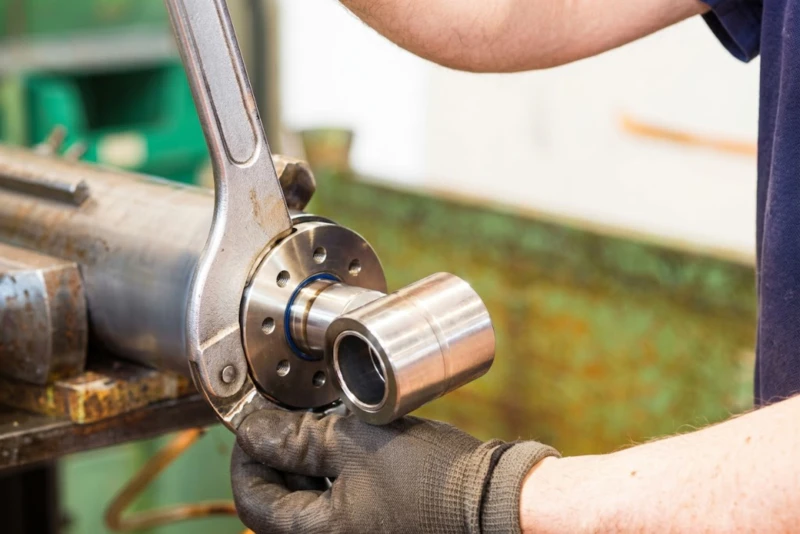
- Seal Kit Replacement: When replacing seals, ensure the use of an EP series-compatible kit. Inspect the cylinder bore for scoring. If scratches are deep enough to be felt with a fingernail, the barrel must be replaced or re-burnished.
- Manifold Cartridge Cleaning: Remove the counterbalance valves. Inspect the O-rings and seats. A slight re-seating of the valve can often solve drift issues in crane outrigger systems.
- Hydraulic System Bleeding: Air in the system is compressible and can mimic the symptoms of drifting. Always cycle the cylinder 5 times to full stroke to purge air after any maintenance.
Conclusion: The Hydraulic Link to Safety
Hydraulic drifting is more than an inconvenience; it is a leading indicator of systemic component failure. By understanding the top five causes—ranging from internal bypass to metallurgical fatigue—fleet managers can implement a predictive maintenance strategy that reduces downtime and increases safety. At tiltcylinder.net, we combine world-class ST52.3 metallurgy with Japanese sealing technology to provide the actuators that ensure your machines never stop holding their ground.
Eliminate Drift from Your Fleet Today
Stop the sink and increase your lifting confidence. Connect with our engineering team for custom EP series anti-drift solutions or high-volume OEM support.
100% Quality Tested
Worldwide Shipping
Anti-Drift Technology