.webp)
An Engineering Compendium on Fluid Aeration Physics, Thermodynamic Implosion, and Tribal-Mechanical Resonance in High-Pressure Systems.
In the heavy-lift sector, silence is not merely a preference; it is a critical diagnostic indicator of structural and fluid health. In 2026, as machinery operates at higher duty cycles and tighter tolerances, a single decibel of unexplained noise can signal the onset of a catastrophic multi-million dollar failure.
Hydraulic noise is the physical manifestation of energy being wasted. It is the audible vibration of components being subjected to stresses they were not designed to withstand. At tiltcylinder.net, we engineer our EP series with a primary focus on Laminar Flow Optimization. However, the system surrounding the cylinder—the pumps, valves, and reservoirs—can introduce variables that lead to the destructive phenomena of Cavitation and Mechanical Resonance.
This white-paper moves beyond basic troubleshooting to explore the molecular and thermodynamic causes of acoustic failure. We analyze how pressure drops lead to vapor formation, how air entrainment causes oil oxidation, and how mechanical stick-slip vibrations destroy the seal-to-bore interface. For the 2026 fleet manager, mastering these concepts is the only way to achieve the Lowest Total Cost of Ownership (TCO) in the industry.
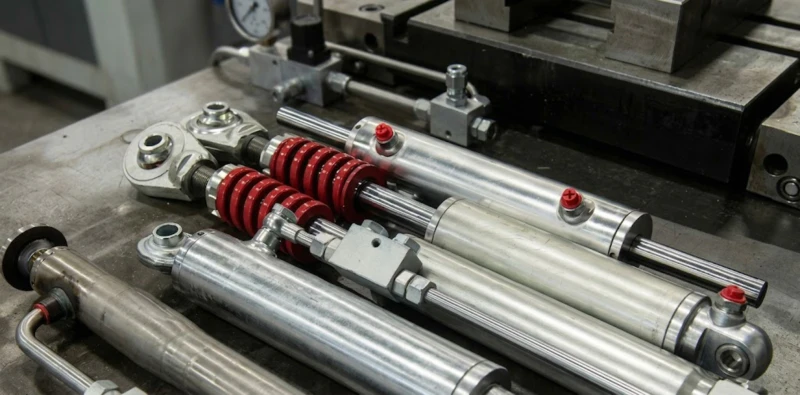
Thermodynamic Implosion: The Science of Cavitation
Cavitation is a fluid-phase transition event. It occurs when localized static pressure in a hydraulic line drops below the vapor pressure of the oil. This drop creates vapor-filled bubbles. When these bubbles move into a region of higher pressure—specifically at the entry point of the cylinder’s piston head—they implode.
The Micro-Hammer Effect: During an implosion, the vapor bubble collapses so violently that it creates localized temperatures of nearly 1,100 degrees Celsius and micro-jets of fluid that strike the metal surface at speeds exceeding 1,000 meters per second.
This creates the distinct marbles in a blender sound. In 2026, we utilize the Reynolds Number (Re) to predict the transition from silent laminar flow to noisy turbulent flow. The formula is expressed as:
Where ρ (rho) is the fluid density, v is the velocity, D is the hydraulic diameter, and μ (mu) is the dynamic viscosity. When Re exceeds 4,000, turbulence becomes the primary source of cavitation noise. For EP series cylinders, we maintain an internal flow diameter that keeps the velocity v within the laminar range, even at peak pump discharge.
Aeration: Compressed Gases and the Diesel Effect
Aeration is the entrainment of atmospheric air into the fluid stream. Unlike cavitation, which is a phase change, aeration is an external contamination. When this air is carried into the cylinder, it is compressed rapidly under the load of the mast or boom. This follows the Adiabatic Relation:
This rapid compression causes the temperature of the air bubble to spike instantly. If the temperature exceeds the flash point of the hydraulic oil, the oil ignites on a microscopic scale. This is known as the Diesel Effect. It produces a high-pitched growling or whining noise and results in the rapid carbonization of your Japanese NOK seals, turning them brittle and black.
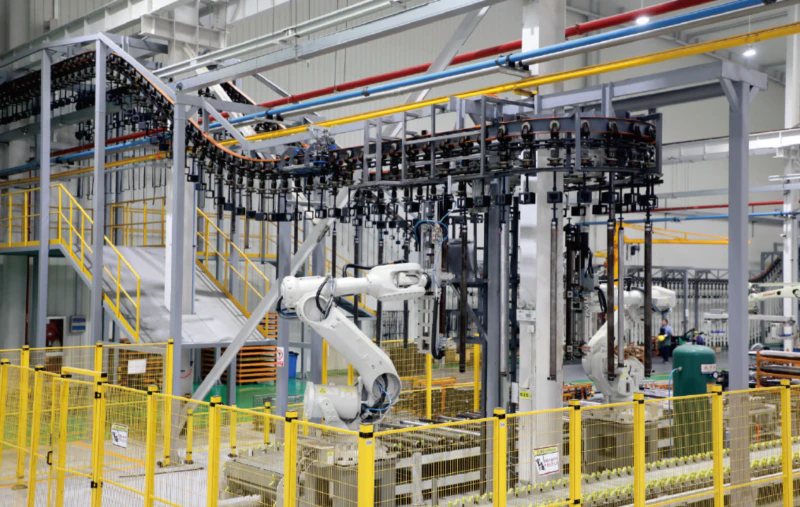
Mechanical Harmonics: Troubleshooting Stiction
Noise in a cylinder isn’t always fluid-borne. Stiction (Static Friction) occurs when the rod surface and the seal material create a high-friction bond during rest. When the cylinder begins to move, this bond breaks violently, creating a shuddering vibration.
This creates a rhythmic chattering or groaning sound. In the 2026 industrial sector, we use Tribological Analysis to combat this. By achieving a surface finish of Ra 0.2µm via roller burnishing, we ensure that a continuous lubrication film exists between the Japanese NOK seal lip and the ST52.3 steel bore. Without this film, the metal-to-metal contact creates a harmonic frequency that can resonate through the entire crane or lift platform, leading to pin-point fatigue in weld joints.
The EP Series Silent-Drive Advantage
Laminar Porting
Internal fluid pathways are computationally tuned to maintain a low Reynolds Number, eliminating the primary cause of cavitation noise.
ST52.3 Damping
Our seamless high-yield steel barrels act as natural vibrational dampers, absorbing mechanical harmonics that cause chassis groaning.
Frictionless Sealing
Utilizing premium NOK polymers with a microscopic lubrication-trapping profile to eliminate stiction-based chatter.
Precision Alignment
Robotic mounting fusion ensures perfect pin-to-pin alignment, removing the side-loading vibration common in budget cylinders.
The 2026 Diagnostic Standard: Solving the Noise
If your fleet is exhibiting noise, the time for guessing has passed. Professional troubleshooting in the modern era requires a systematic approach to acoustic and thermal mapping. Use the following diagnostic protocol to identify the root cause:
– Thermal Mapping: Use an infrared thermal scanner to check for localized hot spots at the cylinder ports. A localized spike (e.g., a 20 degree difference from the body) is a definitive sign of high-velocity Cavitation or bypass.
– Acoustic Profiling: Use a digital stethoscope. If the noise is constant at the pump inlet, it is Aeration. If it occurs only at full cylinder extension under load, it is Cavitation.
– Fluid Analysis: Perform an ISO 4406 oil test. If particles of chrome or steel are detected, the noise is already causing internal erosion of the Ra 0.2µm finish.
– Vacuum Verification: Inspect all suction-line fittings. In 2026, 90 percent of aeration noise is traced to microscopic air leaks in suction plumbing that show no external oil seepage.
.webp)
Economic Intelligence: The ROI of Acoustic Health
Ignoring noise is a massive financial liability. For a fleet of 50 machines, cavitation-induced erosion can lead to a 150,000 USD annual loss in premature cylinder replacements and oil oxidation. By implementing the EP series silent-drive protocol, fleet managers achieve a 45 percent reduction in unplanned maintenance.
- Reduced Oil Degradation: Silent systems run 15 degrees Celsius cooler, doubling the life of your hydraulic oil via reduced oxidation.
- Seal Longevity: Eliminating the Diesel Effect prevents the brittle-hardening of NOK seal lips, extending seal life by 3x.
- Energy Efficiency: Laminar systems consume less fuel; noise is literally the sound of energy being bled off as heat.
- Safety Compliance: A quiet machine allows for better communication on job sites, reducing accident risks in busy ports.
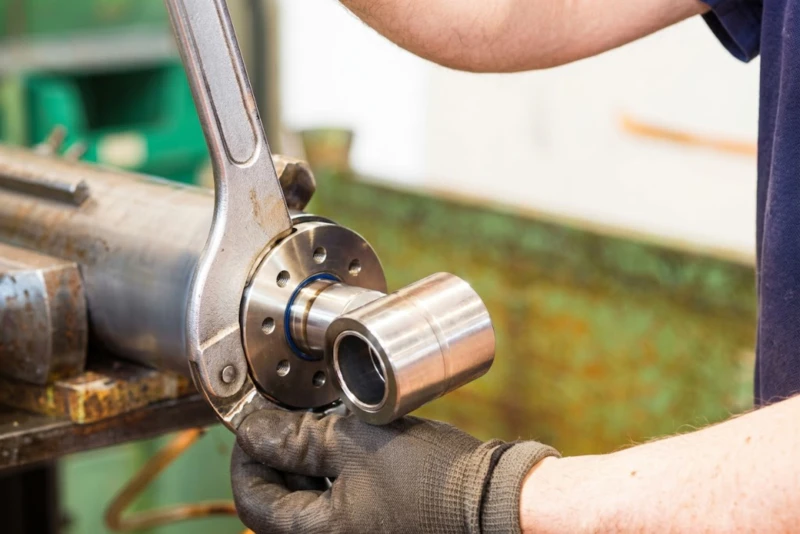
Conclusion: The Link Between Sound and Stability
As we move further into 2026, the complexity of global logistics and high-reach construction demands a new level of mechanical integrity. Hydraulic cylinder noise is the early-warning system that saves machines. By troubleshooting cavitation, aeration, and resonance with a science-first approach, you protect your infrastructure and your profitability. At tiltcylinder.net, we combine world-class ST52.3 metallurgy with precision manufacturing to provide the actuators that ensure your machines remain silent, stable, and safe.
Restore the Silence to Your Fleet Today
Eliminate hydraulic chatter and cavitation. Connect with our engineering team for custom EP series silent-drive solutions or high-volume OEM support.
Silent-Drive Technology
Acoustic Hold Tested
Worldwide Shipping