.webp)
Product Description
Parker Telescopic Hydraulic Dump Truck/Trailer Cylinder/Roll-Off hoist
Features
·Parker Seal Division-“Zero-leak”Sealing Package
·100,000 Yield Induction Hardened Chrome Plated Rod as Standard
·Skived and Burnished Tubing
·Hardened Pin-eye Bushings
·Parker”Zero-leak” Internal Bypass Piston Design
·Greater Rod Support
Benefits
·Leak Free Extended Life
·More Resilient to External Damage
·Consistant Quality
·Extends Cylinder Life as Cylinder Wears
·More Efficient/Less Heat
·Resiste rod Deflection and Side Loading
| Part Description | |
| Application | Dump truck,Tipping,Trailer,Underbody,Roll-off Hoist |
| Material of cylinder tube | 45 steel,27SiMn,Carbon steel,Alloy steel and general seamless steel |
| Seal | Hallite,SKF,NOK,Guarnitec,Parker,and other equivalent brands |
| Coating | Hard Chrome 0.03-0.05mm |
| Temperature | _30°C to +100°C |
| Working Pressure | 16Mpa-20Mpa |
| Stroke | 2755mm-8530mm |
| Color | as Customer’s Requirement |
| Mounting type | Earring-trunnion,double trunnion,double earring(eye end) |
| Plunger | 20#,45# steel with high frequency quenching |
| Certification | ISO/TS 16949,ISO9001,ABS,API,SGS |
| Package | Shrink film,pallet,plywood case |
| Warranty | 12 months |
| Delivery time | 25-30 days after down payment |
| SKU# | |
Why choose us?
Roca team takes all your concerns into consideration to suit your hydraulic cylinder requirements. We work out the best design solution for your application.
Hydraulic cylinders are the most effective and efficient method of pushing, pulling, lifting, and lowering.
Nowadays hydraulic cylinders play an essential role in daily application and industry:
√ Mining
√ Earthmoving & Construction
√ Agriculture &Forestry
√Waste Management & Material Handing
√Ship crane & offshore
Selecting the right cylinders for an application is critical in obtaining maximum performance and reliability.
ROCA team considers all your concerns to suit your hydraulic cylinder requirements.
Together, we work out the best design solution for your application.
FAQ
Q1.Do you have MOQ?
Depending on different ideas, Can be negotiated. The larger the quantity is, the competitive the unit price will be.
Q2.Should the customer pay the delivery fee, How much is it?
For the delivery fee, many samples are being requested to be sent, so we must get the delivery fee.
If you tell me to use the appointed Express, you will give me your express account or you will pay according to the Express.
If you do not request, I will choose a cheap one in China.
Q3.How about the after sale service?
1) We will always keep the quality the same as the buyer’s samples and if there is something with the quality, we will make compensation for our customers.
2) We will suggest our packing and take charge in our packing, we will keep the goods safe in the delivery.
3) We will trace the goods from the production to selling, we will solve the problems in the selling for our customers.
Q4.When can I get a price?
We usually quote within 24 hours after we get your inquiry.
Q5: Are you a trade company or manufacturer?
We are a professional manufacturer with our own factory.
| Certification: | RoHS, CE, ISO9001 |
|---|---|
| Pressure: | High Pressure |
| Work Temperature: | High Temperature |
| Acting Way: | Single Acting |
| Working Method: | Rotary |
| Adjusted Form: | Regulated Type |
| Customization: |
Available
|
|
|---|
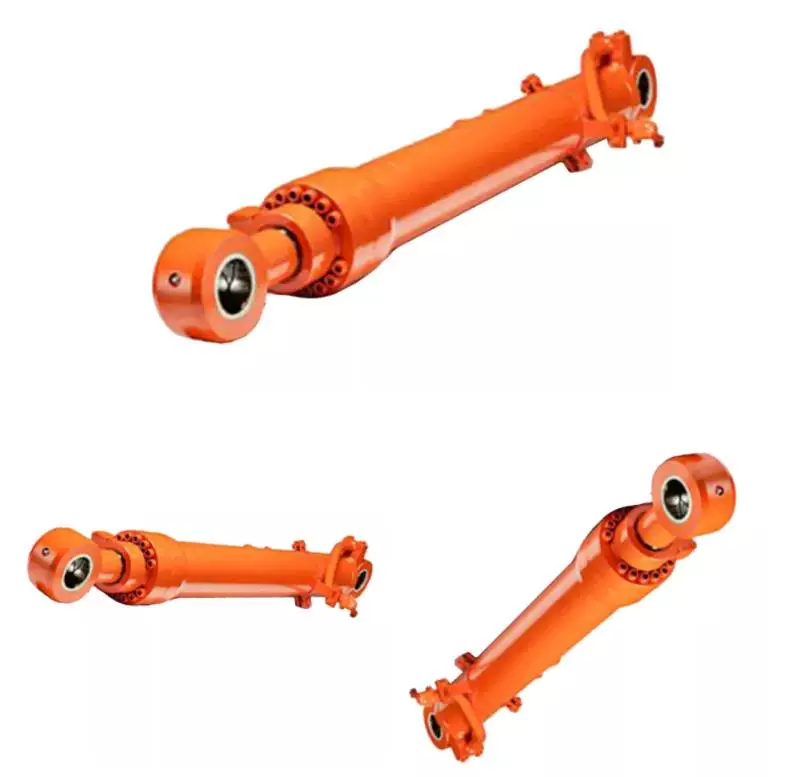
How do hydraulic cylinders enhance the performance of construction and mining equipment?
Hydraulic cylinders play a vital role in enhancing the performance of construction and mining equipment by providing powerful and precise linear motion. These industries require heavy-duty machinery that can withstand demanding conditions and efficiently perform tasks such as lifting, pushing, and digging. Here’s a detailed explanation of how hydraulic cylinders enhance the performance of construction and mining equipment:
1. Power and Force:
– Hydraulic cylinders are capable of generating substantial force, allowing construction and mining equipment to handle heavy loads and perform challenging tasks. The hydraulic system applies pressure to the fluid, which is transmitted to the hydraulic cylinder, resulting in the movement of the piston rod. The larger the diameter of the cylinder, the greater the force that can be generated. Hydraulic cylinders enable the equipment to exert significant force, making it possible to lift and move heavy materials, excavate soil and rock, and perform other demanding operations.
2. Precise Control:
– Hydraulic cylinders offer precise control over the movement of construction and mining equipment. By regulating the flow of hydraulic fluid into and out of the cylinder through control valves, operators can precisely control the speed, position, and force exerted by the hydraulic cylinder. This level of control allows for accurate and controlled movements, enabling operators to perform tasks with precision and efficiency. Whether it’s lifting a specific load, positioning an attachment, or maneuvering in tight spaces, hydraulic cylinders provide the necessary control for optimal equipment performance.
3. Adaptability:
– Hydraulic cylinders are highly adaptable to various construction and mining equipment. They can be designed and manufactured in different sizes, stroke lengths, and configurations to suit specific requirements. Hydraulic cylinders can be integrated into different types of equipment, such as excavators, loaders, bulldozers, and drilling rigs. Their adaptability allows for the customization of equipment to meet the needs of different applications and operating conditions, enhancing overall performance.
4. Durability and Reliability:
– Construction and mining environments are known for their harsh conditions, including extreme temperatures, vibrations, and exposure to dust, dirt, and debris. Hydraulic cylinders are designed to withstand these challenging conditions and provide long-lasting performance. They are constructed using robust materials, such as high-strength steel, and equipped with seals and components that can endure heavy loads, impacts, and contaminants. The durability and reliability of hydraulic cylinders ensure that construction and mining equipment can operate continuously and withstand the demanding nature of these industries.
5. Safety:
– Hydraulic cylinders contribute to the safety of construction and mining equipment operations. Their precise control allows operators to perform tasks with accuracy, minimizing the risk of accidents and damage to the equipment or surrounding structures. Hydraulic cylinders also enable the implementation of safety features, such as overload protection systems and emergency stop mechanisms, ensuring the safe operation of the equipment. The reliable and controlled movements provided by hydraulic cylinders enhance overall safety in construction and mining operations.
6. Increased Productivity:
– By providing the necessary power, precise control, and adaptability, hydraulic cylinders contribute to increased productivity in construction and mining applications. Construction and mining equipment equipped with hydraulic cylinders can perform tasks more efficiently and effectively, reducing the time and effort required to complete projects. The ability to handle heavy loads, control movements precisely, and adapt to various tasks improves the overall productivity of the equipment, leading to cost savings and improved project timelines.
In summary, hydraulic cylinders enhance the performance of construction and mining equipment by providing power, precise control, adaptability, durability, and safety. They enable these machines to handle heavy loads, perform tasks with accuracy, withstand harsh conditions, and increase productivity. Hydraulic cylinders are integral components that contribute to the efficiency and effectiveness of construction and mining operations.
Handling the Challenges of Minimizing Fluid Leaks and Contamination in Hydraulic Cylinders
Hydraulic cylinders face challenges when it comes to minimizing fluid leaks and contamination, as these issues can impact the performance, reliability, and lifespan of the system. However, there are several measures and design considerations that help address these challenges effectively. Let’s explore how hydraulic cylinders handle the challenges of minimizing fluid leaks and contamination:
- Sealing Systems: Hydraulic cylinders employ advanced sealing systems to prevent fluid leaks. These systems typically include various types of seals, such as piston seals, rod seals, and wiper seals. The seals are designed to create a tight and reliable barrier between the moving components of the cylinder and the external environment, minimizing the risk of fluid leakage.
- Seal Material Selection: The choice of seal materials is crucial in minimizing fluid leaks and contamination. Hydraulic cylinder manufacturers carefully select seal materials that are compatible with the hydraulic fluid used and resistant to wear, abrasion, and chemical degradation. This ensures the longevity and effectiveness of the seals, reducing the likelihood of leaks or premature seal failure.
- Proper Installation and Maintenance: Ensuring proper installation and regular maintenance of hydraulic cylinders is essential for minimizing fluid leaks and contamination. During installation, attention should be given to proper alignment, torqueing of bolts, and adherence to recommended procedures. Regular maintenance includes inspecting seals, replacing worn-out components, and addressing any signs of leakage promptly. Proper maintenance practices help identify and rectify issues before they escalate and cause significant problems.
- Contamination Control: Hydraulic cylinders incorporate measures to control contamination and maintain fluid cleanliness. This includes the use of filtration systems, such as in-line filters, to remove particles and contaminants from the hydraulic fluid. Additionally, hydraulic reservoirs often have breathers and desiccant filters to prevent moisture and airborne contaminants from entering the system. By controlling contamination, hydraulic cylinders minimize the risk of damage to internal components and maintain optimal system performance.
- Environmental Protection: Hydraulic cylinders may be equipped with protective features to safeguard against external contaminants. For example, bellows or protective boots can be installed to shield the rod and seals from debris, dirt, or moisture present in the operating environment. These protective measures help extend the life of the seals and enhance the overall reliability of the hydraulic cylinder.
In summary, hydraulic cylinders employ sealing systems, appropriate seal materials, proper installation and maintenance practices, contamination control measures, and environmental protection features to handle the challenges of minimizing fluid leaks and contamination. By implementing these measures, manufacturers can ensure reliable and long-lasting hydraulic cylinder performance, minimize the risk of fluid leakage, and maintain the cleanliness of the hydraulic system.
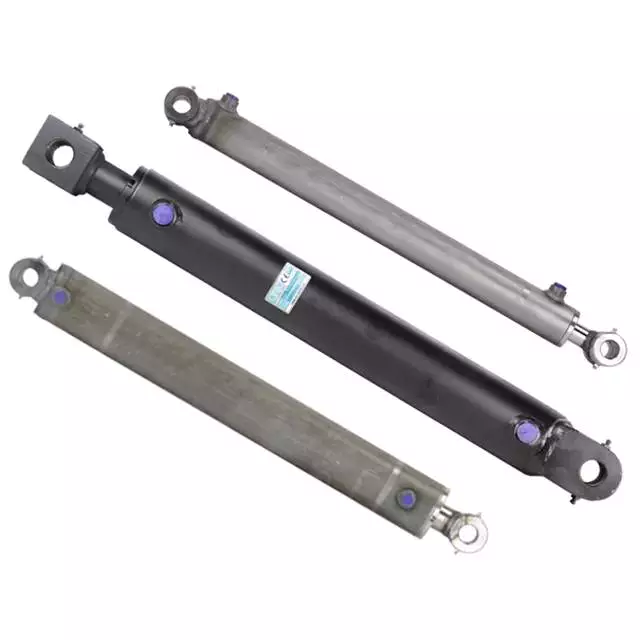
What factors should be considered when selecting the right hydraulic cylinder for an application?
When selecting the right hydraulic cylinder for an application, several important factors need to be considered. These factors help ensure that the chosen hydraulic cylinder is suitable for the specific requirements of the application and will perform reliably. Here are the key factors to consider:
1. Load Requirements:
– One of the crucial factors to consider is the load requirement of the application. Determine the maximum load that the hydraulic cylinder needs to handle. Consider both the static load (when the cylinder is stationary) and the dynamic load (when the cylinder is in motion). The load requirement will impact the cylinder’s bore size, rod diameter, and overall strength. Choose a hydraulic cylinder with a load capacity that exceeds the application’s maximum load to ensure safety and longevity.
2. Stroke Length:
– The stroke length refers to the distance the hydraulic cylinder needs to extend and retract to perform the desired motion. Measure the required stroke length based on the application’s operational requirements. It is essential to choose a hydraulic cylinder with a stroke length that matches or exceeds the required distance. Consider any potential variations or adjustments in the stroke length that may be needed in the future.
3. Operating Pressure:
– Consider the operating pressure required for the application. The hydraulic cylinder must be capable of withstanding the maximum pressure within the hydraulic system. Ensure that the selected cylinder has a pressure rating that exceeds the application’s maximum operating pressure. This ensures safety and prevents premature failure.
4. Speed Requirements:
– Determine the required speed of the hydraulic cylinder’s movement for the application. Consider both the extension and retraction speeds. Select a cylinder that can achieve the desired speed while maintaining precise control and stability. It is important to choose a cylinder that can handle the required speed without compromising performance or safety.
5. Mounting:
– Evaluate the available space and mounting requirements for the hydraulic cylinder. Consider the mounting type (such as flange, foot, trunnion, or clevis), the available mounting points, and any specific mounting constraints. Ensure that the selected cylinder can be easily and securely mounted in the desired location.
6. Environmental Factors:
– Assess the environmental conditions in which the hydraulic cylinder will operate. Consider factors such as temperature extremes, humidity, exposure to chemicals, dust, or corrosive substances. Choose a cylinder that is designed to withstand the specific environmental conditions of the application. This may involve selecting appropriate materials, coatings, or seals to ensure the longevity and performance of the cylinder.
7. Cylinder Configuration:
– Determine the appropriate cylinder configuration based on the application’s requirements. Consider factors such as single-acting or double-acting cylinders, telescopic cylinders for limited space, or custom configurations for unique applications. Evaluate the specific needs of the application to select the most suitable cylinder configuration.
8. Maintenance and Serviceability:
– Consider the maintenance and service requirements of the hydraulic cylinder. Evaluate factors such as ease of access for maintenance, availability of spare parts, and the reputation of the manufacturer or supplier in terms of customer support and after-sales service. Choosing a reliable and reputable brand can ensure ongoing support and availability of spare parts when needed.
9. Compliance and Standards:
– Depending on the industry and application, certain compliance standards may need to be met. Consider any industry-specific regulations, safety standards, or certifications that the hydraulic cylinder should comply with. Ensure that the selected cylinder meets the required standards and certifications for the application.
10. Cost and Budget:
– Finally, consider the cost and budget for the hydraulic cylinder. While it is important to select a cylinder that meets the application’s requirements, it is also necessary to consider the overall cost-effectiveness. Evaluate the initial purchase cost, long-term maintenance costs, and the expected lifespan of the cylinder. Balancing the cost and quality will help in selecting a hydraulic cylinder that provides the best value for the application.
By considering these factors in the selection process, it becomes possible to choose the right hydraulic cylinder that meets the specific requirements of the application in terms of load capacity, stroke length, operating pressure, speed, mounting, environmental conditions, maintenance needs, compliance, and cost-effectiveness. Proper selection ensures optimal performance, reliability, and longevity of the hydraulic cylinder in the intended application.


editor by CX 2023-11-20