.webp)
Product Description
1.hydraulic cylinder can be used with hydraulic station.
2.Selection is as follows.
3.The front and rear cylinder heads of this series of hydraulic cylinders are made of carbon steel.
4.Strong structure.
5.The shaft is made of medium carbon steel S45C steel rod . The surface is hard-plated and polished to mirror luminosity . It has strong rigidity , wear resistance and corrosion resistance .
6.The inner wall of the hydraulic cylinder is made of twilight carbon steel pipe , and the induction type is made of twilight stainless steel cylinder tube.
7.The endpoint can choose to set the buffer device.
Specification
| Bore | Φ20,Φ25,Φ32,Φ40,Φ50,Φ60,Φ70,Φ80,Φ90,Φ100 |
| Tatal stroke | 40,50,60,80,90,100,100 |
| Actuation oil | iso vg68 |
| Maximum use pressure | 210kgf/cm |
| operating temperature range | -10~+60°C |
How toorder
| Bore | Φ20,Φ25,Φ30,Φ40,Φ50,Φ60,Φ70,Φ80,Φ90,Φ100 |
| Stroke | 20-2000mm |
| Rod type | female thread,male thread |
| q’ty of rod | single end rod,double end rod |
Packaging & Delivery
About US
HangZhou you jia xin machinery equipment Co., Ltd was established in2006, it’s 1 of the leading hydraulic cylinder manufacturers in China, specializes in the production of hydraulic cylinders for various types of equipment, Our range of products includes both standard cylinders (double-acting and single acting), tie-rod cylinder, ultra- thin cylinder welded rod cylinders custom-made cylinders according to our customers’ requests. We are working with prestigious state-owned companies zijin Mining and recognized in cylinder industry widely for high service that we provide.
The company currently employs 135 staffs, among whom, 8 persons are R & D and engineering technical personnel, obtain 35 patents established”yozece” brand. At present, the factory has established 3 production bases, covers an area of 12 thousand m2. In 2571 annual sales revenue over 100 million Yuan.
Pre-sale: Our engineering team combines decades of experience with computer-aided technology. No matter your application, design challenge or geographic location, our engineers can work with you to develop the right custom hydraulics solutions.
During the manufacturing, we have semi-automated and fully automated equipment for manufacturing 1 piece to production quantities. What’s more Our proprietary and custom developed ERP system drives expedient quotes and efficiently synchronizes manufacturing process scheduling. This tool provides our customers with short lead times while maintaining on-time delivery.
After-sale: All the hydraulic cylinder we produced include a 3-year limited warranty service. And provide professional technology support and consult lifetime.
Any question or requirement about hydraulic cylinders CHINAMFG is here to serve you.
FAQ
- Do you accept OEM manufacturing?
Yes! We do accept OEM manufacturing. so we can provide the best price as well as the first class service.
- Could we get small quantity samples?
Yes! We understand the quality test is important and we are glad to make the sample for you. The MOQ could be 1pcs.
- Can you provide free sample? How long can we expect to get the sample?
Sample can be free of charge if deposit for future order received. samples need 5-10days if need custom make . standard can be ship out in 2 days.
- How long is the production time?
Normally about 30 days.
- What is the warranty?
1year against B/L date.
| Certification: | ISO9001 |
|---|---|
| Pressure: | Low Pressure |
| Work Temperature: | High Temperature |
| Acting Way: | Double Acting |
| Working Method: | Straight Trip |
| Adjusted Form: | Regulated Type |
| Samples: |
US$ 100/Piece
1 Piece(Min.Order) | |
|---|
| Customization: |
Available
|
|
|---|
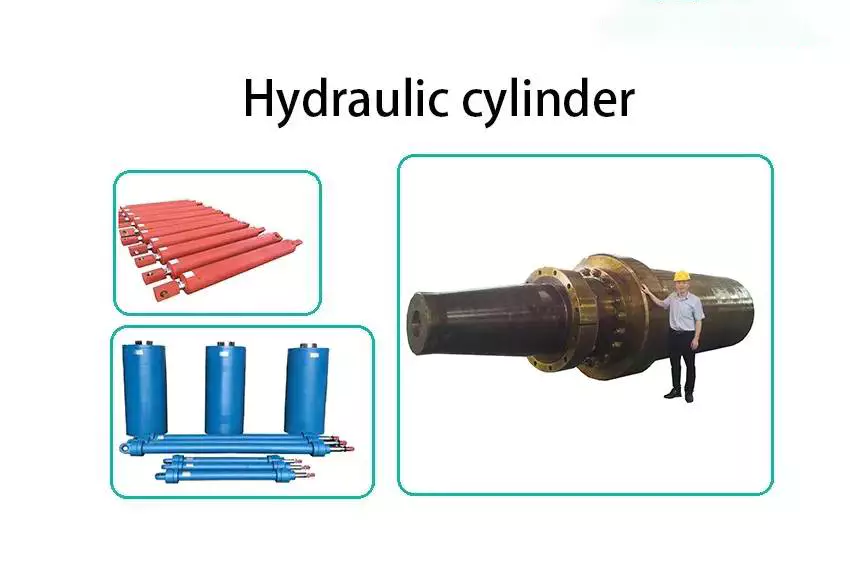
Can hydraulic cylinders be used for precise operations like CNC machining or molding?
Yes, hydraulic cylinders can be used for precise operations like CNC machining or molding. While hydraulic systems are commonly associated with heavy-duty applications, they can also provide the necessary precision and control required for precise operations in CNC machining and molding processes. Here’s a detailed explanation of how hydraulic cylinders can be utilized for such precise operations:
1. Force and Control:
– Hydraulic cylinders are capable of generating substantial force, which is essential for precise operations in CNC machining and molding. By using hydraulic pressure, the cylinders can deliver the required force to cut or shape materials accurately or exert pressure for molding operations. The hydraulic system allows precise control over the force applied, ensuring consistent and reliable performance.
2. Adjustable Speed and Positioning:
– Hydraulic cylinders offer adjustable speed and precise positioning capabilities, making them suitable for precise operations. By controlling the flow of hydraulic fluid, the speed of the cylinder’s movement can be adjusted according to specific requirements. This adaptability allows for fine-tuning the machining or molding process, achieving the desired precision in material removal or shaping. Hydraulic systems also enable accurate positioning of tools or molds, ensuring precise operations.
3. Integrated Feedback Systems:
– Advanced hydraulic systems can incorporate feedback sensors and control mechanisms to enhance precision in CNC machining and molding. These sensors provide real-time information about the position, speed, and force exerted by the hydraulic cylinders. The control system processes this data and adjusts the flow of hydraulic fluid accordingly, allowing for precise and accurate control over the operations. The feedback systems help maintain consistent performance and compensate for any deviations, ensuring high precision.
4. Damping and Vibration Control:
– Hydraulic cylinders can be equipped with damping mechanisms to minimize vibrations and ensure stability during CNC machining or molding operations. Vibrations can negatively impact precision by causing tool chatter or material deformation. By incorporating cushioning or damping features, hydraulic cylinders help absorb shocks and suppress vibrations, resulting in smoother and more accurate operations.
5. Customization and Adaptability:
– Hydraulic cylinders can be customized and adapted to meet the specific requirements of CNC machining or molding processes. Engineers can design cylinders with unique dimensions, stroke lengths, mounting options, and sealing arrangements to fit into equipment or systems with precise specifications. Customized hydraulic cylinders ensure optimal performance and compatibility for precise operations, enabling seamless integration into CNC machines or molding equipment.
6. Energy Efficiency:
– Hydraulic systems can be designed to be energy-efficient, contributing to cost savings in CNC machining or molding operations. By utilizing variable speed pumps, efficient control valves, and well-designed hydraulic circuits, energy consumption can be optimized. This efficiency reduces heat generation, leading to improved stability and precision in operations while minimizing energy costs.
7. Maintenance and Calibration:
– Regular maintenance and calibration of hydraulic systems are essential to maintain their precision in CNC machining or molding applications. Proper lubrication, inspection of seals, and replacement of worn-out components help ensure optimal performance. Regular calibration of control systems and feedback sensors ensures accurate readings and reliable operation, contributing to precision in machining or molding processes.
In summary, hydraulic cylinders can be effectively used for precise operations like CNC machining or molding. Their ability to generate substantial force, adjustable speed and positioning, integration with feedback systems, damping and vibration control, customization and adaptability, energy efficiency, and proper maintenance contribute to achieving the required precision in these operations. By leveraging the strengths of hydraulic systems, manufacturers can enhance the accuracy and reliability of CNC machining or molding processes, resulting in high-quality products and improved productivity.
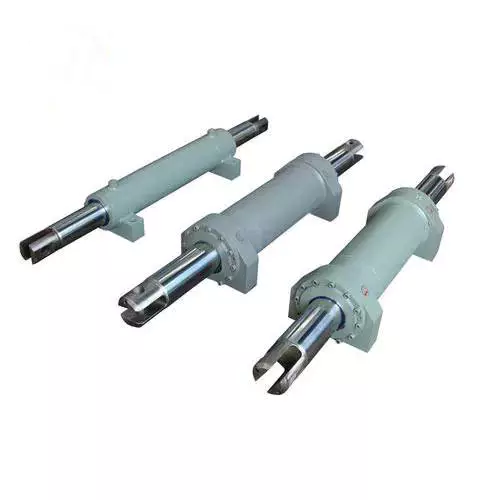
Ensuring Stable Performance of Hydraulic Cylinders Under Fluctuating Loads
Hydraulic cylinders are designed to provide stable performance even under fluctuating loads. They achieve this through various mechanisms and features that allow for efficient load control and compensation. Let’s explore how hydraulic cylinders ensure stable performance under fluctuating loads:
- Piston Design: The piston inside the hydraulic cylinder plays a crucial role in load control. It is typically equipped with seals and rings that prevent leakage of hydraulic fluid and ensure effective transfer of force. The piston design may incorporate features such as stepped or tandem pistons, which provide enhanced load-bearing capabilities and improved stability by distributing the load across multiple surfaces.
- Cylinder Cushioning: Hydraulic cylinders often incorporate cushioning mechanisms to minimize the impact and shock caused by fluctuating loads. Cushioning can be achieved through various methods, such as adjustable cushion screws, hydraulic cushioning valves, or elastomeric cushioning rings. These mechanisms slow down the piston’s movement near the end of the stroke, reducing the impact and preventing sudden stops that could lead to instability.
- Pressure Compensation: Fluctuating loads can result in pressure variations within the hydraulic system. To ensure stable performance, hydraulic cylinders are equipped with pressure compensation mechanisms. These mechanisms maintain a consistent pressure level in the system, regardless of load changes. Pressure compensation can be achieved through the use of pressure relief valves, compensating pistons, or pressure-compensated flow control valves.
- Flow Control: Hydraulic cylinders often incorporate flow control valves to regulate the speed of the cylinder’s movement. By controlling the flow rate of hydraulic fluid, the cylinder’s motion can be adjusted to match the changing load conditions. Flow control valves allow for smooth and controlled movement, preventing abrupt changes that could lead to instability.
- Feedback Systems: To ensure stable performance under fluctuating loads, hydraulic cylinders can be integrated with feedback systems. These systems provide real-time information on the cylinder’s position, velocity, and force. By continuously monitoring these parameters, the hydraulic system can make immediate adjustments to maintain stability and compensate for load fluctuations. Feedback systems can include position sensors, pressure sensors, or load sensors, depending on the specific application.
- Proper Sizing and Selection: Ensuring stable performance under fluctuating loads starts with proper sizing and selection of hydraulic cylinders. It is crucial to choose cylinders with appropriate bore size, rod diameter, and stroke length to match the anticipated load conditions. Oversized or undersized cylinders can lead to instability and reduced performance. Proper sizing also involves considering factors such as the required force, speed, and duty cycle of the application.
In summary, hydraulic cylinders ensure stable performance under fluctuating loads through features such as piston design, cushioning mechanisms, pressure compensation, flow control, feedback systems, and proper sizing and selection. These mechanisms and considerations allow hydraulic cylinders to provide consistent and controlled movement, even in dynamic load conditions, resulting in reliable and stable performance.
How do hydraulic cylinders ensure precise and controlled movement in equipment?
Hydraulic cylinders are widely used in various equipment and machinery to provide precise and controlled movement. They utilize hydraulic fluid and mechanical components to achieve accurate positioning, smooth operation, and reliable control. Here’s a detailed explanation of how hydraulic cylinders ensure precise and controlled movement in equipment:
1. Hydraulic Principle:
– Hydraulic cylinders operate based on Pascal’s law, which states that pressure exerted on a fluid is transmitted equally in all directions. The hydraulic fluid is contained within the cylinder, and when pressure is applied, it acts on the piston, generating force. By controlling the pressure and flow of hydraulic fluid, the movement of the cylinder can be precisely regulated, allowing for accurate and controlled motion.
2. Force and Load Management:
– Hydraulic cylinders are designed to handle specific loads and forces. The force generated by the hydraulic cylinder depends on the hydraulic pressure and the surface area of the piston. By adjusting the pressure, the force output can be controlled. This allows for precise management of the load and ensures that the cylinder can handle the required force without exerting excessive or insufficient force. Proper load management contributes to the precise and controlled movement of the equipment.
3. Control Valves:
– Control valves play a crucial role in regulating the flow and direction of hydraulic fluid within the cylinder. These valves allow operators to control the extension and retraction of the cylinder, adjust the speed of movement, and stop or hold the cylinder at any desired position. By manipulating the control valves, precise and controlled movement can be achieved, enabling operators to position equipment accurately and perform specific tasks with precision.
4. Flow Control:
– Hydraulic cylinders incorporate flow control valves to manage the rate of hydraulic fluid flow. These valves control the speed of the cylinder’s extension and retraction, allowing for smooth and controlled movement. By adjusting the flow rate, operators can precisely control the speed of the cylinder, ensuring that it moves at the desired rate without sudden or erratic movements. Flow control contributes to the overall precision and control of the equipment’s movement.
5. Position Sensing:
– To ensure precise movement, hydraulic cylinders can be equipped with position sensing devices such as linear transducers or proximity sensors. These sensors provide feedback on the position of the cylinder, allowing for accurate position control and closed-loop control systems. By continuously monitoring the position, the equipment’s movement can be controlled with high accuracy, enabling precise positioning and operation.
6. Proportional Control:
– Advanced hydraulic systems utilize proportional control technology, which allows for precise and fine-tuned control of the hydraulic cylinder’s movement. Proportional valves, often operated by electronic control systems, provide variable flow rates and pressure adjustments. This technology enables precise control of speed, force, and position, resulting in highly accurate and controlled movement of the equipment.
7. Cushioning and Damping:
– Hydraulic cylinders can incorporate cushioning and damping mechanisms to ensure smooth and controlled movement at the end of the stroke. Cushioning features, such as adjustable cushions or shock absorbers, reduce the impact and decelerate the cylinder before reaching the end of the stroke. This prevents abrupt stops and minimizes vibrations, contributing to precise and controlled movement.
8. Load Compensation:
– Some hydraulic systems utilize load compensation mechanisms to maintain precise movement even when the load varies. Load-sensing systems monitor the load demand and adjust the hydraulic pressure and flow accordingly to meet that demand. This compensation ensures that the equipment’s movement remains accurate and controlled, regardless of changes in the applied load.
In summary, hydraulic cylinders ensure precise and controlled movement in equipment through the application of hydraulic principles, force and load management, control valves, flow control, position sensing, proportional control, cushioning and damping mechanisms, and load compensation. These features and technologies allow operators to achieve accurate positioning, smooth operation, and reliable control, enabling equipment to perform tasks with precision and efficiency. The combination of hydraulic power and careful design considerations ensures that hydraulic cylinders deliver precise and controlled movement in a wide range of industrial applications.


editor by CX 2023-11-22