.webp)
Product Description
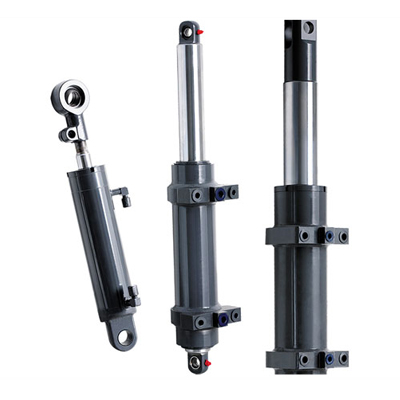
Hydraulic primary cylinder hydraulic tilt cylinder for forklift
- Product information
- Specification
|
Material
|
Tube – Cold Drawn / Honed Tubing Piston Rod – Chromed, ground & polished 45#steel Rod Seals – Polyurethane U-Cap End Caps – Steel, threaded fixed Wear Ring – Nylon Backup Washer Mounts – Trunnion with angular Swivels |
|
Application
|
Agriculture, Concrete & Asphalt, Cranes, Fire & Rescue,Forestry & Logging,Mining & Rock Crushing,Oil & Gas,Snow & Ice Control,Waste Management and Material Recycling Industry , Engineering Equipment, Special Vehicle, Fitness equipment
|
|
Feature |
1.High quality with a reasonable price 2.ISO9001-2008 3.Customized specification are accepted |
|
Payment |
T/T;L/C,WESTERN UNION |
|
Port |
HangZhou/ZheJiang , China |
|
Quotation |
According to the specific request |
|
MOQ |
According to the product |
|
Packaging
|
metal case;plywood case;carton or as requirement |
|
Delivery time |
30days upon receipt of 30% deposit; or upon receipt of relevant L/C; |
- About us
We specialize in this line for more than 20 years and trader with main products as follows: hydraulic cylinders, hydraulic power units, hydraulic manifolds-blocks, hydraulic flanges,pneumatic cylinders and custom-made components and parts, like industrial valves.
Our sales markets have covered North America, Europe, Australia, Japan and ect.
- Working Process
- Packaging & shipping
- FAQ
Q1: Do you accept OEM manufacturing?
A1: Yes! We do accept OEM manufacturing. We will quote you the exact price and make the exact cylinder according to your specification and drawing.
Q2: Can we design our own package or print our own logo?
A2: Yes! Package and logo will be made acording to your requirements.
Q3: Could we get small quantity samples?
A3: Yes! We understand the quality test is important and we are glad to make the sample for you. The MOQ is 1pcs.
Q4: How long is the production time?
A4: Generally the production time is 30 days.
Q5: What is the warranty?
A5: 12 months against B/L date.
Contact me, any comments will be appreciated.
Ellen Wang
/* March 10, 2571 17:59:20 */!function(){function s(e,r){var a,o={};try{e&&e.split(“,”).forEach(function(e,t){e&&(a=e.match(/(.*?):(.*)$/))&&1
| Certification: | GS, CE, ISO9001 |
|---|---|
| Pressure: | Medium Pressure |
| Work Temperature: | Normal Temperature |
| Samples: |
US$ 119/Piece
1 Piece(Min.Order) | Order Sample |
|---|
| Customization: |
Available
|
|
|---|
.shipping-cost-tm .tm-status-off{background: none;padding:0;color: #1470cc}
| Shipping Cost:
Estimated freight per unit. |
about shipping cost and estimated delivery time. |
|---|
| Payment Method: |
|
|---|---|
|
Initial Payment Full Payment |
| Currency: | US$ |
|---|
| Return&refunds: | You can apply for a refund up to 30 days after receipt of the products. |
|---|
How Does a Forklift Hydraulic Cylinder Contribute to Efficient Material Handling?
A forklift hydraulic cylinder plays a crucial role in enabling efficient material handling operations. Its design and functionality offer several key contributions that enhance productivity, precision, and safety. Here’s a detailed explanation of how a forklift hydraulic cylinder contributes to efficient material handling:
- Lifting and Lowering Capabilities:
- High Lifting Capacity:
- Swift Response and Cycle Times:
- Precise Load Positioning:
- Versatility and Adaptability:
- Stability and Safety:
- Reliability and Durability:
The primary function of a forklift hydraulic cylinder is to raise and lower the forks or lifting platform, allowing for the lifting and positioning of loads. This capability enables efficient vertical movement, enabling operators to quickly and safely stack, unstack, load, and unload materials. The hydraulic cylinder’s smooth and controlled operation, coupled with adjustable lift heights, ensures precise positioning of the forks or lifting platform, optimizing load handling efficiency.
Forklift hydraulic cylinders are designed to generate significant lifting forces, enabling the handling of heavy loads with ease. The hydraulic system’s ability to generate high pressure and transfer it to the cylinder allows for efficient lifting of loads that would otherwise be challenging or impossible to handle manually. This high lifting capacity contributes to increased productivity by reducing the number of trips required to move materials and improving overall operational efficiency.
Hydraulic cylinders in forklifts offer quick response times, resulting in swift and efficient material handling cycles. When operators activate the hydraulic controls, the hydraulic fluid immediately transmits pressure to the cylinder, initiating the desired lifting or lowering movement. The fast response time reduces cycle times, allowing forklifts to complete tasks more rapidly and increasing overall productivity.
The smooth and controlled operation of hydraulic cylinders enables precise load positioning, a critical factor in efficient material handling. Operators can accurately adjust the lift height, lower or raise the forks incrementally, and fine-tune the positioning based on the requirements of the task at hand. This precision minimizes the risk of damage to the load, optimizes space utilization, and facilitates seamless integration with storage systems, enhancing efficiency and reducing the likelihood of errors or accidents.
Forklift hydraulic cylinders offer versatility and adaptability, allowing for efficient handling of various load types, sizes, and weights. The adjustable lift heights provided by hydraulic cylinders enable forklifts to accommodate different stacking heights, clearance requirements, and loading/unloading scenarios. This flexibility ensures that forklifts can handle a wide range of material handling tasks, improving operational efficiency and reducing the need for specialized equipment.
The hydraulic cylinder’s contribution to efficient material handling extends to ensuring stability and safety during lifting and lowering operations. Forklifts are equipped with counterweight systems that work in conjunction with the hydraulic cylinder to maintain balance and prevent tipping. The synchronized operation of the hydraulic system and counterweight system enhances stability, allowing for safe handling of loads even at elevated heights. This promotes efficient material handling while prioritizing operator and workplace safety.
Forklift hydraulic cylinders are built to withstand demanding industrial environments and frequent use. They are designed with robust materials and undergo rigorous testing to ensure durability and reliability. This reliability minimizes downtime due to cylinder failures, allowing for continuous material handling operations and improving overall efficiency.
The combination of lifting and lowering capabilities, high lifting capacity, swift response times, precise load positioning, versatility, stability, reliability, and durability makes forklift hydraulic cylinders indispensable for efficient material handling. These cylinders enable operators to handle loads with precision, optimize productivity, and ensure safe and reliable operations in diverse material handling applications.
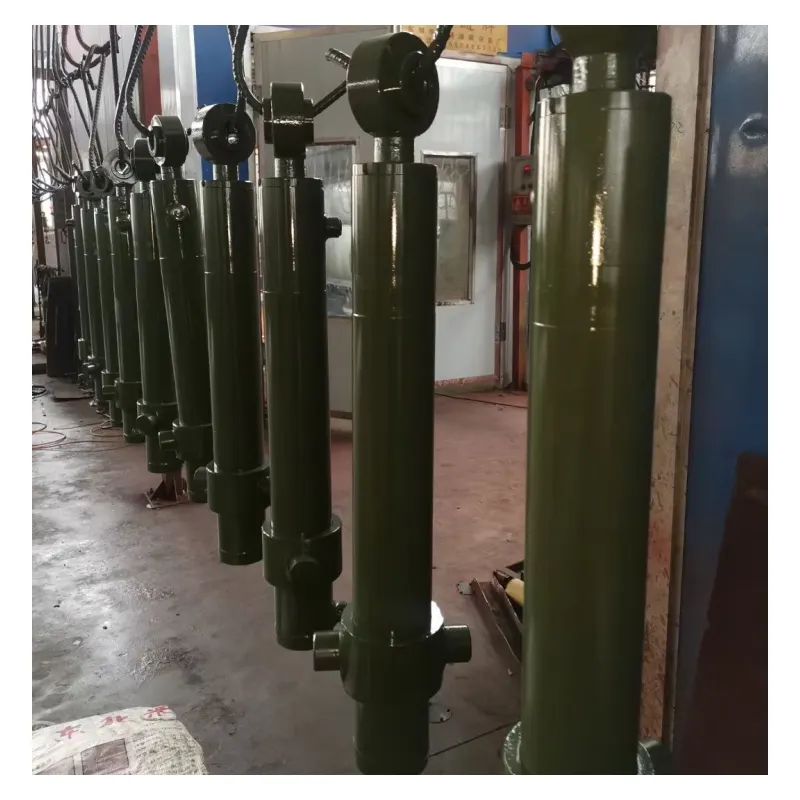
Can hydraulic cylinders be used in container handling forklifts?
Yes, hydraulic cylinders are commonly used in container handling forklifts. Container handling forklifts, also known as container handlers or reach stackers, are specifically designed for lifting and moving shipping containers. Hydraulic cylinders play a crucial role in the operation of these specialized forklifts. Here’s an explanation of how hydraulic cylinders are used in container handling forklifts:
Hydraulic cylinders are utilized in container handling forklifts in the following ways:
1. Mast Lifting:
The main function of hydraulic cylinders in container handling forklifts is to lift and lower the mast. The mast is the vertical assembly that houses the lifting mechanism and forks. Hydraulic cylinders, typically positioned on either side of the mast, provide the power and control for vertical movement. By extending or retracting the cylinders, the forklift can lift and lower containers to the desired height, allowing for stacking or unstacking operations.
2. Reach and Extend:
Container handling forklifts often feature telescopic masts that can reach out and extend. Hydraulic cylinders are responsible for extending and retracting the telescopic sections of the mast. These cylinders enable the forklift to reach containers that are placed further away or to adjust the reach based on container size. The precise control offered by the hydraulic cylinders allows for accurate positioning and safe handling of containers.
3. Container Tilting:
In some container handling forklifts, hydraulic cylinders are used to tilt the container. Tipping containers slightly can help with load stability during stacking or unstacking. Hydraulic cylinders control the tilting operation, allowing the forklift operator to adjust the container’s angle as needed.
4. Side Shift:
Container handlers often feature side shift functionality, which allows the forks or attachment to move horizontally. Hydraulic cylinders are employed to control the side shift movement, enabling precise positioning of the forks or attachment when handling containers. This feature facilitates alignment with container corners and ensures secure engagement.
5. Attachment Control:
Container handling forklifts may have specialized attachments, such as container spreaders or twist locks, for secure container lifting and transport. Hydraulic cylinders play a vital role in controlling the movements of these attachments. They enable precise adjustments and alignment, ensuring proper engagement with the container and safe handling during loading and unloading operations.
In summary, hydraulic cylinders are extensively used in container handling forklifts for mast lifting, reach and extend operations, container tilting, side shift functionality, and attachment control. These cylinders provide the necessary power, control, and precision required to handle containers efficiently and safely in various container terminal and port environments.
Can Hydraulic Cylinders be Customized for Specific Forklift Models?
Yes, hydraulic cylinders can be customized to fit specific forklift models. Forklift manufacturers and hydraulic cylinder suppliers often offer customization options to ensure compatibility and optimal performance with different forklift models. Here’s a detailed explanation of how hydraulic cylinders can be customized for specific forklift models:
1. Cylinder Size and Dimensions:
Hydraulic cylinders can be customized to match the required size and dimensions of a specific forklift model. Forklifts come in various sizes, from small electric models to large industrial forklifts, and each model may have unique specifications for the hydraulic cylinder. By customizing the cylinder size, stroke length, bore diameter, and overall dimensions, it can be precisely tailored to fit the hydraulic system of the forklift model.
2. Lifting Capacity:
The lifting capacity of a forklift is determined by various factors, including the hydraulic cylinder’s design and specifications. Hydraulic cylinders can be customized to match the required lifting capacity of a specific forklift model. This customization involves selecting the appropriate cylinder components, such as piston size, rod diameter, and hydraulic pressure ratings, to ensure the cylinder can handle the intended load capacity of the forklift.
3. Mounting and Connection:
Hydraulic cylinders need to be properly mounted and connected to the forklift’s hydraulic system. The mounting style and connection points may vary depending on the forklift model. Customization allows for the adaptation of the hydraulic cylinder’s mounting brackets, clevises, or other attachment mechanisms to fit the specific mounting requirements of the forklift. This ensures a secure and compatible connection between the cylinder and the forklift’s hydraulic system.
4. Operating Parameters:
Customization of hydraulic cylinders also involves adjusting the operating parameters to meet the specific requirements of the forklift model. This includes setting the hydraulic pressure, flow rate, and other parameters to match the forklift’s hydraulic system specifications. Customization ensures that the hydraulic cylinder operates within the recommended parameters, optimizing its performance and compatibility with the forklift.
5. Special Features and Accessories:
In some cases, specialized forklift models may require additional features or accessories in the hydraulic cylinder design. Customization allows for the inclusion of specific features such as position sensors, integrated valves, cushioning mechanisms, or other enhancements based on the unique requirements of the forklift model. These additional features enhance the functionality and performance of the hydraulic cylinder, addressing specific needs or challenges of the forklift application.
By offering customization options, hydraulic cylinder manufacturers can ensure that the cylinders are specifically tailored to fit the hydraulic systems of various forklift models. Customization allows for precise matching of size, lifting capacity, mounting style, operating parameters, and additional features, resulting in hydraulic cylinders that seamlessly integrate with specific forklift models and deliver optimal performance.


editor by CX 2024-01-19