.webp)
Product Description
Forklifts parts double acting hydraulic cylinders for farm equipment
- Product information
- Specification
|
Material
|
Tube – Cold Drawn / Honed Tubing Piston Rod – Chromed, ground & polished 45#steel Rod Seals – Polyurethane U-Cap End Caps – Steel, threaded fixed Wear Ring – Nylon Backup Washer Mounts – Trunnion with angular Swivels |
|
Application
|
Agriculture, Concrete & Asphalt, Cranes, Fire & Rescue,Forestry & Logging,Mining & Rock Crushing,Oil & Gas,Snow & Ice Control,Waste Management and Material Recycling Industry , Engineering Equipment, Special Vehicle, Fitness equipment
|
|
Feature |
1.High quality with a reasonable price 2.ISO9001-2008 3.Customized specification are accepted |
|
Payment |
T/T;L/C,WESTERN UNION |
|
Port |
HangZhou/ZheJiang , China |
|
Quotation |
According to the specific request |
|
MOQ |
According to the product |
|
Packaging
|
metal case;plywood case;carton or as requirement |
|
Delivery time |
30days upon receipt of 30% deposit; or upon receipt of relevant L/C; |
- About us
We specialize in this line for more than 20 years and trader with main products as follows: hydraulic cylinders, hydraulic power units, hydraulic manifolds-blocks, hydraulic flanges,pneumatic cylinders and custom-made components and parts, like industrial valves.
Our sales markets have covered North America, Europe, Australia, Japan and ect.
- Working Process
- Packaging & shipping
- FAQ
Q1: Do you accept OEM manufacturing?
A1: Yes! We do accept OEM manufacturing. We will quote you the exact price and make the exact cylinder according to your specification and drawing.
Q2: Can we design our own package or print our own logo?
A2: Yes! Package and logo will be made acording to your requirements.
Q3: Could we get small quantity samples?
A3: Yes! We understand the quality test is important and we are glad to make the sample for you. The MOQ is 1pcs.
Q4: How long is the production time?
A4: Generally the production time is 30 days.
Q5: What is the warranty?
A5: 12 months against B/L date.
Contact me, any comments will be appreciated.
Ellen Wang
/* March 10, 2571 17:59:20 */!function(){function s(e,r){var a,o={};try{e&&e.split(“,”).forEach(function(e,t){e&&(a=e.match(/(.*?):(.*)$/))&&1
| Certification: | CE, ISO9001 |
|---|---|
| Pressure: | Medium Pressure |
| Work Temperature: | Normal Temperature |
| Samples: |
US$ 159/Piece
1 Piece(Min.Order) | Order Sample |
|---|
| Customization: |
Available
|
|
|---|
.shipping-cost-tm .tm-status-off{background: none;padding:0;color: #1470cc}
| Shipping Cost:
Estimated freight per unit. |
about shipping cost and estimated delivery time. |
|---|
| Payment Method: |
|
|---|---|
|
Initial Payment Full Payment |
| Currency: | US$ |
|---|
| Return&refunds: | You can apply for a refund up to 30 days after receipt of the products. |
|---|
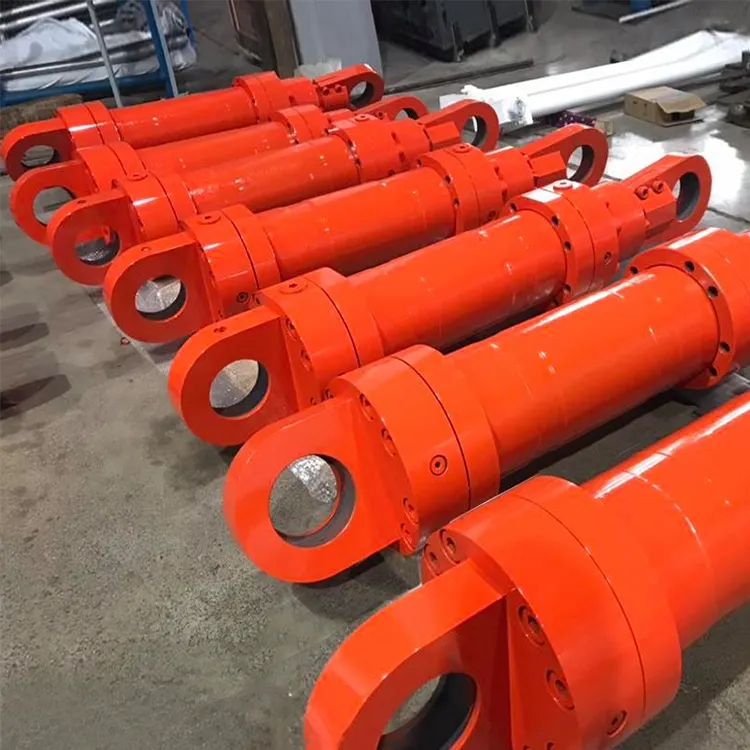
How does a forklift hydraulic cylinder handle variations in cylinder size?
A forklift hydraulic cylinder is designed to handle variations in cylinder size and accommodate different lifting capacities. Here’s an explanation of how it achieves this:
The hydraulic cylinder’s ability to handle variations in cylinder size is primarily dependent on its design and the following factors:
1. Piston Diameter:
The piston diameter of the hydraulic cylinder determines the lifting force it can generate. Forklift hydraulic cylinders are designed with different piston diameters to accommodate various load capacities. Larger piston diameters provide higher lifting capacities, while smaller diameters are suitable for lighter loads. The cylinder is designed and manufactured to match the required lifting capacity based on the forklift’s specifications.
2. Cylinder Construction:
The hydraulic cylinder is constructed to withstand the forces exerted during lifting operations. The materials used in its construction, such as high-strength steel, are selected based on the anticipated load capacities. The cylinder’s structural integrity ensures that it can handle the stress and pressure exerted during lifting, regardless of the cylinder size.
3. Hydraulic System Pressure:
The hydraulic system pressure plays a crucial role in determining the lifting capacity of the cylinder. By increasing or decreasing the pressure of the hydraulic fluid, the lifting force generated by the cylinder can be adjusted. The forklift’s hydraulic system is designed to provide sufficient pressure to match the lifting requirements of different cylinder sizes.
4. Control Valves and Flow:
The forklift’s hydraulic system incorporates control valves that regulate the flow of hydraulic fluid to the cylinder. These valves allow the operator to control the speed and force of the cylinder’s extension and retraction. By adjusting the flow rate, the lifting capacity can be tailored to suit the specific cylinder size and the load being lifted.
5. Sealing Mechanisms:
The hydraulic cylinder incorporates seals to prevent fluid leakage and maintain pressure. These seals, designed to accommodate different cylinder sizes, ensure a proper seal between the piston and cylinder barrel. They are selected based on the specific requirements of the cylinder size to maintain optimal performance and prevent leakage.
In summary, a forklift hydraulic cylinder handles variations in cylinder size by incorporating design elements such as piston diameter, appropriate construction materials, hydraulic system pressure, control valves, and sealing mechanisms. These factors work together to ensure that the cylinder can generate the required lifting force and withstand the forces exerted during lifting operations, regardless of the cylinder size.
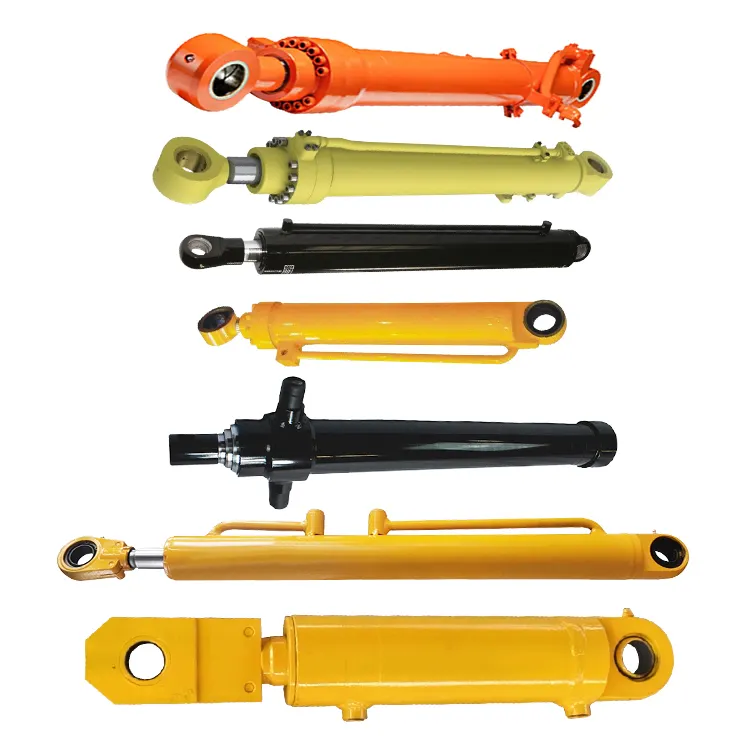
How does a forklift hydraulic cylinder contribute to load handling precision?
A forklift hydraulic cylinder plays a significant role in achieving precise load handling. Here’s an explanation of how it contributes to load handling precision:
The hydraulic cylinder contributes to load handling precision in the following ways:
1. Controlled Lifting and Lowering:
The hydraulic cylinder enables controlled lifting and lowering of the forks or attachment. By adjusting the hydraulic pressure and flow, the operator can smoothly and precisely raise or lower the load. This control allows for accurate positioning of the forks and precise handling of the load, minimizing the risk of damage or accidents.
2. Variable Speed Control:
Forklift hydraulic cylinders offer variable speed control during lift and tilt operations. The operator can adjust the hydraulic flow rate to control the speed at which the forks or attachment move. This variable speed control allows for fine adjustments and precise positioning of the load, even in delicate or sensitive handling situations.
3. Load Balancing:
The hydraulic cylinder contributes to load balancing, which is crucial for precise load handling. By adjusting the extension or retraction of the cylinder, the operator can maintain a proper balance between the load and the forklift. This balance ensures stability and control during lifting, lowering, and transport, enhancing load handling precision.
4. Fork Positioning:
Hydraulic cylinders are responsible for controlling the positioning of the forks or attachment. By extending or retracting the cylinders, the operator can adjust the horizontal position of the forks, aligning them with the load or pallet. This precise fork positioning allows for accurate entry into pallets or containers, ensuring efficient load handling.
5. Attachment Control:
In forklifts with specialized attachments, hydraulic cylinders contribute to precise control of the attachment’s movements. Whether it’s a side shift, fork positioner, or rotating attachment, the hydraulic cylinder enables accurate adjustments and alignment of the attachment to the load. This precise attachment control enhances load handling precision, especially when dealing with unique or challenging load configurations.
In summary, a forklift hydraulic cylinder contributes to load handling precision through controlled lifting and lowering, variable speed control, load balancing, fork positioning, and attachment control. These factors work together to provide operators with the ability to handle loads with accuracy, control, and efficiency.
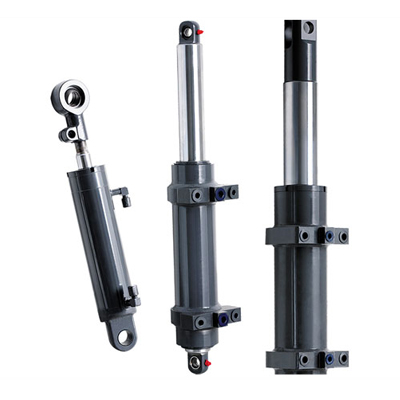
How does a forklift hydraulic cylinder assist in lifting loads?
A forklift hydraulic cylinder plays a critical role in assisting the lifting of loads. Here’s a detailed explanation of how it works:
When a forklift needs to lift a load, the hydraulic cylinder generates the necessary force to raise the load to the desired height. Here’s a step-by-step process of how the hydraulic cylinder assists in lifting loads:
1. Hydraulic Pressure:
When the operator activates the hydraulic controls of the forklift, hydraulic pressure is generated in the hydraulic system. This pressure is typically created by a hydraulic pump, which pressurizes the hydraulic fluid (usually oil) in the system.
2. Hydraulic Fluid Flow:
The pressurized hydraulic fluid is directed to the hydraulic cylinder through control valves and hoses. The fluid enters the cylinder through the inlet port, filling one side of the cylinder.
3. Piston and Piston Rod Extension:
As the pressurized hydraulic fluid enters the cylinder, it acts on one side of the piston. The force exerted by the fluid pushes the piston and the connected piston rod upward.
4. Load Lifting:
As the piston rod extends, it transfers the force to the load-bearing structure of the forklift, such as the mast assembly. The force exerted by the hydraulic cylinder enables the forklift to lift the load off the ground.
5. Load Stability:
The hydraulic cylinder assists in maintaining load stability during the lifting process. The controlled extension of the cylinder allows for smooth and precise lifting, reducing the chances of load tilting or instability.
6. Load Holding:
Once the load reaches the desired height, the hydraulic system can hold the load in place using a valve or a locking mechanism. This ensures that the load remains securely lifted until the operator decides to lower it.
The hydraulic cylinder’s ability to generate a significant amount of force allows forklifts to lift heavy loads efficiently. By controlling the flow of hydraulic fluid and adjusting the cylinder’s extension, the operator can precisely control the lifting speed and height.
In summary, a forklift hydraulic cylinder assists in lifting loads by utilizing hydraulic pressure to extend the piston and piston rod, transferring force to the load-bearing structure of the forklift. This hydraulic force enables the forklift to lift heavy loads, and the controlled extension of the cylinder ensures load stability and precise lifting capabilities.


editor by CX 2024-01-24