.webp)
Product Description
This hydraulic cylinder is specially designed for paver.
This cylinder has the characteristics of compact structure and high reliability.
| Model | Bore Diameter (mm) |
Rod Diameter (mm) |
Stroke (mm) |
Nominal Pressure (bar) |
| HSG80/40-340*591.5-WX | 80 | 40 | 340 | 160 |
/* March 10, 2571 17:59:20 */!function(){function s(e,r){var a,o={};try{e&&e.split(“,”).forEach(function(e,t){e&&(a=e.match(/(.*?):(.*)$/))&&1
| Certification: | ISO9001 |
|---|---|
| Pressure: | High Pressure |
| Work Temperature: | Normal Temperature |
| Acting Way: | Double Acting |
| Working Method: | Straight Trip |
| Adjusted Form: | Regulated Type |
| Customization: |
Available
|
|
|---|
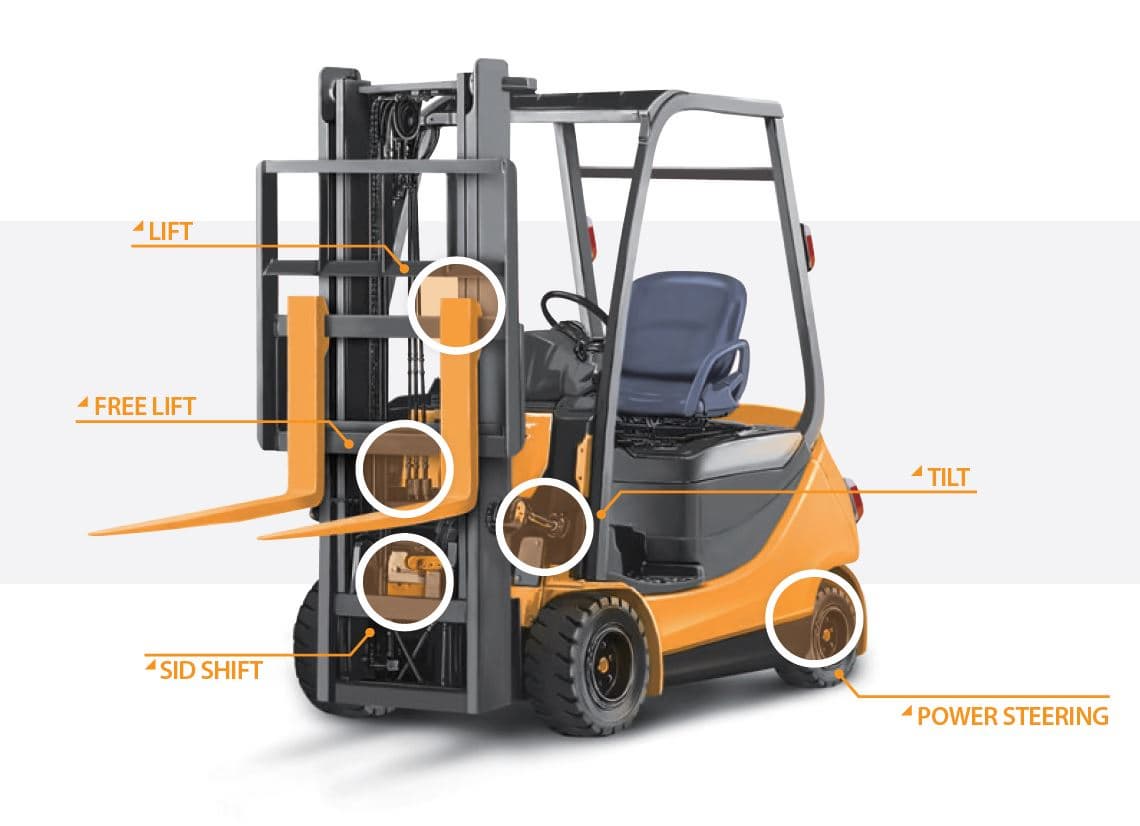
Can hydraulic cylinders be used in side-loading forklifts?
Yes, hydraulic cylinders can be used in side-loading forklifts. Hydraulic systems, including hydraulic cylinders, are commonly employed in side-loading forklifts and play a critical role in their operation. Here’s an explanation of their use:
Side-loading forklifts, also known as sideloaders, are specifically designed for loading and unloading long and bulky items, such as lumber, pipes, and other elongated materials. These forklifts have a unique configuration that allows them to approach the load from the side, as opposed to the front or rear like traditional forklifts.
The hydraulic cylinders in side-loading forklifts are integral to their functionality and contribute in the following ways:
1. Lateral Movement:
Hydraulic cylinders are used to enable the lateral movement of the load-carrying platform or forks in side-loading forklifts. These cylinders are typically positioned horizontally and provide the necessary force to extend and retract the forks or platform, allowing for precise side-to-side movement. The hydraulic system controls the extension and retraction of the cylinders, facilitating efficient loading and unloading of long and bulky items.
2. Load Stability:
Hydraulic cylinders also contribute to load stability in side-loading forklifts. By adjusting the height and angle of the forks or platform, the cylinders help ensure that the load remains secure during transport. The hydraulic system allows for precise control over the positioning of the load, minimizing the risk of shifting or tipping during side-loading operations.
3. Weight Distribution:
Hydraulic cylinders assist in maintaining proper weight distribution in side-loading forklifts. By adjusting the height and angle of the load-carrying platform or forks, the cylinders help distribute the weight of the load evenly across the forklift. This ensures stability and balance during side-loading maneuvers, reducing the risk of tipping or overloading.
4. Control and Maneuverability:
The hydraulic system, including the cylinders, provides precise control and maneuverability in side-loading forklifts. By adjusting the extension and retraction of the cylinders, operators can navigate tight spaces, position the load accurately, and perform delicate maneuvers with ease. The hydraulic system’s responsiveness and control enhance the overall efficiency and safety of side-loading operations.
In summary, hydraulic cylinders are essential components of side-loading forklifts. They enable lateral movement, contribute to load stability, assist in maintaining proper weight distribution, and provide control and maneuverability. By utilizing hydraulic power, these cylinders facilitate efficient and safe loading and unloading of long and bulky items in side-loading forklift applications.
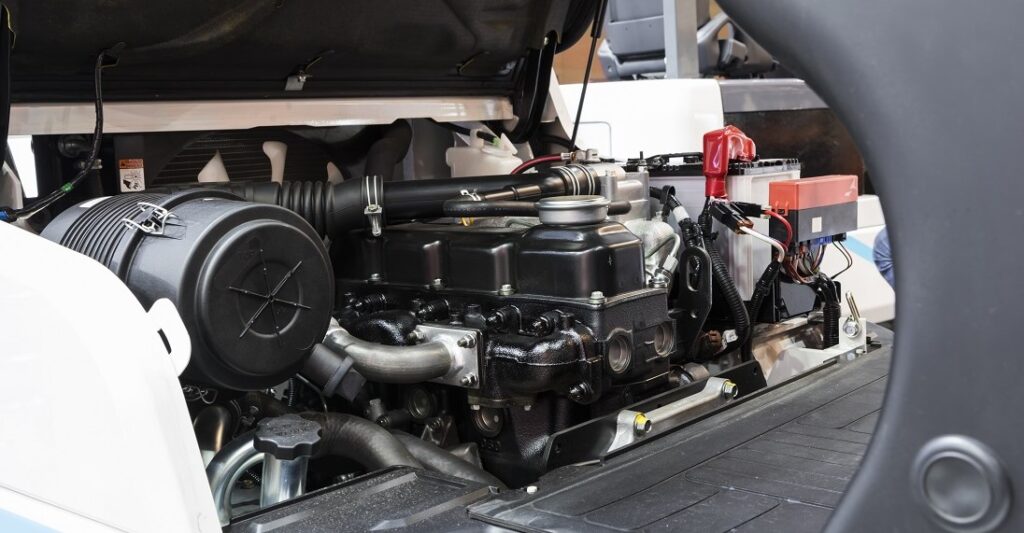
How does a forklift hydraulic cylinder contribute to smooth lifting and lowering?
A forklift hydraulic cylinder plays a crucial role in achieving smooth lifting and lowering operations. Here’s an explanation of how it contributes to this process:
The smooth lifting and lowering of a forklift’s load is made possible by the hydraulic cylinder working in tandem with the hydraulic system. The hydraulic cylinder contributes in the following ways:
1. Controlled Fluid Power:
The hydraulic cylinder utilizes controlled fluid power to lift and lower the load. When the operator activates the hydraulic system, hydraulic fluid is pumped into the cylinder, exerting pressure on the piston inside. This pressure creates a force that raises or lowers the load smoothly and evenly.
2. Piston and Cylinder Design:
The design of the hydraulic cylinder’s piston and cylinder bore contributes to smooth lifting and lowering. The piston is precisely machined to fit within the cylinder bore with minimal clearance. This tight fit, along with the use of seals and hydraulic fluid, helps minimize friction and ensure smooth movement of the piston within the cylinder.
3. Valve Control:
The hydraulic cylinder’s movement is controlled by valves in the hydraulic system. These valves regulate the flow of hydraulic fluid into and out of the cylinder. By adjusting the valve settings, the operator can control the speed and rate of lifting and lowering. The valves allow for precise control, enabling smooth and gradual movements of the load.
4. Load Balancing:
The hydraulic cylinder contributes to load balancing during lifting and lowering operations. By adjusting the extension or retraction of the cylinder, the operator can maintain a proper balance between the load and the forklift. This balance helps prevent sudden shifts or jerky movements, resulting in smoother and more stable lifting and lowering.
5. Damper Mechanisms:
In some forklift hydraulic systems, dampers or shock absorbers are incorporated to further enhance smooth lifting and lowering. These mechanisms help cushion the movements of the hydraulic cylinder, reducing any sudden jolts or vibrations. The dampers absorb and dissipate energy, resulting in smoother and more controlled load handling.
In summary, a forklift hydraulic cylinder contributes to smooth lifting and lowering operations through controlled fluid power, precise piston and cylinder design, valve control, load balancing, and the potential inclusion of dampers. These factors work together to provide operators with the ability to lift and lower loads smoothly, efficiently, and with enhanced control.
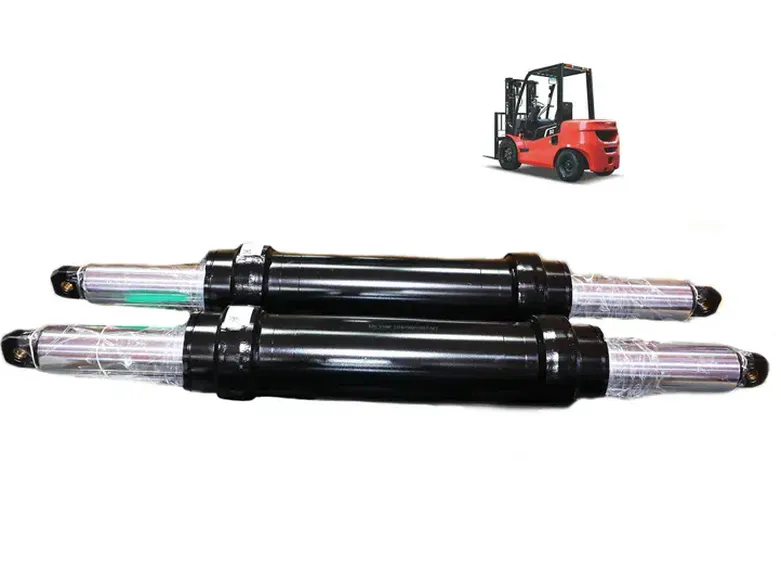
How Does a Forklift Hydraulic Cylinder Handle Variations in Load Weight?
A forklift hydraulic cylinder is designed to handle variations in load weight by utilizing the principles of hydraulic pressure and force. The hydraulic system of a forklift, including the hydraulic cylinder, employs a closed-loop system that allows for efficient and precise handling of different load weights. Here’s how a forklift hydraulic cylinder handles variations in load weight:
- Hydraulic Pressure:
- Force Balance:
- Load Sensing Valves:
- Controlled Lowering:
- Stability and Balance:
The hydraulic cylinder in a forklift operates based on the principle of hydraulic pressure. The forklift’s hydraulic system includes a hydraulic pump that pressurizes the hydraulic fluid, typically hydraulic oil. When the forklift operator activates the controls to lift a load, the pressurized hydraulic fluid is directed to the hydraulic cylinder. The high-pressure fluid exerts force on the piston inside the cylinder, creating an upward force that lifts the load.
The hydraulic cylinder is designed to maintain a force balance between the load weight and the hydraulic pressure. As the load weight increases, the hydraulic system compensates by adjusting the hydraulic pressure accordingly. The hydraulic pump supplies more pressurized fluid to the cylinder, allowing the cylinder to generate the required force to lift the heavier load. This force balance ensures that the forklift can handle variations in load weight effectively.
Modern forklifts often incorporate load sensing valves in their hydraulic systems to further optimize load handling. Load sensing valves continuously monitor the load weight and adjust the hydraulic pressure accordingly. These valves sense the force exerted on the hydraulic cylinder and regulate the pressure to match the load weight. When a heavier load is detected, the load sensing valve signals the hydraulic pump to increase the pressure, ensuring the necessary force is applied to lift the load safely and efficiently.
In addition to handling variations in load weight when lifting, forklift hydraulic cylinders also ensure controlled and safe lowering of the load. The hydraulic system uses various control valves and mechanisms to regulate the flow of hydraulic fluid during lowering. This allows for precise and gradual lowering of the load, regardless of its weight. The operator can control the descent speed using the forklift’s controls, ensuring smooth and safe handling of the load during the lowering process.
While the hydraulic cylinder plays a crucial role in handling variations in load weight, maintaining stability and balance is equally important. Forklifts are designed with a stable base and a counterweight at the rear to provide balance and prevent tipping. The hydraulic system, including the cylinder, works in conjunction with the forklift’s overall design to maintain stability and ensure safe operation, especially when dealing with uneven or shifting loads.
In summary, a forklift hydraulic cylinder handles variations in load weight by utilizing hydraulic pressure, force balance, load sensing valves, and controlled lowering mechanisms. These components and systems work together to ensure that the hydraulic cylinder can lift and lower loads of different weights safely and efficiently. The ability to adapt to varying load weights is essential for the versatility and effectiveness of forklifts in various material handling applications.


editor by CX 2024-02-10