.webp)
Product Description
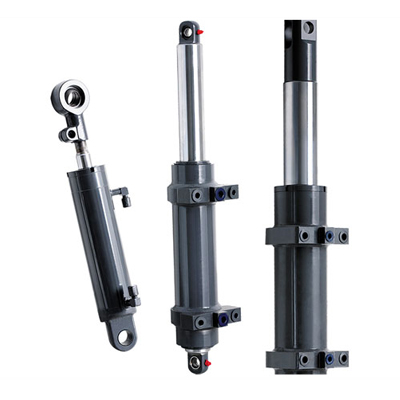
This hydraulic cylinder is specially designed for milling machine.
This cylinder has the characteristics of compact structure and high reliability. The specific connection dimension and size can be designed in accordance with the requirements of main engine.
| Model | Bore Diameter (mm) |
Rod Diameter (mm) |
Stroke (mm) |
Nominal Pressure (bar) |
| HSG32/20-380*600-00 | 32 | 20 | 380 | 160 |
| Type: | Hood Cylinder |
|---|---|
| Application: | Trucks, Forklift, Crane, Loader, Road Machinery |
| Nominal Pressure: | 160 Bar |
| Stroke: | 380 mm |
| Certificate: | ISO9001:2008 |
| Warranty: | 1 Year |
| Customization: |
Available
|
|
|---|
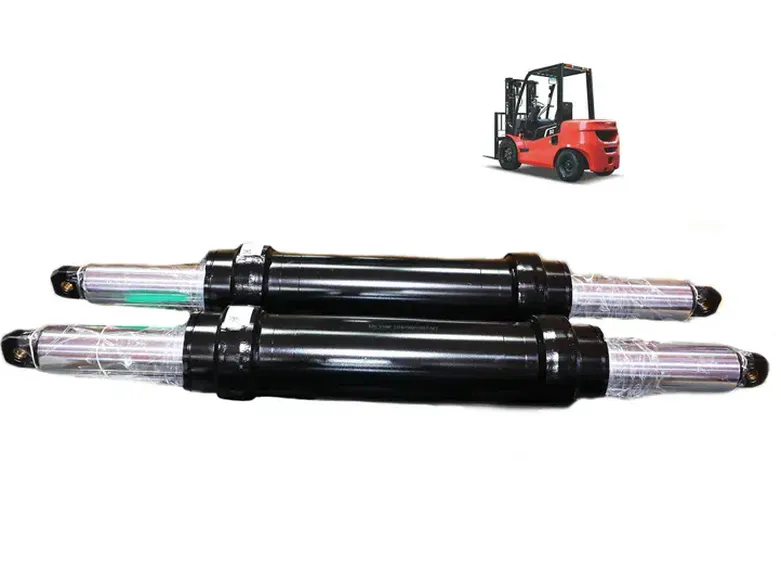
How Does a Forklift Hydraulic Cylinder Contribute to Efficient Material Handling?
A forklift hydraulic cylinder plays a crucial role in enabling efficient material handling operations. Its design and functionality offer several key contributions that enhance productivity, precision, and safety. Here’s a detailed explanation of how a forklift hydraulic cylinder contributes to efficient material handling:
- Lifting and Lowering Capabilities:
- High Lifting Capacity:
- Swift Response and Cycle Times:
- Precise Load Positioning:
- Versatility and Adaptability:
- Stability and Safety:
- Reliability and Durability:
The primary function of a forklift hydraulic cylinder is to raise and lower the forks or lifting platform, allowing for the lifting and positioning of loads. This capability enables efficient vertical movement, enabling operators to quickly and safely stack, unstack, load, and unload materials. The hydraulic cylinder’s smooth and controlled operation, coupled with adjustable lift heights, ensures precise positioning of the forks or lifting platform, optimizing load handling efficiency.
Forklift hydraulic cylinders are designed to generate significant lifting forces, enabling the handling of heavy loads with ease. The hydraulic system’s ability to generate high pressure and transfer it to the cylinder allows for efficient lifting of loads that would otherwise be challenging or impossible to handle manually. This high lifting capacity contributes to increased productivity by reducing the number of trips required to move materials and improving overall operational efficiency.
Hydraulic cylinders in forklifts offer quick response times, resulting in swift and efficient material handling cycles. When operators activate the hydraulic controls, the hydraulic fluid immediately transmits pressure to the cylinder, initiating the desired lifting or lowering movement. The fast response time reduces cycle times, allowing forklifts to complete tasks more rapidly and increasing overall productivity.
The smooth and controlled operation of hydraulic cylinders enables precise load positioning, a critical factor in efficient material handling. Operators can accurately adjust the lift height, lower or raise the forks incrementally, and fine-tune the positioning based on the requirements of the task at hand. This precision minimizes the risk of damage to the load, optimizes space utilization, and facilitates seamless integration with storage systems, enhancing efficiency and reducing the likelihood of errors or accidents.
Forklift hydraulic cylinders offer versatility and adaptability, allowing for efficient handling of various load types, sizes, and weights. The adjustable lift heights provided by hydraulic cylinders enable forklifts to accommodate different stacking heights, clearance requirements, and loading/unloading scenarios. This flexibility ensures that forklifts can handle a wide range of material handling tasks, improving operational efficiency and reducing the need for specialized equipment.
The hydraulic cylinder’s contribution to efficient material handling extends to ensuring stability and safety during lifting and lowering operations. Forklifts are equipped with counterweight systems that work in conjunction with the hydraulic cylinder to maintain balance and prevent tipping. The synchronized operation of the hydraulic system and counterweight system enhances stability, allowing for safe handling of loads even at elevated heights. This promotes efficient material handling while prioritizing operator and workplace safety.
Forklift hydraulic cylinders are built to withstand demanding industrial environments and frequent use. They are designed with robust materials and undergo rigorous testing to ensure durability and reliability. This reliability minimizes downtime due to cylinder failures, allowing for continuous material handling operations and improving overall efficiency.
The combination of lifting and lowering capabilities, high lifting capacity, swift response times, precise load positioning, versatility, stability, reliability, and durability makes forklift hydraulic cylinders indispensable for efficient material handling. These cylinders enable operators to handle loads with precision, optimize productivity, and ensure safe and reliable operations in diverse material handling applications.
Can hydraulic cylinders be used in articulated forklifts?
Yes, hydraulic cylinders can be used in articulated forklifts. Articulated forklifts, also known as flexi forklifts or narrow aisle forklifts, are designed with a unique articulating mast that allows for increased maneuverability in tight spaces. Hydraulic cylinders play a vital role in the operation of these forklifts. Here’s an explanation of their use:
Articulated forklifts utilize hydraulic cylinders in several key areas:
1. Mast Articulation:
The primary function of hydraulic cylinders in articulated forklifts is to facilitate the articulation of the mast. The mast is divided into two sections connected by a hydraulic cylinder. This cylinder enables the mast to pivot or bend at a joint, providing the forklift with the ability to articulate and operate in narrow aisles or confined spaces. By extending or retracting the hydraulic cylinder, the operator can articulate the mast to navigate through tight turns and reach pallets from various angles.
2. Lift and Tilt Functions:
Hydraulic cylinders are also used to control the lift and tilt functions of the forks in articulated forklifts. These cylinders allow for smooth and precise lifting and tilting of the forks to pick up, transport, and deposit loads. By adjusting the extension or retraction of the hydraulic cylinders, the operator can control the height and angle of the forks, ensuring efficient and safe load handling.
3. Side Shift:
Some articulated forklifts are equipped with hydraulic cylinders for side shifting capabilities. These cylinders enable the forks to move laterally, allowing for precise positioning of the load. By activating the hydraulic system, the cylinders extend or retract, shifting the forks to the desired position. This feature is particularly useful when aligning the forks with pallets or when working with varying load sizes.
4. Stabilization:
Hydraulic cylinders also contribute to the stability of articulated forklifts. They work in conjunction with the forklift’s frame and counterweight to ensure proper weight distribution and balance. By adjusting the extension or retraction of the hydraulic cylinders, the forklift can maintain stability during lifting and maneuvering operations.
In summary, hydraulic cylinders are integral components of articulated forklifts, enabling mast articulation, controlling lift and tilt functions, providing side shift capabilities, and contributing to overall stability. These cylinders play a crucial role in enhancing the maneuverability and efficiency of articulated forklifts, allowing them to operate effectively in narrow aisles and confined spaces.
How does a forklift hydraulic cylinder assist in lifting loads?
A forklift hydraulic cylinder plays a critical role in assisting the lifting of loads. Here’s a detailed explanation of how it works:
When a forklift needs to lift a load, the hydraulic cylinder generates the necessary force to raise the load to the desired height. Here’s a step-by-step process of how the hydraulic cylinder assists in lifting loads:
1. Hydraulic Pressure:
When the operator activates the hydraulic controls of the forklift, hydraulic pressure is generated in the hydraulic system. This pressure is typically created by a hydraulic pump, which pressurizes the hydraulic fluid (usually oil) in the system.
2. Hydraulic Fluid Flow:
The pressurized hydraulic fluid is directed to the hydraulic cylinder through control valves and hoses. The fluid enters the cylinder through the inlet port, filling one side of the cylinder.
3. Piston and Piston Rod Extension:
As the pressurized hydraulic fluid enters the cylinder, it acts on one side of the piston. The force exerted by the fluid pushes the piston and the connected piston rod upward.
4. Load Lifting:
As the piston rod extends, it transfers the force to the load-bearing structure of the forklift, such as the mast assembly. The force exerted by the hydraulic cylinder enables the forklift to lift the load off the ground.
5. Load Stability:
The hydraulic cylinder assists in maintaining load stability during the lifting process. The controlled extension of the cylinder allows for smooth and precise lifting, reducing the chances of load tilting or instability.
6. Load Holding:
Once the load reaches the desired height, the hydraulic system can hold the load in place using a valve or a locking mechanism. This ensures that the load remains securely lifted until the operator decides to lower it.
The hydraulic cylinder’s ability to generate a significant amount of force allows forklifts to lift heavy loads efficiently. By controlling the flow of hydraulic fluid and adjusting the cylinder’s extension, the operator can precisely control the lifting speed and height.
In summary, a forklift hydraulic cylinder assists in lifting loads by utilizing hydraulic pressure to extend the piston and piston rod, transferring force to the load-bearing structure of the forklift. This hydraulic force enables the forklift to lift heavy loads, and the controlled extension of the cylinder ensures load stability and precise lifting capabilities.


editor by CX 2023-10-16