.webp)
A 2026 Technical Deep-Dive into Precision Farming Actuators: Exploring Fertilizer Resistance, High-Frequency Impact Damping, and Rapid-Response Automation.
In the global pursuit of food security and precision agriculture, the hydraulic cylinder has evolved from a simple mechanical hoist into a safety-critical structural stabilizer and precision sensor. As farm equipment scales to handle 100-meter planting widths and autonomous harvesting, hydraulic integrity becomes the non-negotiable link between uptime and profitability.
At tiltcylinder.net, we understand that the agricultural environment is uniquely hostile. Between the clouds of abrasive crop dust, the corrosive spray of liquid fertilizers, and the violent mechanical shocks of uneven terrain, standard hydraulic components often fail within a single season. The EP series is engineered to break this cycle of failure. Designed specifically for the high-duty cycles of modern tractors, combine harvesters, and specialized implements, the EP series addresses the fundamental challenges of the agricultural sector: premature seal erosion, rod pitting due to chemical exposure, and hydraulic “creep” during precision depth control. This guide provides an exhaustive analysis of the engineering mastery required to power the world’s most productive and sustainable agricultural fleets.
Metallurgical Resilience: Defeating Fertilizer and Pesticide Corrosion
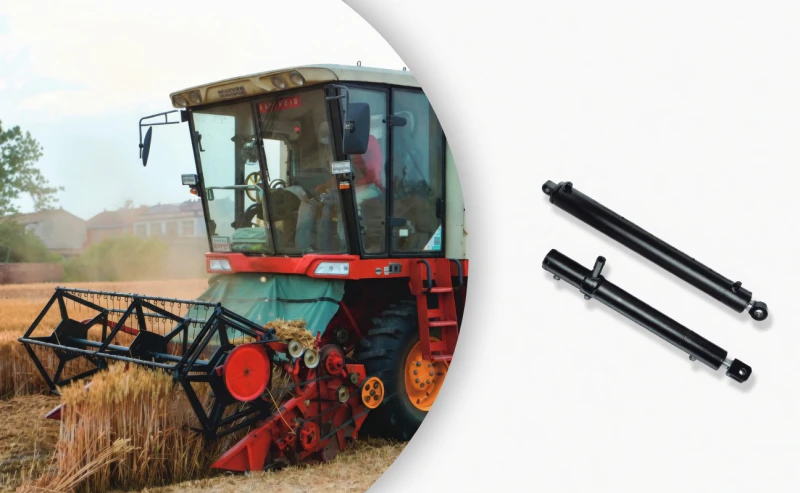
Agricultural hydraulics face a unique “Corrosion Cocktail” that industrial cylinders never encounter. Liquid nitrogen fertilizers, phosphoric acid-based pesticides, and humid, soil-rich environments create an ideal setting for electrochemical oxidation. When a harvester header cylinder extends, its rod is exposed to these corrosive agents. In budget cylinders, microscopic pores in the chrome plating allow these chemicals to reach the raw carbon steel substrate, leading to sub-surface pitting and eventually causing the chrome layer to flake off.
To eliminate this, the EP series utilizes ST52.3 (E355) high-yield strength seamless steel for all pressure-bearing tubes. For the rods, we employ a proprietary Double-Chrome Plating process where a secondary layer of micro-porous chrome is applied over an induction-hardened base (HRC 55-60). This ensures a minimum of 50µm of plating that can withstand a 120-hour neutral salt spray test. Even in the most acidic soil conditions or high-salinity coastal farms, EP series cylinders maintain their surface integrity, protecting the primary seal matrix from abrasive damage.
Mirror-Bore Technology: Achieving the Ra 0.2µm Finish
In modern precision harvesting, autonomous systems rely on rapid hydraulic feedback to adjust header height and tillage depth. If the internal bore of the cylinder is rough, it creates high static friction (stiction), leading to “Stick-Slip” movement. This causes the harvester header to bounce or “judder,” resulting in uneven crop height and significant grain loss.
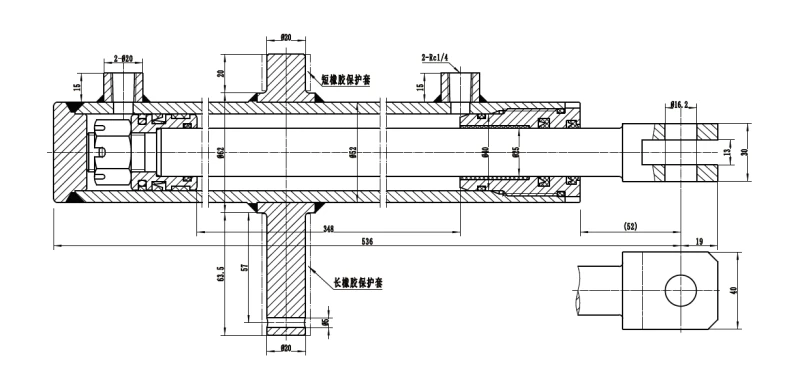
While many agricultural cylinder manufacturers rely on standard honing, we utilize CNC Skiving and Roller Burnishing. This process cold-works the internal bore wall, increasing its surface hardness while achieving a mirror finish of Ra 0.2µm. This ultra-smooth surface allows our Japanese NOK multi-lip seals to glide with minimal resistance. The reduction in friction also lowers the hydraulic oil temperature during the high-cycle harvest season, preventing the thermal degradation of the oil and extending the life of the entire hydraulic circuit.
EP Series Core Agricultural Advantages
High-Cycle Endurance
Designed for the 24/7 duty cycles of harvest seasons, with a seal life 3x longer than standard aftermarket cylinders.
Triple-Lip Dust Shield
Utilizing specialized Japanese NOK rod wipers to keep abrasive crop fibers and mud away from primary seals.
Induction-Hardened Rods
Hardened to HRC 55 to resist physical impact from rocks and debris during high-speed field towing and tillage.
Zero-Leak Validation
Every unit passes 1.5x rated load pressure hold tests to ensure absolute zero hydraulic fluid bypass during operation.
Precision Harvesting: Combine Header Control and Stabilization
The combine harvester is the most complex piece of equipment on the modern farm. Its header (the cutting platform) must follow the contours of the terrain with absolute precision. If the lifting cylinders respond sluggishly, the header may strike the ground, causing thousands of dollars in structural damage and hours of downtime. Conversely, if the cylinder drifts, grain is left in the field, reducing total yield.
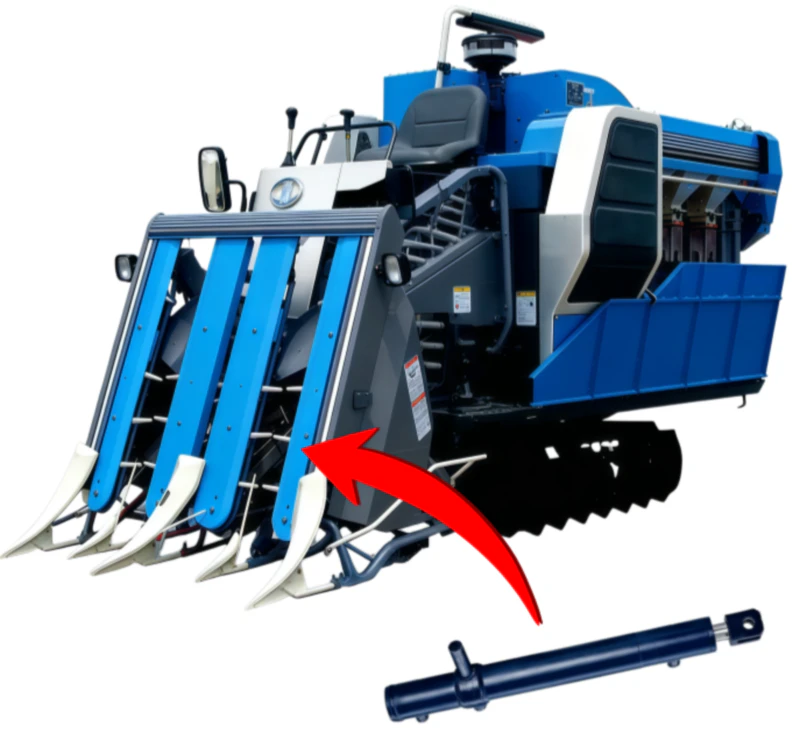
The EPYY Dynamic Solution: Our EPYY11112017 series header lift rams are designed for rapid hydraulic response. Featuring optimized internal fluid channels and integrated rod-end cushioning, these actuators can handle the high-frequency adjustments required by automated ground-following systems. The use of ST52.3 seamless steel prevents “barrel swelling” under the constant pressure of a 10-ton header, ensuring that the machine maintains its height even when operating at speeds of 10km/h on uneven mountain slopes.
Smart Agriculture: Rapid Response Synchronization
Modern heavy tillage and seeding equipment utilize multiple hydraulic cylinders to maintain uniform soil depth. Any lack of synchronization between these cylinders results in uneven planting, which directly impacts crop germination rates. Furthermore, during headland turns, these implements must be raised and lowered in milliseconds to maintain operational tempo.
The EPYY Sync Strategy: We utilize specialized series-parallel hydraulic circuitry and low-friction mirror-burnished bores to ensure that multi-cylinder arrays extend and retract within 2% of each other. The EP series towing cylinders are built to withstand the massive tensile forces of dragging deep-rippers through compacted soil, while their high-pressure seals prevent the “leak-down” that causes implements to sag during transport on public roads—a major safety concern for large-scale farm operations.
Manufacturing Excellence: Forging Trust through Automation
In agriculture, the harvest window is small and unforgiving. A manufacturing defect in a single cylinder can sideline a million-dollar harvester for days. At tiltcylinder.net, our production facility is a benchmark for Industrial 4.0 Hydraulic Fabrication. Every critical joint fusion on an EP series cylinder is performed by robotic Submerged Arc Welding (SAW) units, providing deeper penetration and zero porosity compared to manual welding. Each unit is subject to 100% Ultrasonic Non-Destructive Testing (NDT) and a mandatory 30-minute pressure hold test. This automated rigor ensures that the 10,000th agricultural cylinder performs exactly like the first.
.webp)
Economic Intelligence: Reducing TCO through High-Redundancy Design
For large-scale farm cooperatives and fleet managers, the true measure of a cylinder’s value is its Total Cost of Ownership (TCO). While a budget cylinder may save 15% on the initial purchase price, the cost of an emergency failure during a 10-day harvest window can exceed $100,000 in lost crop value and labor. By investing in the EP “Fit-and-Forget” series, fleet managers achieve a 60% reduction in unplanned maintenance events.
Professional Technical Maintenance Protocol:
- Post-Harvest Dormancy Protection: In the off-season, fully retract the cylinders or apply a dedicated anti-rust grease to exposed rod segments to prevent condensation-induced pitting.
- Wiper Seal Compliance Check: Inspect rod wipers daily for chemical hardening. A failing wiper allows abrasive silica from soil to enter the seal gland, leading to premature bore erosion.
- Hydraulic Fluid Hygiene: Maintain oil to ISO 4406 16/14/11. Agricultural dust is highly abrasive; contaminated oil will destroy the mirror Ra 0.2µm bore finish within one season.
- Manifold System De-Aeration: Always cycle cylinders five times to full stroke under no-load after any hydraulic hose replacement to prevent “spongy” response.
Conclusion: The Hydraulic Link to Sustainable Food Systems
As we move further into 2026, the reliance on automated, high-reach agricultural machinery has become the new global standard. The hydraulic cylinder remains the critical, physical link in the chain of precision. At tiltcylinder.net, we combine world-class ST52.3 metallurgy, Japanese sealing excellence, and rigorous automation to provide the actuators that ensure every acre is harvested with absolute confidence. The EP Series is more than a product; it is the hydraulic foundation of global agricultural progress.
Secure Your Harvest Success Today
Eliminate hydraulic drift and seasonal failure from your fleet. Connect with our engineering team for custom EP series agricultural designs or high-volume OEM support.
120H Salt Spray Tested
OEM Compatible Design
Worldwide AG Logistics