.webp)
A 2026 Technical White-Paper on Industrial Actuators: Exploring Metallurgy, Sealing Physics, and Total Cost of Ownership (TCO) in Modern Logistics.
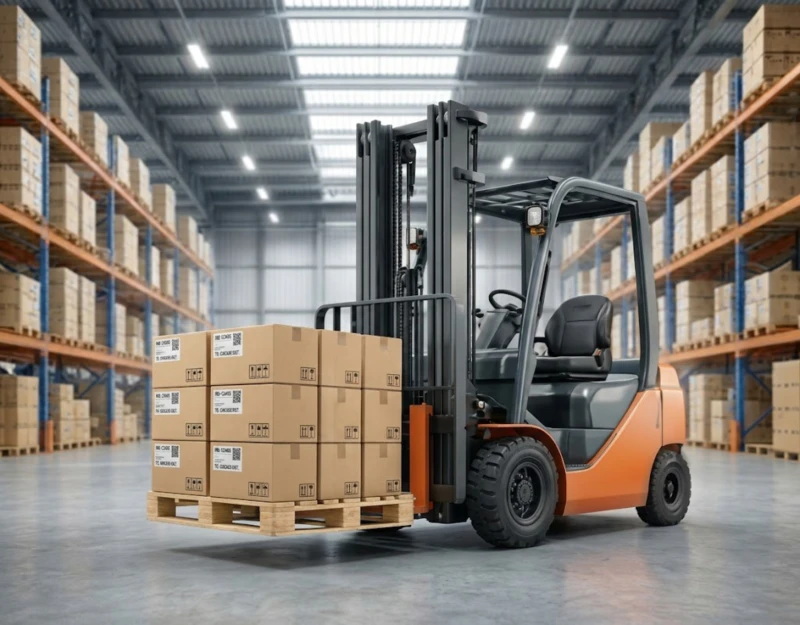
In the era of autonomous warehousing and ultra-high-density storage, the forklift has transitioned from a supporting tool to a mission-critical robotic asset. The hydraulic cylinder—specifically the tilt and lift actuators—represents the physical interface between digital logistics commands and mechanical reality.
At tiltcylinder.net, we believe that component failure is an engineering oversight. In a high-velocity distribution hub, a single leaking seal in a mast lift ram or a buckled tilt rod doesn’t merely halt a vehicle; it creates a systemic bottleneck that can cost an enterprise upwards of $2,500 per hour in lost throughput. Our EPYY series of forklift cylinders is architected to eliminate these failure modes by addressing the fundamental physics of hydraulic stress: internal bypass drift, corrosive rod pitting, and structural fatigue under high-frequency eccentric loading. This guide provides an exhaustive analysis of the engineering mastery required to power the world’s most productive material handling fleets.
The Metallurgy of Resilience: Beyond Standard Steel
The structural integrity of a hydraulic cylinder is primarily dictated by the molecular composition of the tube and the rod. In high-cycle material handling, standard cold-drawn tubing often suffers from internal residual stresses or microscopic porosity. When a lift cylinder holds a 10-ton load at maximum elevation, the internal pressure can spike to 30MPa, causing standard barrels to undergo “micro-swelling.” This elastic expansion, though invisible to the eye, allows hydraulic fluid to slip past the piston seals, resulting in the dreaded phenomenon of “mast creep.”
To combat this, the EPYY series utilizes ST52.3 (E355) high-yield strength seamless steel. Unlike welded tubing, seamless ST52.3 provides a uniform grain structure that ensures absolute pressure containment even under catastrophic shock loads. Furthermore, we employ a Stress-Relief Annealing process during manufacturing to ensure the cylinder remains dimensionally stable throughout decades of thermal cycling. This metallurgical purity prevents the barrel deformation that is the leading cause of premature seal failure in the aftermarket.
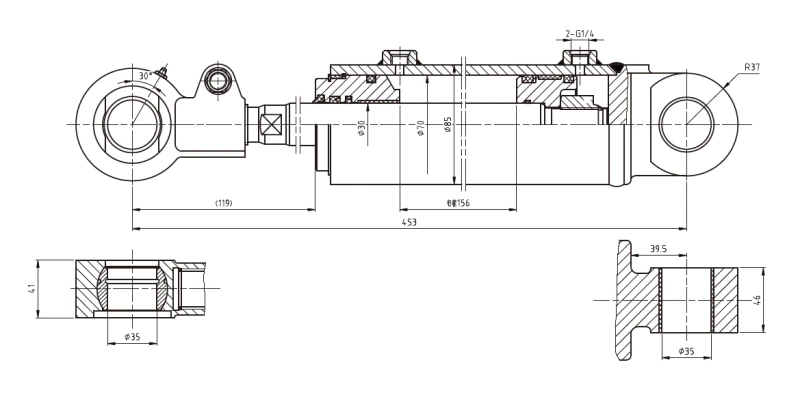
Mirror-Bore Finishing: The ra 0.2µm Standard
In the world of high-pressure hydraulics, friction is the ultimate enemy of longevity. High friction coefficients lead to localized thermal spikes in the hydraulic oil, which in turn degrades the chemical bonds of the seals. While many manufacturers rely on standard honing, which leaves microscopic “valleys” that can trap debris, we utilize CNC Skiving and Roller Burnishing technology.
This dual-action process does not just remove material; the roller burnishing stage cold-works the internal surface of the bore, compressing the metal to increase surface hardness while creating a mirror finish of Ra 0.2µm. This surface profile is so smooth that it allows the seal to glide with nearly zero “stiction” (static friction), ensuring a smooth, judder-free mast movement that is essential for handling sensitive electronics, fragile glass, or hazardous chemical cargo where sudden movements can be catastrophic.
EPYY Core Engineering Advantages
Ultra-Hard Chrome
Induction-hardened to HRC 55 and plated with 50µm of hard chrome to resist the abrasive grit of construction and port sites.
Zero-Drift Matrix
Utilizing specialized multi-lip polyurethane seals from NOK Japan to eliminate internal bypass and ensure absolute mast stability.
Robotic SAW Fusion
Multi-pass robotic SAW welding ensures deeper penetration and zero porosity in critical mount-to-barrel joints for maximum safety.
Hydro-Static Certification
Every unit undergoes a mandatory 30-minute pressure hold test at 1.5x rated load to verify weld integrity and seal perfection before dispatch.
Extreme Scenario: Corrosive Port and Heavy Freight Handling
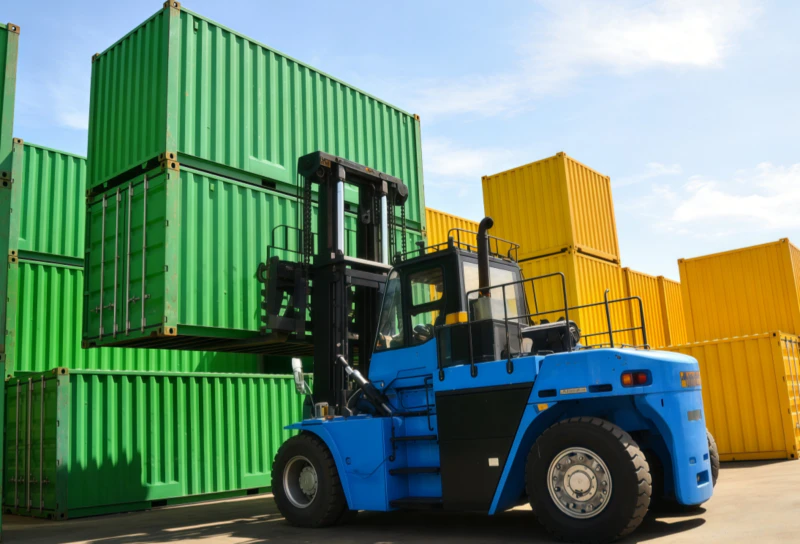
Coastal container terminals and bulk freight ports are among the most hostile environments for hydraulic machinery on the planet. The combination of high-salinity air, 90% relative humidity, and abrasive chemical dust from cargo (such as urea, potash, or iron ore) creates a “corrosion cocktail” that can pit a standard hydraulic rod in less than 30 days. Once pitting occurs, the oxidized pits act as microscopic knives, shredding the internal seal gland with every stroke.
The EPYY Surface Endurance Strategy: For port-deployed forklifts, we utilize a specialized Double-Chrome Plating process. Every rod is induction-hardened to HRC 55 to resist physical impact, then electroplated with 50µm of hard chrome. Furthermore, our port-spec cylinders undergo a 96-hour neutral salt spray test. This ensures that steering and tilt actuators maintain their integrity, protecting the machine’s ability to handle high-value cargo without fear of hydraulic fluid contamination in environmentally sensitive port zones.
Manufacturing Standards: Forged in Automation
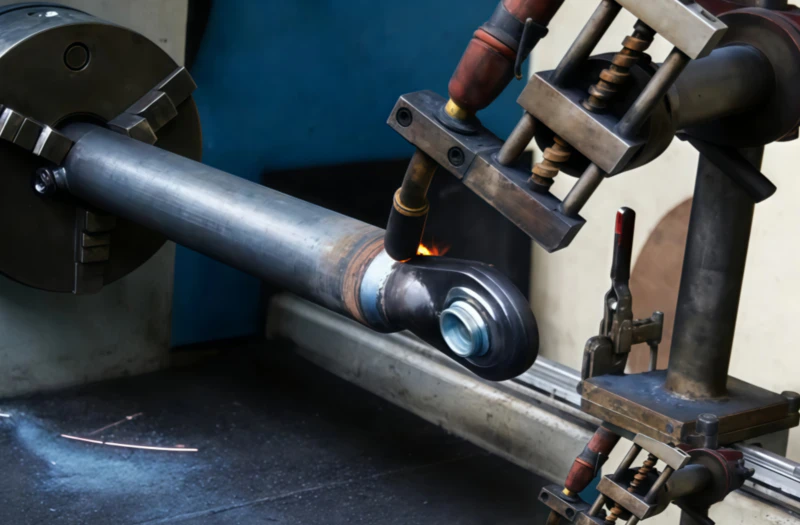
In high-volume hydraulic production, consistency is the ultimate measure of quality. Our production facility is equipped with automated assembly lines where human error is systematically eliminated. From the Ultrasonic Cleaning of components to ensure zero particulate contamination, to the robotic Submerged Arc Welding (SAW) that fuses the mounting trunnions to the barrel, every step is monitored by digital QC sensors. This automated rigor ensures that the 10,000th cylinder is as precise as the 1st, a non-negotiable requirement for OEM partners and large-scale rental cooperatives.
Economic Intelligence: Reducing Fleet TCO through Maintenance
While a budget cylinder may save 15% on initial purchase price, the Total Cost of Ownership (TCO) is often 3x higher due to frequent seal replacements and lost operational hours. By investing in cylinders designed for high-cycle endurance, fleet managers can achieve a 45% reduction in unplanned maintenance events. To maximize this ROI, we recommend the following 2,000-hour technical protocol:
- Hydraulic Fluid Hygiene: Maintain oil to ISO 4406 16/14/11 standards. Suspended particulates act like liquid sandpaper on the Ra 0.2µm bore surface.
- Wiper Seal Integrity: The rod wiper is the first line of defense. Replace at any sign of UV hardening to prevent grit from entering the primary pressure seals.
- Induction-Hardened Rod Check: Daily inspection for physical rod dings; induction-hardened surfaces resist scratches but require immediate stone-polishing if damaged.
- System De-Aeration: Cycle cylinders five times to full stroke under no-load after any hydraulic system maintenance to prevent cavitation.
.webp)
Conclusion: The Foundation of Unstoppable Logistics
As the complexity of the global supply chain reaches new peaks in 2026, the reliance on high-uptime material handling equipment has become absolute. Whether you are managing an autonomous reach-truck fleet in a temperature-controlled pharmaceutical hub or heavy-duty diesel forklifts in a bustling container port, the reliability of your hydraulic cylinders is the non-negotiable foundation of your success. At tiltcylinder.net, we combine world-class metallurgy, Japanese sealing excellence, and rigorous automation to ensure that your machines never stop lifting the world.
Secure Your Operations with EPYY Hydraulics
Eliminate hydraulic failure from your fleet’s future. Connect with our engineering team for custom solutions or high-volume OEM support.
100% Quality Tested
Worldwide Shipping
OEM Ready