.webp)
The 2026 Industry Standard for Mobile Lifting Actuators: Exploring Precision Outrigger Systems, High-Yield Metallurgy, and Zero-Drift Engineering.
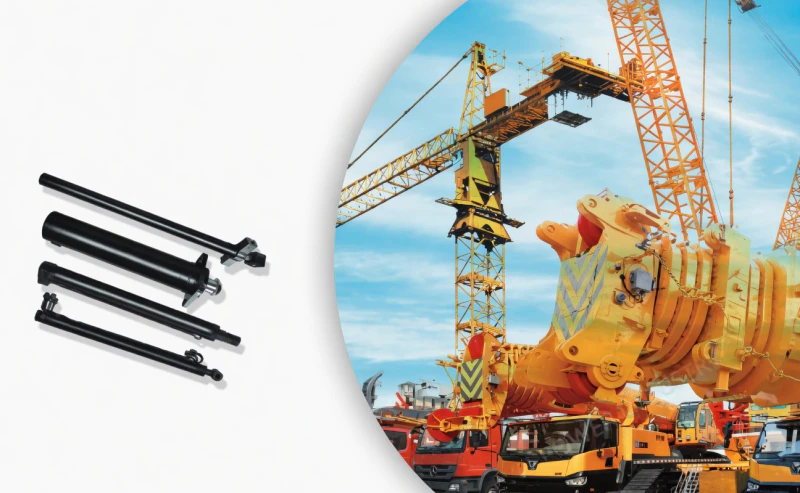
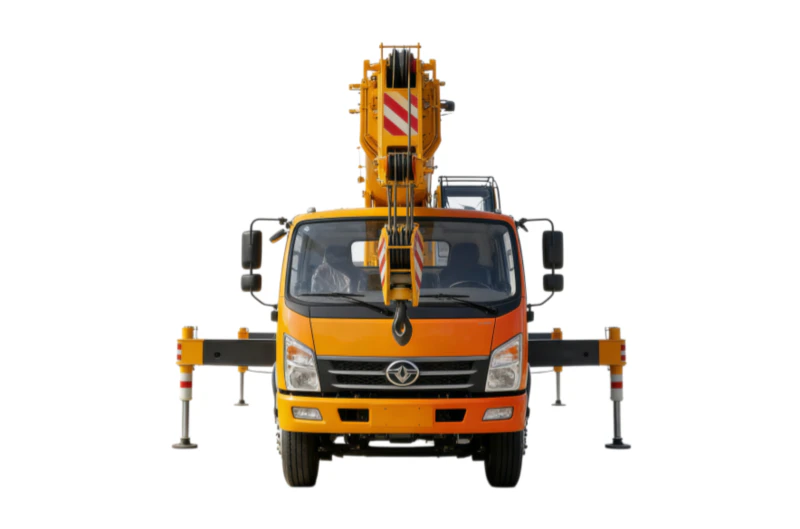
In the modern landscape of high-reach urban development and heavy industrial infrastructure, the truck crane is the primary tool for rapid mechanical leverage. However, the true strength of these machines is not found in their engines, but in the hydraulic actuators that provide the rock-solid foundation for every lift.
At tiltcylinder.net, we recognize that in the 2026 operational environment, “good enough” is a safety risk. The EP series represents a departure from traditional hydraulic design, moving toward a philosophy of absolute structural integrity. Whether it is a main boom luffing cylinder, a rear rack opening ram, or a behind-frame support cylinder, every component is designed to manage the violent dynamic forces of modern job sites. Our EPYY series addresses the fundamental technical hurdles of the lifting industry: internal fluid bypass, rod surface pitting, and the structural fatigue caused by eccentric loading. This pillar page provides an exhaustive deep-dive into the metallurgy, finishing technology, and operational ROI that define the EP series.
The Metallurgy of Resilience: Beyond Standard Steel
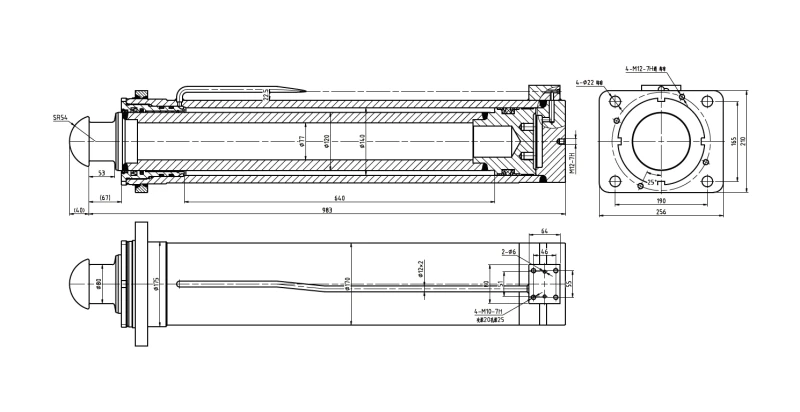
Structural failure in a crane outrigger cylinder often begins with barrel swelling. When a truck crane is under maximum load, the internal pressure in the support jack can surge past 30MPa. In budget aftermarket cylinders, the cylinder barrel undergoes micro-expansion. This creates a minute gap between the piston seals and the internal bore wall, leading to the phenomenon known as “outrigger drift.”
To eliminate this, the EP series utilizes ST52.3 (E355) high-yield strength seamless steel. This material offers superior pressure containment properties, ensuring that the cylinder maintains its dimensional integrity even under extreme static hold cycles. Furthermore, all EP series components undergo Stress-Relief Annealing to ensure zero structural deformation over decades of high-cycle operation. By ensuring the barrel remains rigid, we preserve the seal-to-bore interface, providing the foundation for our “Zero-Drift” guarantee.
Mirror-Bore Finishing: The Ra 0.2µm Standard
In high-tonnage hydraulics, friction is the leading cause of component failure. High friction leads to localized thermal spikes in the hydraulic fluid, which degrades the chemical bonds of the seals. While standard honing processes leave microscopic “peaks” that wear out polyurethane seals, the EP series utilizes CNC Skiving and Roller Burnishing.
This dual-action process cold-works the internal bore wall, increasing its surface hardness while achieving a mirror finish of Ra 0.2µm. This surface profile is so smooth that it allows our Japanese NOK seals to glide with nearly zero static friction (stiction). This ensures that outrigger deployment is smooth and precise, preventing the “judder” that can occur on uneven terrain and significantly extending the service life of the internal sealing matrix.
EP Series Core Engineering Advantages
35MPa Surge Rating
Built from ST52.3 seamless tubing to survive the sudden dynamic load spikes of heavy-lift outrigger stabilization.
Zero-Drift Hold
Utilizing Japanese NOK multi-lip seals and mirror bores to eliminate internal bypass and ensure chassis leveling for days.
Hard-Chrome Rods
Induction-hardened rods with 50µm of hard chrome plating survive the abrasive grit of construction and coastal salt spray.
Manifold Integration
Pre-calibrated load-holding check valves integrated directly into the cylinder base to prevent uncontrolled boom descent.
Rear Frame Support: Establishing the Global Level
In high-tonnage lifting, the rear frame support cylinder is the machine’s primary anchor. When a truck crane reaches its maximum outreach, the rear outriggers face immense tension and compression cycles. Any failure here doesn’t just mean a failed lift; it means a potential chassis structural failure.
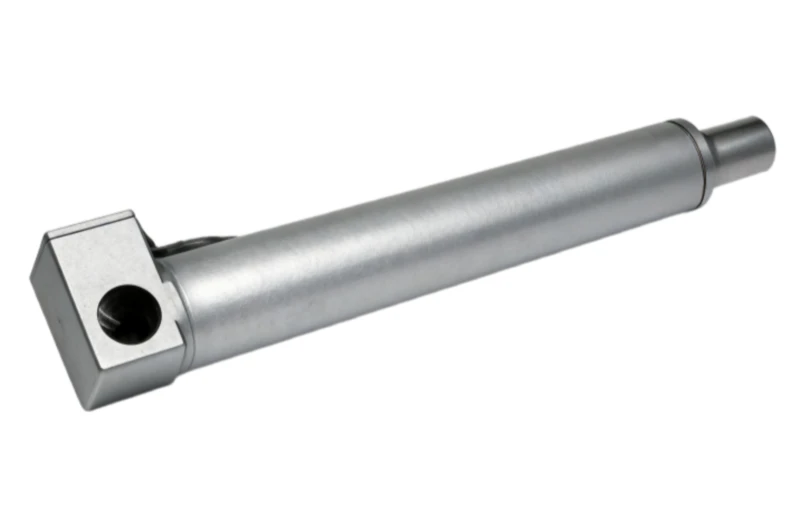
The EPYY Stability Matrix: Our EPYY11112027 series behind-frame support rams are engineered for static load retention. Featuring massive mounting blocks fused via robotic SAW welding, these actuators establishes a four-point stabilization grid that remains immune to the ground-vibration of construction sites. By maintaining a perfectly horizontal chassis, EP series cylinders ensure that the luffing and telescopic booms operate within their designed physics envelopes, maximizing safety and performance simultaneously.
Horizontal Reach: Rear Rack Support and Extension
Modern mobile cranes utilize horizontal slide rams (Behind cylinders for opening rack support) to expand their outrigger footprint. Operating within the congested chassis of a truck crane, these actuators must overcome the extreme friction of rust and dust buildup in the stabilizer tracks.
The EPYY Performance Strategy: The EPYY11112026 series utilizes a specialized external hard-piping manifold. This design prevents the hydraulic hoses from being crushed or abraded within the dark confines of the outrigger box. By using induction-hardened Φ25mm rods, we ensure the horizontal push force is delivered without rod buckling, even if the rack encounters an obstruction during the extension cycle. This focus on reliability is why EP series cylinders are the preferred choice for EPC contractors managing massive modular infrastructure projects.
Manufacturing Standards: The Rigor of Automation
Quality in hydraulics is not an inspection at the end; it is a fundamental process integrated into every robotic welding cycle. Our production facility is a benchmark for Industrial 4.0 Hydraulic Fabrication. From the multi-pass Submerged Arc Welding (SAW) that fuses mounting blocks to the barrel, to the 100% automated pressure testing benches, human error is systematically eliminated. This ensured consistency is why the 10,000th EP series cylinder performs exactly as the 1st—a requirement for global OEM partners and the world’s largest crane rental cooperatives.
.webp)
Economic Intelligence: Optimizing Lifecycle TCO
While a budget cylinder may save 15% on initial purchase price, the Total Cost of Ownership (TCO) is often 3x higher due to frequent seal failures and lost operational hours. In high-velocity construction, truck crane downtime is calculated at roughly $2,000 per hour. By investing in the EP “Fit-and-Forget” series, fleet managers achieve a 50% reduction in unplanned maintenance events. To maximize this ROI, we recommend the following 2,000-hour technical protocol:
- Hydraulic Fluid Hygiene: Maintain oil to ISO 4406 16/14/11 standards. Suspended particulates act like liquid sandpaper on the Ra 0.2µm bore surface.
- Wiper Seal Inspection: Ensure the rod wipers are intact; failure allows grit to enter the main seal matrix, leading to premature erosion.
- Induction-Hardened Rod Check: Daily inspection for physical rod dings; induction-hardened surfaces resist scratches but require immediate stone-polishing if damaged.
- System De-Aeration: Cycle cylinders five times to full stroke under no-load after any hydraulic system breach to prevent cavitation.
Conclusion: The Hydraulic Foundation of Global Progress
As we move further into 2026, the reliance on high-uptime material handling equipment has become absolute. Whether you are operating high-tonnage truck cranes in a bustling container port or maintaining utility infrastructure in a modern smart city, the reliability of your hydraulic cylinders is the non-negotiable foundation of your success. At tiltcylinder.net, we combine world-class ST52.3 metallurgy, Japanese sealing excellence, and rigorous automation to ensure that your machines never stop lifting the world. The EP Series is more than a component; it is the hydraulic link to global progress.
Secure Your Fleet’s Future Today
Eliminate hydraulic drift and outrigger failure from your operations. Connect with our engineering team for custom EP series designs or high-volume OEM support.
100% Quality Tested
Worldwide Shipping
OEM Ready