.webp)
A 2026 Engineering Compendium on Internal Bypass Physics, Load-Moment Stability, and High-Velocity Logistics Efficiency.
In the high-density warehousing environment of 2026, the margin for error in pallet placement has effectively reached the sub-centimeter level. As racking heights push beyond 15 meters, the stability of the forklift mast is no longer just a functional requirement—it is the primary pillar of facility safety.
The forklift tilt cylinder is the most critical link in the machine’s load-holding chain. While the lift cylinder manages verticality, the tilt cylinder dictates the center of gravity and the precise pitch of the forks. In a high-velocity logistics hub operating 24/7, the subtle onset of Hydraulic Drifting in the tilt mechanism is a silent catalyst for tip-over accidents and racking damage.
At tiltcylinder.net, our EP series is engineered to eliminate the variables that lead to mast instability. We recognize that warehouse safety is a product of three integrated factors: Zero-Bypass Sealing, Metallurgical Rigidity, and Thermal Consistency. This white-paper provides a granular analysis of the mechanical forces affecting forklift tilt cylinders, the diagnostic markers of internal bypass, and the economic necessity of choosing high-spec actuators. For fleet managers, safety officers, and warehouse directors, this is the definitive guide to achieving absolute material handling stability.
.webp)
Mast Kinematics: The Leverage of Instability
To understand the danger of tilt cylinder drift, one must analyze the forklift as a variable lever system. When a forklift carries a 2.5-ton load at a height of 10 meters, even a microscopic retraction of the tilt cylinder rod is amplified by the length of the mast.
The 2026 Safety Marker: A drift of just 0.5 millimeters at the tilt cylinder rod translates to a horizontal fork-tip movement of nearly 5 centimeters at full extension. This “Mast Creep” shifts the center of gravity beyond the stability triangle, significantly increasing the risk of a lateral tip-over during turning maneuvers.
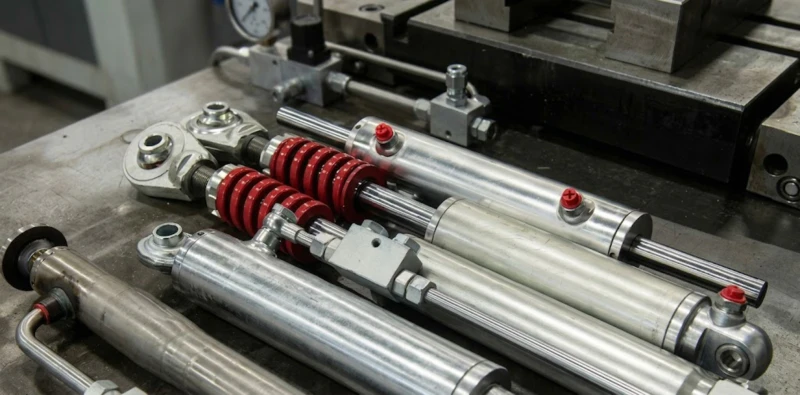
Internal bypass—the primary cause of drift—occurs when pressurized oil seeps past the piston seals. This is often caused by the Eggshell Effect: if the cylinder barrel (made of low-grade steel) expands under pressure, the seals lose their interference fit. At tiltcylinder.net, we eliminate this through the use of ST52.3 (E355) seamless steel. This material offers a higher yield strength, ensuring the barrel remains dimensionally stable under 250 bar surges, thus maintaining the “Zero-Drift” performance required for high-shelf operations.
Tribological Integrity: NOK Seals and Mirror Bores
In a high-velocity warehouse, a forklift may perform over 500 tilt cycles per shift. This high frequency generates localized heat at the seal-to-bore interface. Traditional honed cylinders possess microscopic peaks that act like a saw, gradually shredding the seal lips and leading to “Intermittent Drift.”
The Mirror Standard: We solve this through CNC Roller Burnishing, achieving an Ra 0.2 micron mirror finish. This plateaued surface topology allows our Japanese NOK seals to glide with 30 percent less friction. By reducing friction, we lower the operating temperature of the hydraulic fluid, preventing the “Seal Hardening” that typically results in catastrophic blowout. This synergy between polymer chemistry and metallurgical finish is why the EP series can maintain a vacuum-tight hold even after years of three-shift operation.
The EP Forklift Stability Foundation
Zero-Drift Matrix
Utilizing premium NOK multi-lip polyurethanes to eliminate internal bypass, ensuring the mast stays locked at the programmed angle.
HRC 55 Hardening
Induction-hardened rods resist the dings and scratches from warehouse debris that typically shred seals and cause external leaks.
Ra 0.2 micron Polish
Mirror-bore finishing reduces internal heat by 20 percent, extending hydraulic fluid life and protecting seal elasticity.
100 percent QC
Every forklift tilt actuator undergoes a mandatory 30-minute pressure-hold test to verify zero-leak performance before dispatch.
Economic Intelligence: The ROI of Precision Tilting
In the 2026 logistics economy, the profitability of a warehouse is measured by “Picks Per Hour.” A forklift with a drifting tilt cylinder is not just a safety hazard; it is an economic drain. When a cylinder drifts, the operator must constantly re-adjust the mast angle, adding 3 to 5 seconds per pallet move.
– Throughput Loss: In a fleet of 20 forklifts, tilt-readjustment can waste over 1,500 labor hours per year.
– Energy Savings: Precision EPYY hydraulics consume 10 percent less engine/battery power because the system isn’t constantly working to compensate for fluid bypass.
– Racking Integrity: Zero-drift ensures that forks remain perfectly level during entry, reducing the high cost of rack-upright repairs caused by mast-angle errors.
– Insurance ROI: Documented use of high-spec safety hydraulics can reduce premiums by demonstrating a commitment to tip-over prevention.
.webp)
Fluid Hygiene: Protecting the Ra 0.2 micron Polish
The longevity of a high-performance cylinder is dictated by ISO 4406 Cleanliness Standards. In a warehouse, dust from pallets and tires acts as an abrasive slurry. Once it enters the hydraulic oil, it bypasses the rod wiper and begins to pit the mirror bore.
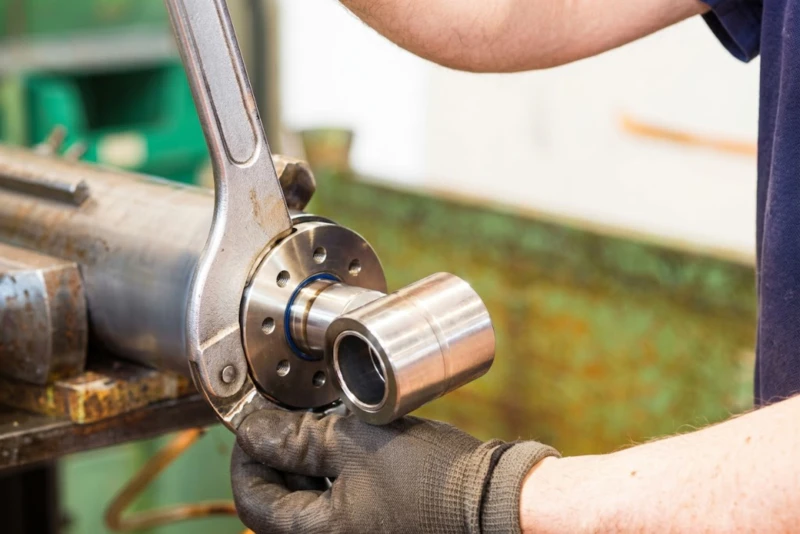
At tiltcylinder.net, we recommend a 10-micron filtration strategy. By maintaining a clean fluid environment, you preserve the Induction Hardened (HRC 55) rod surface and the Japanese NOK seal lips. This prevents the abrasive wear that typically causes “spongy” tilt response and ensures the machine remains safe and responsive for its entire 10-year design life.
Conclusion: The Link Between Actuation and Productivity
As global logistics hubs scale to meet the demands of an interconnected world in 2026, the reliance on precision material handling has become absolute. The forklift tilt cylinder remains the critical, physical link in the chain of center-of-gravity stability. At tiltcylinder.net, we combine world-class ST52.3 metallurgy, Japanese sealing excellence, and rigorous automation to provide the actuators that ensure every pallet move is performed with absolute confidence. The EP series is more than a component; it is the hydraulic foundation of a safer, more profitable warehouse.
Stabilize Your Fleet’s Future Today
Eliminate mast drift and racking damage. Connect with our engineering team for custom EP series forklift solutions or high-volume OEM support.
Zero-Drift Technology
100 percent NDT Tested
Worldwide Shipping