.webp)
The 2026 Engineering Standard for Renewable Energy Actuators: Exploring Fail-Safe Locking, Precision Pitch Control, and Offshore Corrosion Resilience.
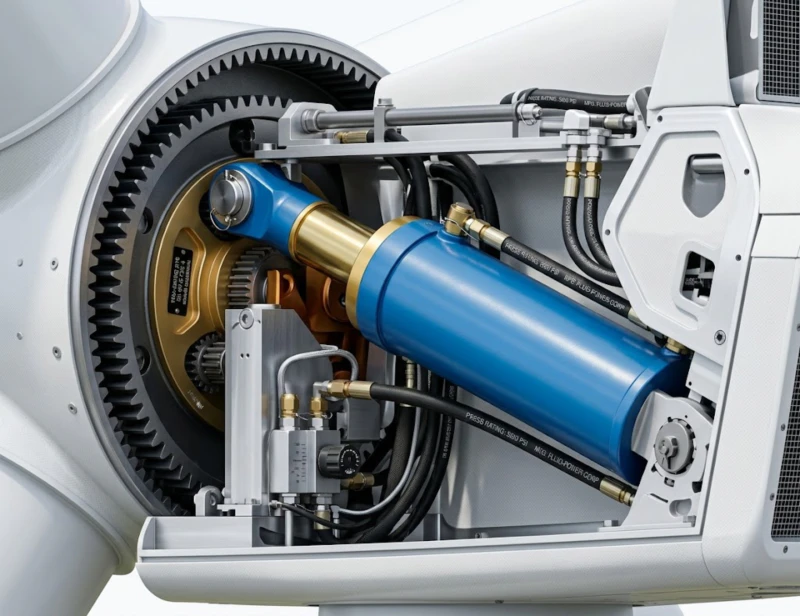
As the global energy matrix undergoes its most significant transition in a century, the demand for ultra-reliable, high-altitude actuation has reached a critical peak. In the nacelle of a multi-megawatt wind turbine, the hydraulic cylinder is the primary link between atmospheric energy and electrical output.
At tiltcylinder.net, we recognize that wind power applications represent the ultimate frontier of hydraulic engineering. Operating 150 meters above the ground, often in remote offshore locations, these actuators must withstand extreme vibration, rapid temperature fluctuations, and the relentless corrosive force of salt spray. The EP series is our definitive response to these challenges. Designed for pitch control, yaw stabilization, and fail-safe mechanical locking, the EP series—including the flagship EPYY11112028—addresses the core technical hurdles of the renewable sector: internal bypass drift, metallurgical fatigue, and environmental oxidation. This guide provides an exhaustive analysis of the engineering mastery required to power the world’s most sustainable and efficient energy fleets.
Metallurgical Integrity: Defeating Fatigue and Thermal Expansion
In the wind energy sector, structural integrity is non-negotiable. A wind turbine nacelle is a high-vibration environment where components are subjected to constant harmonic resonance. Standard hydraulic barrels often fail due to microscopic stress-cracking or “barrel swelling” under the extreme luffing pressures required to manage 100-meter blades.
To eliminate these failure modes, the EP series utilizes ST52.3 (E355) high-yield strength seamless steel. Unlike welded tubing, seamless ST52.3 provides a uniform molecular density that ensures absolute pressure containment even during the massive pressure surges caused by sudden wind gusts. Furthermore, we employ a proprietary Stress-Relief Annealing process to ensure the cylinder remains dimensionally stable despite the temperature swings typical of high-altitude or offshore environments (ranging from -40°C to +60°C). This metallurgical purity is the primary reason EP series cylinders maintain their performance over a 25-year design life.
Mirror-Bore Technology: Achieving the Ra 0.2µm Finish
Precision is the ultimate metric for turbine efficiency. Pitch control cylinders must adjust blade angles by fractions of a degree to optimize lift and prevent catastrophic overspeed conditions. If the internal bore of the cylinder is rough, it creates high static friction (stiction), leading to “Stick-Slip” movement. This causes the blades to oscillate, putting massive mechanical stress on the hub bearings and gearbox.
We solve this through CNC Skiving and Roller Burnishing. Our process cold-works the internal bore wall, increasing its surface hardness while achieving a mirror finish of Ra 0.2µm. This ultra-smooth surface allows our Japanese NOK seals to glide with nearly zero resistance. The reduction in friction also results in a significant reduction in heat generation—critical in the enclosed, unventilated environment of a turbine nacelle—preserving the life of the hydraulic fluid and preventing seal hardening.
EP Series Energy Series Advantages
Fail-Safe Locking
Integrated pilot-operated check valves and mechanical locks ensure 100% position retention during emergency turbine braking.
Marine-Grade Rods
Induction-hardened rods with 50µm hard chrome plating and optional ceramic coatings survive 120H salt spray tests for offshore wind.
Zero-Bypass Sealing
Utilizing premium NOK polyurethane matrix to eliminate internal bypass drift, ensuring consistent blade pitch stability over long durations.
25-Year Lifecycle
Designed and tested for high-frequency fatigue resistance, minimizing the total cost of ownership (TCO) for remote site operators.
Safety Scenarios: Fail-Safe Mechanical and Hydraulic Locking
The most critical moment for a wind turbine’s hydraulic system is not when it is generating power, but when it is parked for maintenance. In high-wind conditions, the rotor must be physically locked to ensure technician safety. If the locking cylinder drifts or fails, the resulting rotation can lead to catastrophic damage and loss of life.
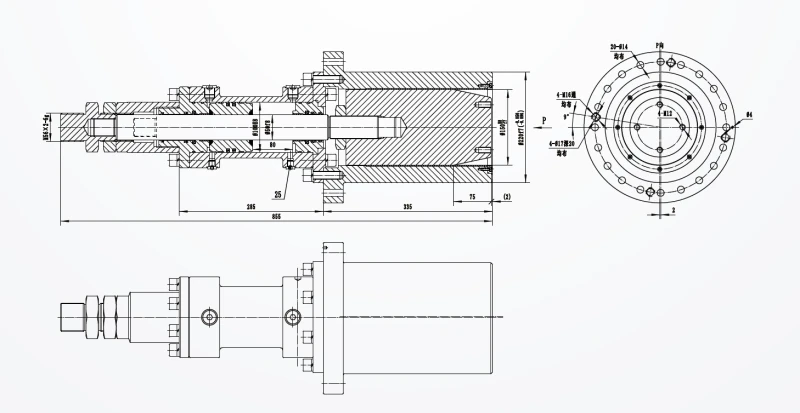
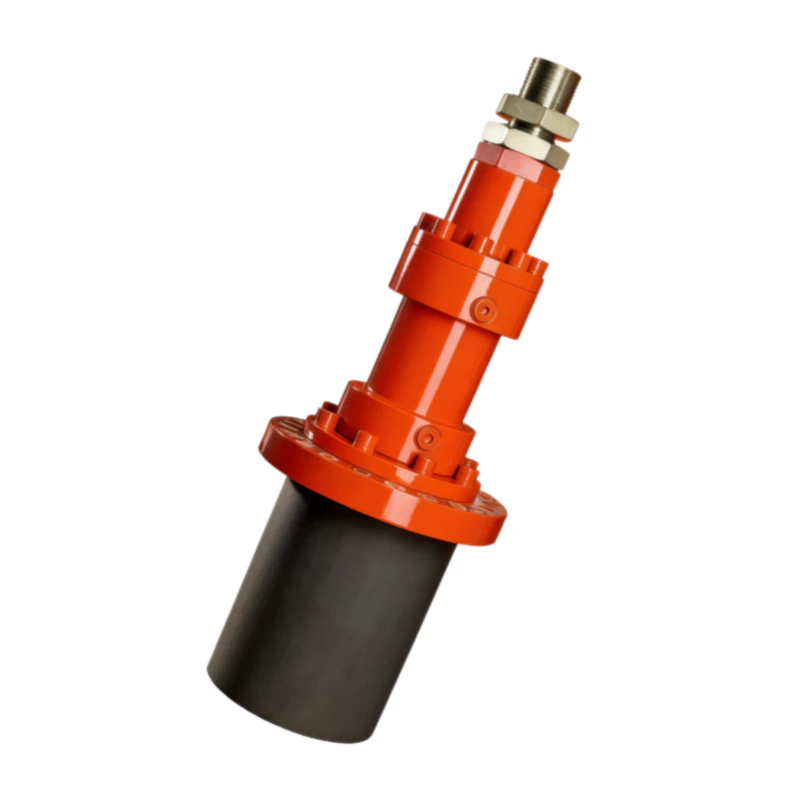
The EPYY Safety Lock Matrix: The EPYY11112028 series is specifically designed for static load holds. Featuring integrated manifold blocks and specialized heavy-duty flange mounting, these cylinders act as a physical deadbolt for the rotor hub. By utilizing zero-drift sealing and ST52.3 barrels that prevent micro-swelling, EPYY cylinders maintain their locking force for weeks of maintenance downtime without the need for hydraulic re-pressurization. This fail-safe engineering is why tiltcylinder.net is the preferred supplier for global energy contractors managing multi-billion dollar offshore wind farms.

Operational Efficiency: Precision Pitch and Yaw Actuation
To maximize energy capture, a wind turbine must constantly adjust the “Pitch” of its blades and the “Yaw” of the nacelle. This requires high-frequency, low-amplitude strokes from the hydraulic cylinders. Standard actuators often experience seal wear and oil contamination in these conditions because the rod never fully retracts to allow for proper lubrication.
The EPYY Performance Strategy: Our pitch series utilizes specialized internal rod lubrication channels and mirror-burnished bores to ensure the seals remain hydrated even during micro-adjustments. The EPYY11112028 is tested for 2.5 million cycles without leakage, providing a “Fit-and-Forget” solution for operators in remote mountainous or offshore terrains where maintenance access costs upwards of $10,000 per site visit. This focus on durability ensures the turbine remains at peak efficiency for longer, significantly improving the project’s overall Levelized Cost of Energy (LCOE).
.webp)
Manufacturing Standards: The Rigor of Industrial 4.0
When human lives and multi-million dollar renewable assets are at stake, the margin for manufacturing error is zero. Our production facility is a benchmark for Industrial 4.0 Hydraulic Fabrication. Every critical weld on an Energy series cylinder is performed by multi-pass robotic SAW (Submerged Arc Welding) units, providing deeper penetration and zero porosity compared to manual welding. Each unit is subject to 100% Ultrasonic Non-Destructive Testing (NDT) and a mandatory 30-minute pressure hold test to verify absolute integrity.
.webp)
Economic Strategy: Optimizing Lifecycle TCO
For energy cooperatives and utility managers, the true measure of a cylinder’s value is its Total Cost of Ownership (TCO). While a budget cylinder may save 15% on initial purchase, the costs of a failure in an offshore turbine are catastrophic. By investing in the EP “Fit-and-Forget” series, operators typically see a 55% reduction in hydraulic-related O&M costs.
Professional Technical Maintenance Protocol:
- Hydraulic Fluid Hygiene: Maintain oil to ISO 4406 14/12/10 standards. The high-altitude unventilated environment accelerates oil oxidation.
- Wiper Seal Compliance: Inspect rod wipers every 6 months for chemical hardening. A failing wiper allows salt-mist and particulate to reach the primary pressure seals.
- Pressure Hold Validation: Perform annual static load holds to verify the integrity of the integrated counterbalance and safety locking valves.
- System De-Aeration: Cycle cylinders five times to full stroke under no-load after any hydraulic maintenance to prevent “spongy” response and cavitation.
Conclusion: The Hydraulic Heart of a Sustainable Planet
As we move further into 2026, the intersection of mechanical engineering and renewable stewardship has become the new industry standard. The hydraulic cylinder remains the critical link in the energy-to-grid chain. At tiltcylinder.net, we combine world-class ST52.3 metallurgy, Japanese sealing technology, and rigorous automated fabrication to provide the actuators that ensure the world’s cities remain powered by clean, reliable energy. The EP Series is more than a product; it is the hydraulic foundation of a sustainable future.
Secure Your Renewable Energy Future Today
Eliminate mast drift and outrigger failure from your operations. Connect with our engineering team for custom Energy series designs or high-volume OEM support.
120H Salt Spray Tested
100% Quality Tested
Worldwide Green Logistics